
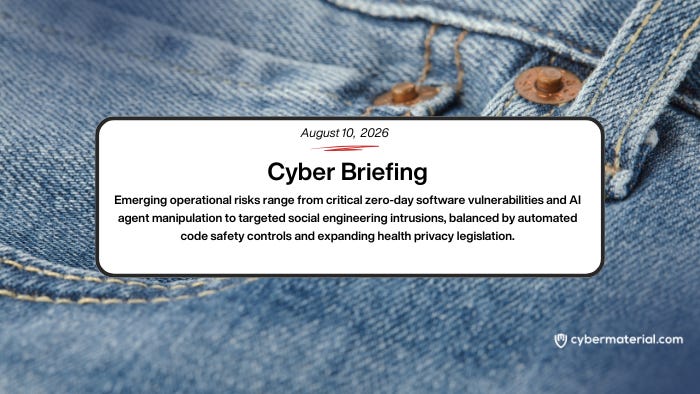


Cybersecurity Briefing: Key Developments and Threats
Cybersecurity is increasingly becoming a focal point for businesses as new threats emerge and vulnerabilities are discovered. Recent incidents underscore the pressing need for proactive measures in maintaining digital security.
Critical Zero-Day Vulnerability in Metabase Discovered
A major vulnerability identified in the Metabase business intelligence software has raised significant alarms. This flaw, regarded as a critical zero-day issue, enabled unauthorized remote attackers to gain full administrative access to systems before protective patches were made available to users. The company emphasizes that organizations utilizing Metabase must immediately update to the latest version to safeguard against unauthorized administrative control. Given the severity of this vulnerability, entities relying on Metabase for their analytics and data visualization need to act promptly to mitigate potential damage.
Ghostjacking: A New Threat for AI Agents
In a notable development, security researchers from Tenet Security have unveiled a novel attack method termed "Ghostjacking." This technique is particularly concerning as it affects nearly half of Fortune 500 companies. Ghostjacking exploits the AI coding assistants employed within firms, enabling cybercriminals to insert malicious instructions into system logs. These instructions are executed by the AI, causing it to bypass established firewall protections. The implications are profound: attackers can leverage this method to reroute traffic, exfiltrate sensitive data, and maintain undetected access within corporate networks. Notable service platforms such as Cloudflare, Datadog, and Sentry, which cater to a vast user base, are particularly at risk since their AI capabilities lack the discernment to detect and neutralize these hidden threats. This discovery serves as a crucial reminder of the vulnerabilities that persist even within advanced security systems.
Levi Strauss & Co. Suffers from Social Engineering Attack
The renowned apparel brand Levi Strauss & Co. has reported a cyberattack that exploited social engineering tactics. According to the company’s filing with the SEC, unauthorized actors managed to compromise three employee workstations, leading to the exfiltration of certain corporate information. Fortunately, the company has assured stakeholders that consumer data remained unaffected, and business operations have continued uninterrupted. Levi Strauss has taken steps to contain the incident and has enlisted third-party cybersecurity professionals to assist in addressing the breach. The company is also in the process of notifying impacted parties and regulatory bodies in accordance with legal requirements. This incident underscores the pervasive threat landscape companies face, particularly from social engineering, which exploits human vulnerabilities rather than technical ones.
Changes in AI Behavior Management with Anthropic’s Claude
Amid fears surrounding dangerous commands within AI systems, Anthropic has announced significant changes regarding its Claude Code, set to take effect on August 14, 2025. The company reveals that "auto mode" will become the default operational setting for Claude Code across Pro, Max, and Team tiers. Data collected from over a thousand professional users indicates that this mode intercepts 89% of harmful commands, a stark contrast to the mere 13.6% captured through human oversight. This move reflects a growing recognition of the importance of enhancing AI reliability, particularly where code execution is involved. Anthropic will also retain an option for enterprise plan users to choose whether to engage auto mode or not.
Legislative Movements: Health Information Privacy Reform Act
On the legislative front, the Senate Health, Education, Labor, and Pensions Committee has unanimously advanced the Health Information Privacy Reform Act. This significant piece of legislation aims to collectively extend HIPAA-like protections to health data procured by non-regulated health apps and wearables. The bill mandates the establishment of privacy, security, and breach notification standards within a stipulated timeframe of 18 months. Consumers will benefit from rights similar to those under HIPAA, including the right to request data deletions and notifications related to breaches. Although the bill now advances to a full Senate vote, its ultimate fate remains uncertain despite bipartisan support.
In conclusion, the cybersecurity landscape continues to evolve, presenting both challenges and opportunities. From evolving threats like Ghostjacking to the robust responses from industry leaders and legislative bodies, it is clear that organizations must stay vigilant and adapt to the complexities of modern digital security. As the risks grow, so too does the necessity for rigorous cybersecurity measures and policies to protect sensitive data and maintain consumer trust.