


Cybersecurity: Key Developments and Alerts
In the rapidly evolving realm of cybersecurity, recent incidents underscore an increasing need for vigilance among both users and corporate entities. This environment is characterized by a myriad of threats, ranging from malware distribution to vulnerability exploits in widely used platforms.
Fake Microsoft Support Site Distributes Malware
One of the most alarming issues emerging currently is the presence of a fraudulent Microsoft support website. The site, operating under the URL microsoft-update[.]support, has been reported to distribute a password-stealing malware disguised as a legitimate Windows update file named WindowsUpdate 1.0.0.msi. Users who are lured to this site are tricked into thinking they are performing a necessary system update, thus putting their personal information at significant risk. The campaign appears to be especially targeted at users whose personal data is particularly valuable, suggesting a significant degree of planning behind the operation. As a countermeasure, Chief Information Security Officers (CISOs) are being advised to block access to this fraudulent domain and utilize endpoint detection tools to monitor for any unauthorized installations of the WindowsUpdate file.
Vulnerability in Palo Alto Networks’ Cortex Integration
In another critical development, Palo Alto Networks issued a warning related to a high-severity vulnerability (CVE-2026-0234) discovered within the Microsoft Teams integration of its Cortex XSOAR and Cortex XSIAM platforms. This vulnerability allows attackers to exploit the system remotely, gaining access to and potentially altering sensitive data without needing user interaction. CISOs are urged to disable this integration until a secure patch is available. This highlights ongoing risks that enterprise systems face, particularly when integrating widely used communication platforms like Microsoft Teams.
GitLab Addresses Several Vulnerabilities
Following these alerts, GitLab has released crucial security updates for its software versions (18.10.3, 18.9.5, and 18.8.9) that address various vulnerabilities, including critical flaws that could lead to remote code execution and denial-of-service attacks. Administrators are strongly encouraged to upgrade their self-managed Community and Enterprise Edition instances as quickly as possible to forestall potential unauthorized access or system crashes.
Social Engineering Attacks Targeting Developers
Adding to the complexity of the cybersecurity landscape, a sophisticated social engineering campaign is reported to be targeting open-source developers. Attackers have been pretending to be reputable figures within the Linux Foundation, leveraging platforms such as Slack to promote clicking on malicious links. Such tactics illustrate the increasingly strategic approaches cyber criminals are employing to disrupt software development, highlighting the essential need for education and precaution among developers.
Bitcoin Depot Experiences a Major Hack
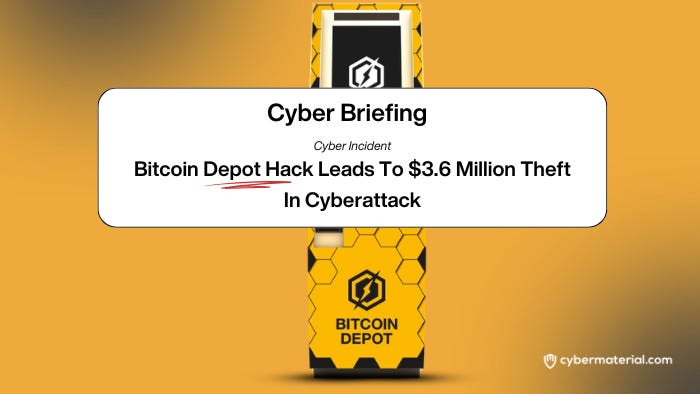
In a more alarming financial cybersecurity incident, Bitcoin Depot, a prominent operator of Bitcoin ATMs in the U.S., has revealed a security breach that led to the theft of approximately $3.6M worth of cryptocurrency. The attackers gained unauthorized access to Bitcoin Depot’s IT systems, obtaining credentials related to their settlement accounts. The company asserts that customer platforms and data remain unaffected by this intrusion, yet the incident raises significant concerns regarding the security measures in place within financial technology firms.
LAPD Sensitive Information Breach
A substantial security breach at a major office within the city of Los Angeles resulted in the exposure of sensitive information, including personal data related to police officers and internal documents. The leak was traced back to a digital storage system maintained by the City Attorney’s office rather than the Los Angeles Police Department’s internal networks. This scenario emphasizes the interconnected nature of cybersecurity concerns across different government entities and the potential for widespread repercussions.
Staying Informed and Proactive
As these incidents unfold, stakeholders in the cybersecurity community are urged to stay informed about ongoing alerts and news. Regular updates and advisories are crucial to fortifying defenses and mitigating risks associated with emerging threats. Enterprises must implement robust detection systems while also educating their staff about the risks posed by social engineering tactics.
In conclusion, the current landscape of cybersecurity necessitates decisive action from organizations and individuals alike. Keeping abreast of developments, improving technological defenses, and fostering an informed user base can significantly diminish vulnerabilities and help address the pervasive challenges presented by cyber threats today.