


Cybersecurity Alert: The Rising Threat from Chinese Cybercrime and Espionage Tactics
In an alarming development within the sphere of cybersecurity, state-sponsored actors and cybercriminal groups from China have significantly intensified their efforts to extract sensitive intelligence and financial resources. Recent advisories from intelligence agencies among the Five Eyes nations—comprised of Australia, Canada, New Zealand, the United Kingdom, and the United States—have underscored a concerning trend: Chinese operatives are systematically leveraging platforms like LinkedIn and creating fake recruitment fronts to forge long-term relationships with Western military personnel, academics, journalists, and holders of security clearances.
Moreover, a particularly active Chinese cybercrime group identified as TA4922 is reported to have expanded its operations into Europe and Africa, further broadening the geographical scope of its financially motivated campaigns. This group employs sophisticated techniques, including the use of large language models to design malware rapidly. Their latest creation, the Atlas RAT backdoor, represents a significant advancement in cybercriminal capabilities—the malware is being combined with a barrage of phishing attempts aimed at credential theft and the illicit resale of network access.
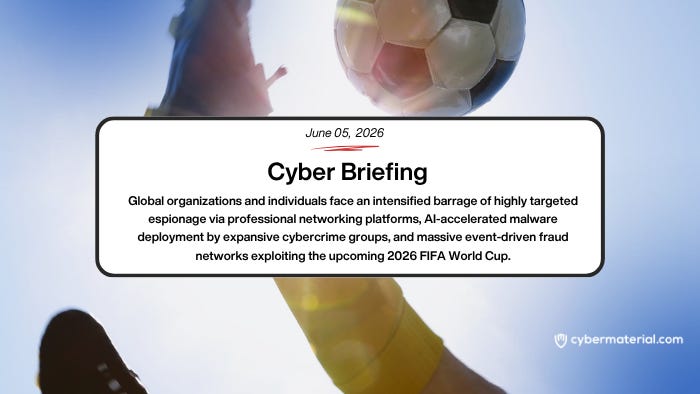
The global impact of such cyber threats is increasingly palpable. Infrastructure vulnerabilities and high-profile events are becoming prime targets for transnational syndicates looking to exploit weaknesses for their gain. For instance, as the June 11, 2026 tournament of the FIFA World Cup approaches, cybercriminals have registered more than 13,000 fraudulent domain names linked to the event. FortiGuard Labs notes that approximately 8.8% of these domains have been flagged as either malicious or suspicious. The criminals are employing a variety of tactics—including fake ticket sales, phishing scams, and malicious applications—to deceive fans and exploit their enthusiasm for the tournament.
The U.S. Department of Justice has responded robustly to these rising threats. An ongoing crackdown has been directed at Southeast Asian networks engaged in cryptocurrency fraud. This initiative has revealed millions of fraudulent social media accounts and email identities utilized by transnational criminal organizations, designed to ensnare unsuspecting Americans and manipulate them into financial schemes.
In addition to financial exploitation, supply chain and data breaches are also wreaking havoc on essential platforms. For example, a crypto-mining executable was recently discovered embedded in the installation files of the Hola Browser, indicating a breach of the company’s supply chain. This unauthorized program, identified during a routine security audit, was mining cryptocurrency while users believed their systems were idle. Hola Browser has since acknowledged the issue, indicating it affected approximately 0.1% of their user base, and corrective actions have been taken to fortify their distribution pipeline against future incursions.
Compounding these security challenges, the World Food Programme (WFP) has disclosed a security incident that has potentially exposed personal data belonging to aid recipients in Gaza. An external party managed to access the information via WFP’s self-registration application, posing a grave concern for privacy amid ongoing humanitarian crises. The agency is now in the process of notifying affected individuals.
As cybercriminals ramp up their targeting leading up to significant events like the FIFA World Cup, vigilance is paramount. Cybersecurity experts recommend that organizations establish intricate monitoring of brand impersonation and closely examine lookalike domains. Users are cautioned to transact only through official channels, avoiding third-party purchases or downloads that could expose them to malicious activities.
As this global landscape of cyber threats evolves, organizations and individuals alike must prioritize robust cybersecurity measures. Best practices may include implementing application allow listing, closely monitoring temporary directories for unfamiliar or suspicious programs, and restricting local administrator access to minimize exposure to these sophisticated cyber attacks.
In summary, the increasingly sophisticated landscape of cybercrime, especially from state-sponsored actors, poses a formidable challenge. Authorities and organizations must remain proactive in their defenses, as the threat extends beyond simple financial fraud and encroaches upon the security of national interests and critical infrastructure. The ongoing collaboration among international intelligence and law enforcement agencies offers a glimmer of hope, but the persistent ingenuity of cybercriminals necessitates relentless vigilance and adaptation in the realm of cybersecurity.