
Cybersecurity Updates: Rising Threats and Breaches Dominate the Landscape
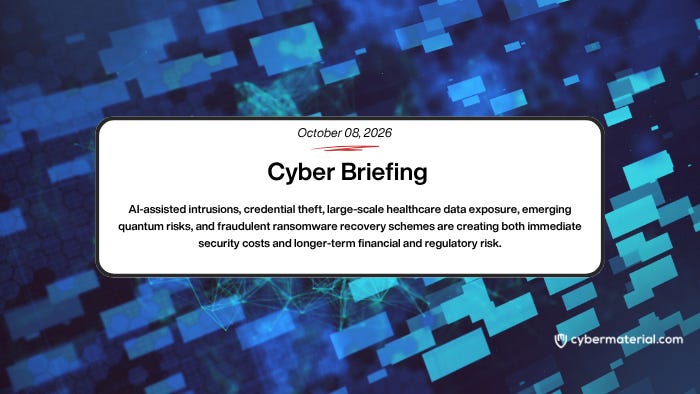
In recent developments within the cybersecurity sphere, multiple significant threats have emerged, indicating a troubling trend in cyber attacks. Cybersecurity analysts reported suspected Chinese-linked activities targeting financial institutions in South Korea, alongside research organizations in Taiwan. These operations leverage sophisticated AI-powered tools, supporting not only intrusions but also highly convincing phishing campaigns. Among the methods, adversary-in-the-middle techniques and malicious QR codes stand out, capturing user credentials and Multi-Factor Authentication (MFA) tokens, raising serious concerns regarding the robustness of existing defenses.
In another concerning incident, Oracle Health has recently revealed a substantial data breach that now affects nearly 20 million individuals—a figure significantly higher than initially reported. This breach involved unauthorized access to vital patient health information stored across Oracle’s healthcare systems. It highlights the urgent need for healthcare organizations utilizing these platforms to reassess their security configurations and proactively notify affected patients, adhering to regulatory requirements.
Warnings from Law Enforcement Agencies
Adding to the urgency, both Europol and the U.S. Government Accountability Office (GAO) have issued reports emphasizing the importance of post-quantum preparation. Experts suggest that cryptographically relevant quantum computing might arrive sooner than anticipated, with potential implications reaching government and corporate security sectors by as early as 2029. A disconcerting finding from the GAO indicates that none of the 24 federal agencies examined have fully implemented three critical practices of post-quantum cryptography (PQC). These include the development of inventories for vulnerable systems, identification of required funding, and testing PQC solutions.
Organizations are encouraged to upgrade to modern security protocols such as TLS 1.3, enable forward secrecy, eliminate any unnecessary sensitive data, and commence planning for the adoption of PQC solutions. This proactive approach is vital for safeguarding against potential threats, such as "harvest now, decrypt later" attacks, where adversaries collect encrypted data today for future decryption.
Ransomware Recovery Scheme Exposed
In an alarming revelation, a ransomware recovery scheme orchestrated by Zohar Pinhasi generated an impressive $11 million by secretly paying ransoms to secure decryption keys while subsequently charging victims inflated fees for remediation services. This scheme illustrates the need for organizations to verify the legitimacy of recovery services and to ensure that they remain transparent about their methodologies. The financial toll inflicted on victims serves as a stark reminder of the complexities surrounding cyber incident recovery.
Furthermore, amidst these evolving threats, security operations centers are transitioning their focus from traditional alert-based detection to more nuanced behavioral analysis. Attackers increasingly exploit legitimate credentials and utilize authorized tools to evade detection by conventional security systems. Experts argue that modern threats necessitate a deeper understanding of behavioral patterns over time rather than merely flagging individual suspicious events. As various threat vectors—including compromised user sessions and insider threats—may appear legitimate in isolation, organizations must prioritize context-driven detection systems that analyze behavior comprehensively across identity, network, and application environments.
Implications for Social and Commercial Sectors
The implications of these developments extend beyond individual organizations, affecting the broader landscape, including social trust and overall economic stability. With the rise of AI-enabled attacks and sophisticated phishing techniques, organizations must bolster their defenses and elevate their awareness of potential vulnerabilities. As digital environments become increasingly interconnected, the potential cascading effects of breaches can be extensive and far-reaching.
In this rapidly evolving cyber landscape, vigilance, and proactive measures are paramount. As organizations navigate these turbulent waters, they must remain alert to emerging threats while continually reassessing and fortifying their cybersecurity strategies to safeguard sensitive data against ever-evolving adversarial tactics. In light of these challenges, the importance of collaboration and sharing intelligence across sectors cannot be understated, as a unified approach will be crucial in combating the rising tide of cyber threats.
For those interested in exploring these topics further, resources such as podcasts and dedicated cybersecurity newsletters can provide valuable insights into the current threats and best practices for safeguarding against them.