


Cybersecurity Updates: Key Vulnerabilities and Industry Developments
In a rapidly evolving digital landscape, cybersecurity remains a top priority as news of critical vulnerabilities and industry developments continue to emerge. Recent discoveries by researchers and industry leaders have illuminated issues within both artificial intelligence technologies and consumer hardware, necessitating urgent attention and action from stakeholders.
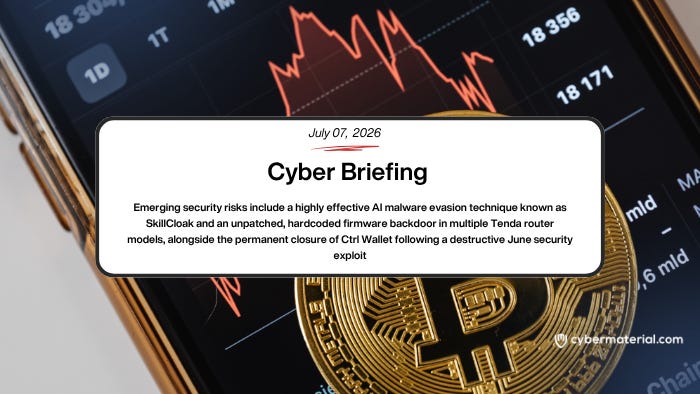
One prominent finding comes from a team of researchers at the Hong Kong University of Science and Technology, who have developed an innovative evasion technique dubbed "SkillCloak." This method effectively bypassed malware scanners implemented to detect malicious add-ons associated with AI coding agents over 90% of the time. Such findings emphasize the increasing sophistication of cyber threats in AI environments and underscore the necessity for the development of enhanced runtime checkers. These solutions aim to counteract the obfuscation techniques used in attacks, heightening the need for robust security frameworks as AI technologies penetrate more sectors.
On the consumer hardware front, the Computer Emergency Response Team Coordination Center (CERT/CC) has disclosed a significant vulnerability labeled CVE-2026-11405. This hardcoded backdoor affects various models of Tenda routers, including FH1201, W15E, AC10, AC5, and AC6, allowing attackers to gain administrative access irrespective of user credentials. The implications of such vulnerabilities can be severe, as they grant unauthorized entities comprehensive control over the affected devices. In response to this alarming revelation, cybersecurity experts urge Tenda users to disable remote management features and consider replacing their devices, particularly given that Tenda has not yet issued a public response to the issue.
In the realm of cryptocurrency, Ctrl Wallet, a non-custodial multichain wallet, has announced its impending closure following a serious security exploit that took place on June 23, impacting its Cardano wallets. Users have until August 3, 2026, to withdraw their assets; after this date, all functionalities will be disabled except for exporting recovery phrases. The company swiftly entered maintenance mode post-incident to safeguard remaining user funds while the engineering team conducted a thorough investigation of the breach.
Meanwhile, the enterprise technology landscape is also undergoing significant changes. Microsoft has announced the automatic activation of the Windows settings backup and restore feature for enterprise systems joining Microsoft Entra (formerly Azure AD) with the Windows 11 version 26H2 update. This transition could raise data governance and compliance concerns, prompting IT administrators to reassess their backup policies. Organizations are advised to configure appropriate controls to monitor and manage data leaving their networks.
In a bid to reinforce cybersecurity practices at a national level, the UK government has launched a voluntary Cyber Resilience Pledge that has garnered participation from 60 initial signatories, including well-known companies like Marks & Spencer and Capita. This initiative emphasizes the importance of board-level oversight for cybersecurity, adherence to supplier security certifications, and participation in the National Cyber Security Centre’s Early Warning service. The move aims to bolster organizational resilience against cyber threats, though notable absentees from the pledge include Co-op, Harrods, and Jaguar Land Rover—companies that have also faced recent cyber incidents.
Furthermore, in the tech industry, IQM Quantum Computers, designated as Europe’s first publicly traded quantum computing firm, has made a strategic acquisition of key software and intellectual property from Berlin-based Quantistry. This acquisition aims to facilitate the development of hybrid classical-quantum solutions, benefiting diverse sectors including aerospace, automotive, and pharmaceuticals, thereby enhancing technological advancements within critical industries.
As these developments unfold, the cybersecurity landscape requires ongoing vigilance and proactive measures. Stakeholders across various sectors must remain informed about emerging vulnerabilities, regulations, and innovations to protect their digital environments effectively. While the threats may be complex, so too are the solutions, demanding a collaborative effort from all parties involved to navigate the increasingly intricate realm of cybersecurity.
Stay tuned for more updates and insights from the ever-evolving world of cybersecurity.