


Cybersecurity Briefing: Rising Threats and Defensive Measures
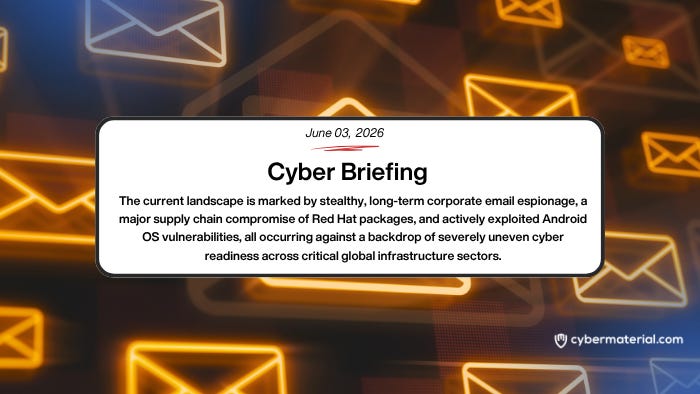
In the ever-evolving landscape of cybersecurity, recent events have underscored critical vulnerabilities within both software ecosystems and national infrastructure. A disturbing supply chain attack has been reported that targets 32 NPM packages managed by Red Hat, leading to the deployment of credential-stealing malware resembling the Mini Shai-Hulud worm across 96 malefic versions. This incident raises alarms for organizations utilizing these packages, emphasizing the necessity for immediate audits of their dependencies and credential rotations on impacted systems.
Simultaneously, Google has issued a significant June 2026 security update addressing 124 vulnerabilities affecting Android devices. This release includes CVE-2025-48595, a high-severity integer overflow flaw with a CVSS score of 8.4. Notably, this vulnerability has been identified as actively exploited in targeted attacks, implicating various versions of Android. The U.S. Cybersecurity and Infrastructure Security Agency (CISA) has added this to its Known Exploited Vulnerabilities catalog, mandating federal agencies to implement patches by June 5, 2026, to mitigate potential breaches.
Furthermore, an alarming trend has emerged in organizational defenses where threat actors have shown remarkable capability to maintain long-term access to sensitive information. A noteworthy case involved an unidentified stock exchange where a hacker infiltrated an executive’s email inbox and maintained this access surreptitiously for months. Utilizing native Windows administrative tools, the intruder successfully evaded detection while monitoring communications without raising suspicions. This incident highlights the urgent need for organizations to scrutinize their email access protocols and implement rigorous monitoring systems alongside restrictions on built-in administrative tool usage.
On a macro level, cyber preparedness appears alarmingly fragmented across key sectors and regulatory frameworks. This sentiment is echoed in the recent ENISA NIS360 report, which warns of uneven defenses within European Union infrastructure. Vital sectors, including healthcare, water, and space infrastructure, are reported to lag significantly in preparedness compared to other industries such as banking and telecommunications. The report identifies seven sectors as high-risk, emphasizing that many healthcare facilities are still struggling with basic asset tracking and legacy systems. Alarmingly, one-third of entities within the water sector have reportedly never conducted a risk assessment. Such disparities in preparedness leave these sectors vulnerable to increasingly sophisticated AI-enabled threats and geopolitical tensions.
In response to these evolving risks, organizations are adapting their security awareness training programs. Bayer, for example, has revamped its training initiatives to focus on recognizing psychological manipulation techniques rather than just technical indicators of phishing threats. This strategy follows the company’s experience of successfully thwarting a deepfake impersonation of its global CFO, which requested an urgent fund transfer.
In line with increasing systemic threats, a federal commission has put forward a proposal for a comprehensive overhaul of U.S. military cyber operations. The recommendation includes the establishment of a dedicated cyber force branch with an estimated startup cost of $11 billion. This force would comprise approximately 5,000 National Guard members and up to 6,000 civilian personnel, aiming to significantly enhance the United States’ capability to combat cyber threats.
Amidst the turmoil, organizations are increasingly recognizing the need for robust cybersecurity measures and adaptive training practices. As the cybersecurity landscape continues to evolve, proactive measures are essential for protecting sensitive information and ensuring the resilience of critical infrastructure against emerging threats. An informed and prepared response is imperative, as failures in cybersecurity can have dire consequences not just for individual organizations, but for national security.
The ongoing development of cybersecurity strategies is crucial. Regular updates and assessments of existing protocols can fortify these defenses. Through collective awareness and vigilance, industries can better safeguard themselves against present and future threats. The implications of these developments resonate not only through individual enterprises but also across broader societal structures, emphasizing the critical need for cohesive cybersecurity strategies in an increasingly interconnected world.