
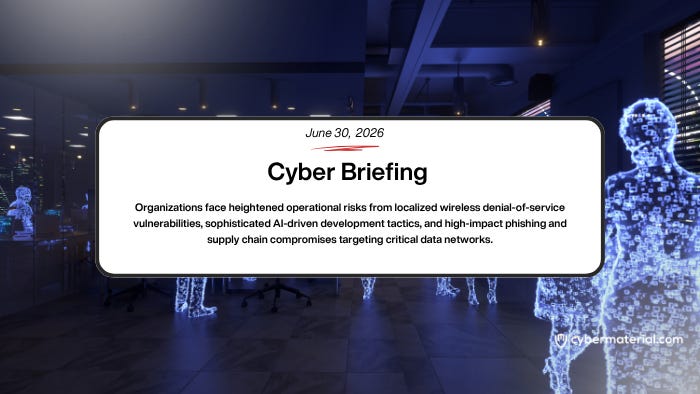


Cyber Briefing: Navigating Emerging Cyber Threats and Regulatory Changes
In the ever-evolving landscape of cybersecurity, new threats, vulnerabilities, and regulatory developments are constantly surfacing. Recent reports reveal a concerning rise in targeted phishing campaigns and malware attacks, particularly involving the use of blockchain technology and counterfeit USB drives. The latest cybersecurity updates provided insights into these trends, showcasing the need for heightened awareness and protective measures across various sectors.
Phishing Attacks and Malware Exploitation
Cybercriminals are increasingly exploiting trusted platforms to execute phishing attacks. A particularly alarming case involves the TONResolver malware which has been deployed to target hotel staff at Booking.com partner properties in Japan. The phishing scheme involves emails impersonating guest complaints, delivering malicious ZIP files that deploy malware designed to maintain persistent access to compromised systems. The sophisticated nature of these attacks leverages The Open Network (TON) blockchain as a command-and-control infrastructure, making traditional email security measures less effective. Experts recommend that organizations restrict access to blockchain platforms and monitor for unauthorized network communications to enhance security against such threats.
Simultaneously, a disturbing incident was reported involving the Japanese military. It was revealed that members of Japan’s Ground Self-Defense Force unknowingly utilized counterfeit USB drives infected with malware linked to Chinese actors. These infected drives, sold significantly below market prices on online platforms, infiltrated military networks during relief operations for a 2024 earthquake. This exploitation of procurement processes raises serious questions about cybersecurity vetting in military operations. To mitigate such risks, experts advise organizations to source storage devices solely from verified vendors and to implement rigorous scanning protocols for removable media.
Emerging Vulnerabilities in Device Sharing Technologies
Alongside these alarming trends, vulnerabilities have been identified in popular file-sharing features such as Apple’s AirDrop and Android’s Quick Share. Security researchers have discovered six exploits that enable attackers within wireless range to force a denial-of-service condition on devices without any required interaction from users. This places devices, particularly those configured to accept transfers from anyone, at great risk. Consequently, it is recommended that organizations limit their devices’ file-sharing capabilities to known contacts and apply security updates promptly when vendors release patches.
Innovations in Cybersecurity Frameworks
In response to the aforementioned challenges, Sophos X-Ops has introduced a new taxonomy framework aimed at categorizing AI-related cybersecurity threats. This framework emphasizes two prevalent categories: malicious uses of AI by attackers and threats against AI systems themselves. Such classification is essential, as it highlights how threat actors are increasingly employing advanced technologies like generative AI to automate malicious activities, such as network penetration and malware development. Security teams are urged to prepare for a surge in the volume and speed of attacks while closely monitoring unusual traffic patterns associated with AI applications.
Regulatory Reforms in Digital Payments
On the regulatory front, significant developments are underway to foster competition within digital ecosystems. The UK’s Competition and Markets Authority (CMA) has proposed reforms mandating that major tech firms, including Apple and Google, allow app developers to offer alternative payment options outside of their proprietary app stores. Currently, developers face restrictions that require them to utilize the companies’ payment systems, which often results in hefty fees. The CMA’s proposed changes aim to lower these fees, providing consumers with potential savings and enabling developers to reinvest in innovations.
Improvements in Security Tools
In the realm of security tools, the recent release of Kali Linux 2026.2 stands out as it optimizes virtual machine performance by removing unnecessary GPU firmware. This enhancement facilitates significantly faster boot times for virtual machines, which is a crucial improvement for users reliant on swift and efficient cybersecurity protocols.
As cyber threats continue to evolve and adapt, the importance of maintaining robust security practices cannot be overstated. Organizations must remain vigilant, keeping abreast of emerging threats, regularly updating their security measures, and promoting a culture of cyber-awareness to safeguard sensitive information and critical infrastructure.