
Cybersecurity Updates: Key Developments from November 2026
In the rapidly evolving landscape of cybersecurity, several significant incidents have emerged recently, highlighting ongoing vulnerabilities and proactive measures that organizations must take to safeguard their digital infrastructure. This article summarizes recent developments, providing insights into vulnerabilities, breaches, and innovative security measures.
Vulnerabilities in Zyxel GS1900 Series Switches
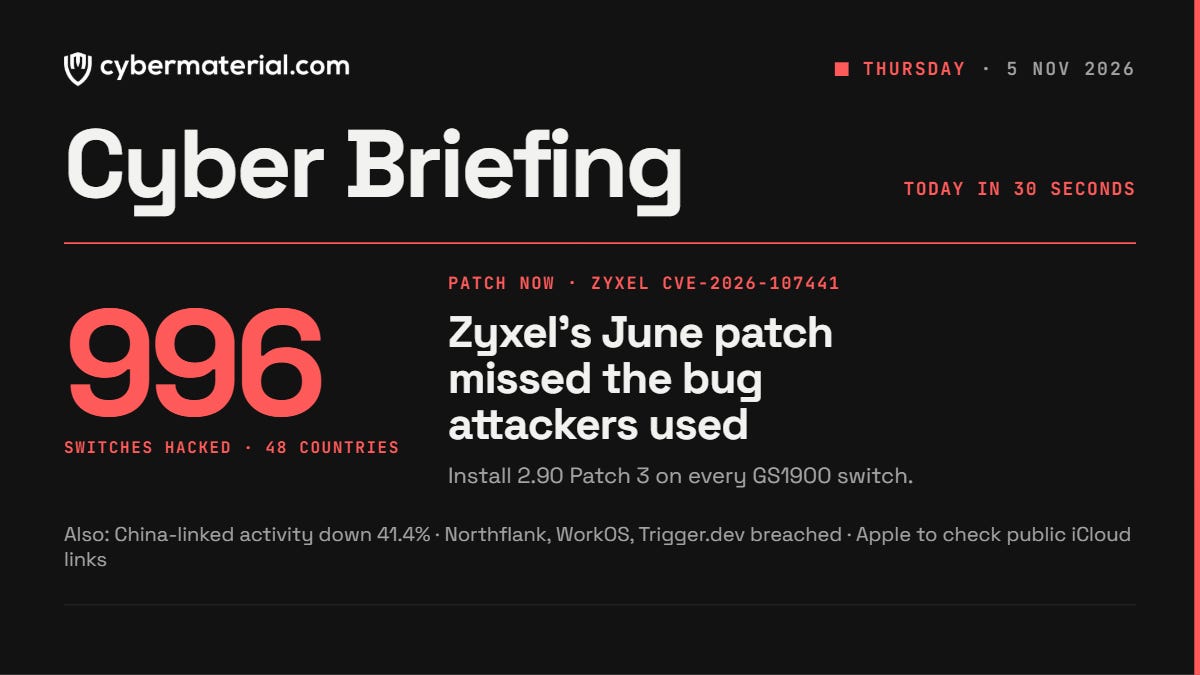
Despite a security patch released in June 2026, Zyxel GS1900 series network switches remain susceptible to a serious exploit. Binarly researchers have indicated that the patch failed to mitigate all vulnerabilities, specifically CVE-2026-107441, which attackers continue to exploit. Organizations that utilize these switches are urged to ensure that they have implemented the most current updates and to stay vigilant for any additional guidance from Zyxel. This situation underscores the necessity of regularly verifying that security patches are thoroughly applied, as lapses can expose systems to potentially dangerous incursions.
Notable Breaches Reported
The cybersecurity community is reeling from disclosures related to three leading developer platforms: WorkOS, Northflank, and Trigger.dev. Each of these platforms has recently encountered security breaches tied to AI (artificial intelligence). In these incidents, hackers successfully harvested AI access tokens and hijacked AI-driven tools to enhance their attacks. Organizations leveraging AI services are advised to conduct urgent audits of their access tokens and review authentication logs meticulously. Moreover, implementing additional measures to monitor for automated attack patterns is crucial to fortifying defenses against future intrusions.
Decline in Chinese Cyber Activity
Research from Trellix has revealed a significant decrease—41.4%—in Chinese nation-state cyber activities between April and September 2026. This decline could be attributed to shifting intelligence priorities focusing on Western military capabilities and tensions surrounding Taiwan. However, despite this reduction, the volume of Chinese cyber operations remains markedly higher in comparison to those conducted by adversaries such as Russia and Iran. The United States and Turkey were reported as prime targets during this timeframe, accounting for over 75% of detected attacks, particularly within sectors like transportation, shipping, and telecommunications. Security researchers caution that a reduction in detection does not translate to a diminished threat; vigilance is still required as adversaries adapt their strategies.
Apple’s New Scanning Practices
Apple has announced its intention to begin scanning public iCloud links for harmful content with the impending release of iOS 17.3, iPadOS 17.3, macOS 17.3, and visionOS 17.3. The scanning will specifically apply to materials shared via links accessible to "Anyone with the link," including files stored in iCloud Drive and photos in iCloud Photos. This measure seeks to enhance user security, prompting individuals who often share content publicly to be aware that Apple will scrutinize their shared materials for compliance with content policies.
Advances in Google Cloud Security
In a bid to bolster security measures, Google Cloud has introduced new controls for CodeMinder, its AI-powered vulnerability detection and remediation tool. Key updates include sandboxed attack simulations that allow organizations to safely test vulnerabilities, requirements for human approval on sensitive operations, and more detailed code scanning options. These measures aim to prevent inadvertent modifications during automated security testing, thereby enhancing overall cybersecurity.
Critical Need for Enhanced Hardware Wallet Security
In the realm of cryptocurrency, security researchers have expressed concerns regarding the efficacy of hardware wallets. These wallets, designed to safeguard private keys against online threats, often lack vital security features necessary for user verification before signing transactions. Experts emphasize the importance of hardware wallets possessing three essential elements: open-source firmware for comprehensive security audits, transparent signing that displays full transaction details on-device, and on-device verification mechanisms to protect against fraudulent transactions. Given the increasing sophistication of attacks targeting cryptocurrency holders, these features are pivotal in enabling users to maintain control over their assets securely.
Conclusion
As 2026 progresses, the cybersecurity landscape is marked by both challenges and advancements. Organizations must remain proactive, implementing stringent security measures and staying informed about new vulnerabilities and threats. Continuous education on the latest developments in cybersecurity is paramount to safeguarding against potential threats in this digital age. The necessity for robust security practices, especially in relation to AI and emerging technologies, will only grow more critical as the threats evolve.