
Cybersecurity Alert: Key Issues Impacting Users and Organizations
In recent developments within the cybersecurity landscape, several critical issues have come to the forefront, prompting immediate attention and action from organizations and users alike. These incidents highlight vulnerabilities and potential threats that have the capacity to disrupt operations and compromise sensitive data across diverse sectors.
OpenSSH Vulnerability Details
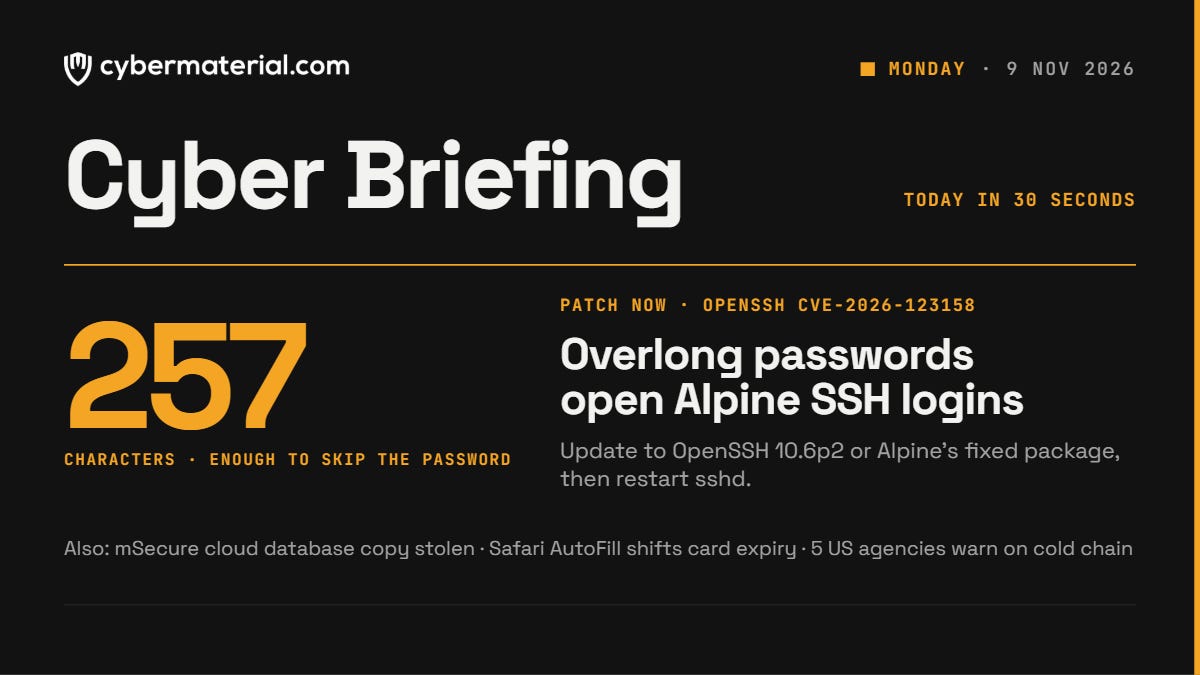
One of the most pressing concerns is the authentication bypass vulnerability (CVE-2026-123158) discovered in OpenSSH on musl-based Linux systems. Attackers can exploit this vulnerability by logging into accounts with password authentication disabled, using passwords ranging from 257 to 1,024 characters. Notably, Alpine Linux, a distribution frequently used within Docker containers, is predominantly affected. Its default cloud images expose the ‘alpine’ user account, which possesses passwordless root privileges, significantly heightening associated risks.
Organizations utilizing this software are urged to act without delay. It is imperative to update OpenSSH to version 10.6p2 or install a fixed package provided by Alpine. Furthermore, disabling password authentication in favor of key-based authentication is strongly recommended. Organizations should also meticulously monitor logs for any unauthorized "Accepted password" entries on accounts that should remain passwordless.
Concerns Over Refrigeration Systems
Simultaneously, alarming reports have emerged from the FBI and multiple U.S. agencies concerning a coordinated cyber-attack targeting industrial refrigeration and cold chain systems. The attackers are exploiting unpatched controllers, internet-exposed devices, and default passwords to manipulate environmental controls vital for food safety and medication storage. Incidents in Europe underline the severity of these breaches, with attackers successfully manipulating temperature settings at major blood service sites in France.
In light of these threats, specialists urge organizations to decommission any systems that are accessible over the internet, employ network segmentation, change default credentials, and implement rigorous patching protocols. Furthermore, temperature monitoring alerts should be established to ensure rapid response capabilities.
mSecure Cloud Breach Alert
Adding to the growing list of cybersecurity issues, password management service mSecure has issued a warning regarding suspicious activity within its cloud database. Although no specifics have been provided about which systems were compromised or the potential scope of the breach, users are advised to take precautionary measures by changing their passwords and resetting two-factor authentication settings. According to mSecure, it appears only those who synced with mSecure Cloud might be affected. However, a lack of clarity from the company regarding the situation has raised concerns about the security of stored credentials.
Apple’s Autofill Issue
Further complicating the user experience, a bug in Apple’s Safari autofill feature has been identified, affecting how credit card expiration dates are processed. Customers have documented that Safari erroneously shifts the month field backward by one month on web forms, which could inadvertently impact online transactions. While Apple has yet to provide an official acknowledgment of the issue, users encountering it can attempt to resolve the problem by clearing their browser cache and re-entering credit card information.
Google Chrome Version Update
In a related software update, Google has launched Chrome 158 (158.0.8127.22) for Android, but the rollout is limited initially. As users await broader distribution via Google Play, the update promises enhancements in stability and performance. Users encountering problems with the new version are encouraged to report their issues through Google’s bug reporting system.
In conclusion, the evolving cybersecurity threats underscore the need for organizations and users alike to remain vigilant. Immediate action is required to mitigate risks associated with the vulnerabilities identified in OpenSSH and the alarming trends in industrial cyber-attacks. Encryption of sensitive information, proper updates to software, and awareness of existing flaws like the Autofill bug in Safari can drastically improve overall security for individuals and organizations. Continuous monitoring, reporting, and working towards a more secure digital environment is not only crucial but essential in today’s cybersecurity landscape.