
Cybersecurity Alert: Key Developments and Advisories
In the fast-paced world of cybersecurity, recent reports highlight significant vulnerabilities and breaches, emphasizing the need for heightened awareness and proactive measures among users and organizations alike.
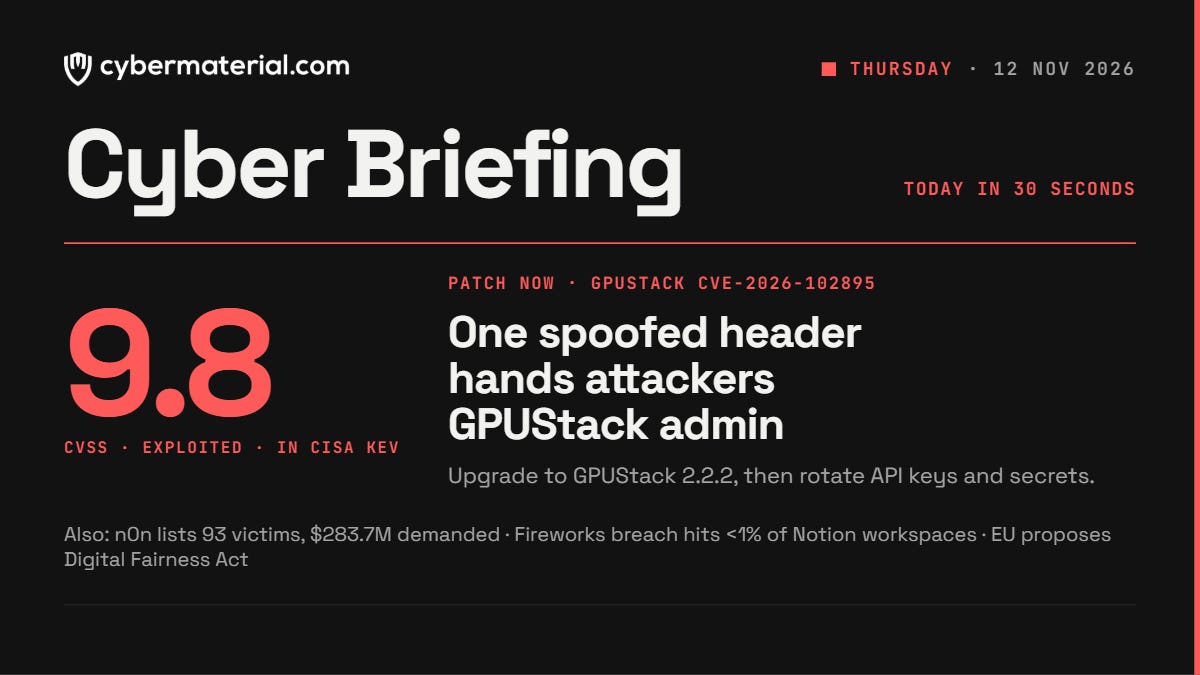
One of the most urgent updates comes in the form of a critical vulnerability identified within the GPUStack server, noted as CVE-2026-102895. With a staggering CVSS score of 9.8, this vulnerability allows attackers to gain administrative rights simply through a spoofed header. Such ease of exploitation raises alarms among cybersecurity professionals, especially since reports indicate that this vulnerability is already being actively exploited in the wild. The Cybersecurity and Infrastructure Security Agency (CISA) has included this issue in its Known Exploited Vulnerabilities (KEV) catalog since November 9, encouraging users to upgrade to version 2.2.2 of GPUStack immediately in order to safeguard their systems.
In another concerning development, Notion, a widely used productivity platform, disclosed a breach stemming from its vendor Fireworks AI. This incident has affected customer chat data, with the company revealing that fewer than 1% of workspaces had exposed chat transcripts. Fortunately, Notion identified that the majority of the accessed transcripts could not be distinctly attributed to specific users. However, as a precautionary measure, users are being urged to review their activity logs meticulously and reset any sensitive credentials that may have been shared in the Notion AI chats.
Additionally, a ransomware group known as n0n has been making headlines for its expansive exploitative activities, recently listing 93 victims on their leak site along with a staggering ransom demand of $283.7 million. An analysis of the data leaks indicates that the group’s modus operandi heavily relied on weak or stolen passwords, reminding organizations of the critical importance of robust password management and multi-factor authentication to deter such attacks.
On a broader scale, the European Union is taking steps to advance its regulatory framework aimed at digital fairness through the proposed Digital Fairness Act. Set forth on November 11, the act seeks to combat deceptive design patterns often used by digital platforms, such as addictive features and subscription traps. Once enacted, the legislation will compel organizations operating within the EU to reassess and potentially redesign their digital practices to comply with the new tenets that prioritize consumer rights and protection.
Moreover, the cybersecurity marketplace is witnessing a notable shift, with European organizations increasingly opting to procure cybersecurity solutions from EU-based vendors. Over the past two years, distributor sales from these local vendors have surged by 35%, capturing a 15% share of the market. This trend is largely driven by concerns related to digital sovereignty and compliance with regulations such as the NIS2 Directive and the Digital Operational Resilience Act (DORA), which enforce elevated security requirements for critical infrastructure and financial services. Consequently, organizations are becoming more discerning, prioritizing control over crucial aspects such as encryption keys, security logs, and data storage locations when selecting cybersecurity vendors.
Marching into the more technical realm of cybersecurity, recent insights from Kaspersky researchers underscore the necessity of a thorough approach to cloud security assessments. Their newly published methodology advocates for a comprehensive evaluation that goes beyond merely assessing external interfaces. The researchers propose a three-layer model—External, Overlay, and Underlay—akin to a hotel’s public, staff, and core infrastructure areas. This model emphasizes that effective penetration testing must include checks on whether attackers can breach internal isolations between tenant environments.
The ongoing developments in cybersecurity illustrate the persistent threats faced by individuals and organizations alike. As technology continues to evolve, so does the complexity of cyberattacks, magnifying the imperative for all entities to stay informed, proactive, and resilient in the face of these challenges. Regular updates, robust security practices, and adherence to regulatory requirements can play pivotal roles in mitigating the risks associated with emerging threats and vulnerabilities.
Awareness and vigilance are key; the cybersecurity landscape is as dynamic as it is critical. As organizations digest the implications of these recent findings, a commitment to cybersecurity best practices will be essential for fostering a safer digital environment.