
Cybersecurity Update: Key Incidents and Advisories from October 29, 2026
In today’s fast-paced digital environment, cybersecurity threats continue to evolve, and organizations must stay vigilant. On October 29, 2026, critical updates and incidents emerged, underscoring the urgency for cybersecurity measures across various platforms and networks.
Key Vulnerabilities and Immediate Actions Required
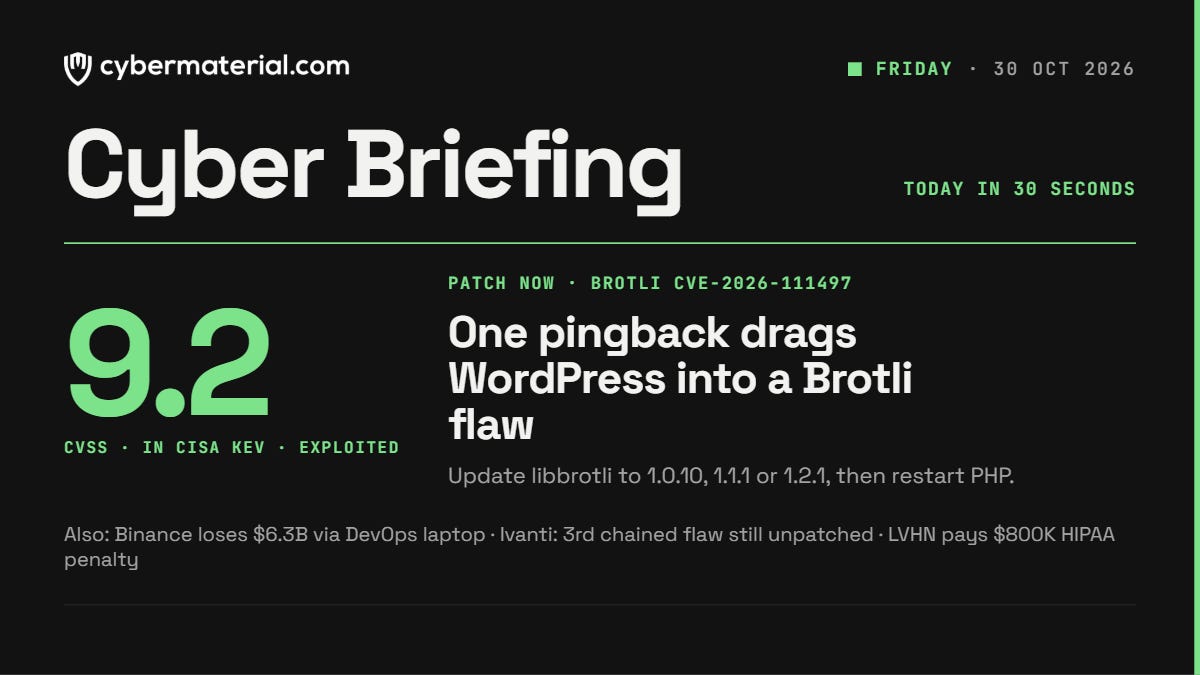
First on the agenda is CVE-2026-111497, a significant vulnerability identified within Google’s Brotli decoder. The Common Vulnerability Scoring System (CVSS) rates this flaw at 9.2, leading to its inclusion in the Cybersecurity and Infrastructure Security Agency (CISA) Known Exploited Vulnerabilities (KEV) catalog. This vulnerability poses an out-of-bounds write risk affecting Brotli decoder versions between 1.0.3 and 1.2.0. As exploitation has already been confirmed in real-world scenarios, it requires immediate action. For WordPress users, the concern is particularly pronounced, as the flaw can be leveraged through unauthenticated pingbacks to submit crafted requests to a vulnerable PHP environment, leading to potential crashes and even code execution. It is imperative for system administrators to apply patches without delay, particularly those involved with libbrotli, and restart their PHP services thereafter.
In tandem with this, another pressing issue relates to Ivanti Connect Secure appliances, where attackers are exploiting a chained zero-day vulnerability. This exploitation allows unauthorized command execution at root privileges, enabling cyber actors to steal sensitive credentials and perform internal reconnaissance. The security firm Volexity has identified the threat actor, known as UTA0576, linking the exploitation to events dating back to October 3, 2024. Organizations utilizing Ivanti Connect Secure need to take immediate steps to review their systems for any signs of compromise while implementing any available patches to safeguard against ongoing threats.
Malicious Software Campaign: The Yoba Threat
A sophisticated malware campaign titled "Yoba" has emerged, highlighting the peril of counterfeit software distributions. The malware masquerades as legitimate applications from renowned AI developers, such as ChatGPT and Claude. By utilizing fake repositories on platforms such as GitHub, the attackers have managed to exploit SEO techniques to rank their malicious offerings prominently in search results. Once downloaded, these applications install hidden cryptocurrency miners on Windows systems via DLL sideloading techniques. It is advised that organizations tighten security controls regarding the installation of AI-related software and remain watchful for any unauthorized DLL loading from verified applications.
Major Cryptocurrency Losses Linked to North Korean Hackers
In a dramatic turn of events, cryptocurrency powerhouse Binance reported the loss of approximately $6.36 billion as attackers breached the platform via a compromised DevOps engineer’s laptop. The incident unfolded swiftly, with unauthorized withdrawals across ten different blockchain networks executed in a matter of minutes. Cybersecurity analysts at TRM Labs attribute this theft to the North Korean Lazarus Group, further corroborated by Chainalysis. Despite Binance’s active measures to suspend deposits and withdrawals while securing customer losses through its SAFU fund, the incident raises concerns about ongoing vulnerabilities within major cryptocurrency exchanges.
AI in Recruitment and Cybersecurity Compliance
In the realm of AI advancements, Accenture has initiated the deployment of AI agents throughout its recruitment processes. These algorithms assist in screening resumes and scheduling interviews, with claims that the new system has reduced hiring timelines by 28%. However, academic research raises questions regarding the fairness of AI-assisted recruitment, calling into question its potential for bias, suggesting that human oversight remains paramount in the decision-making process.
Moreover, healthcare organizations must note the settled HIPAA violations faced by Lehigh Valley Health Network, which stemmed from a ransomware attack linked to the ALPHV/BlackCat group. An investigation revealed that the healthcare provider was negligent in conducting risk analyses and failed to notify affected individuals promptly, resulting in a mandated payment of $800,000.
These developments underscore the critical need for organizations to prioritize cybersecurity measures, enhance their awareness surrounding vulnerabilities, and remain proactive in implementing solutions to mitigate associated risks. With the digital landscape forever changing, staying informed and prepared is crucial for safeguarding sensitive data and maintaining operational integrity.