
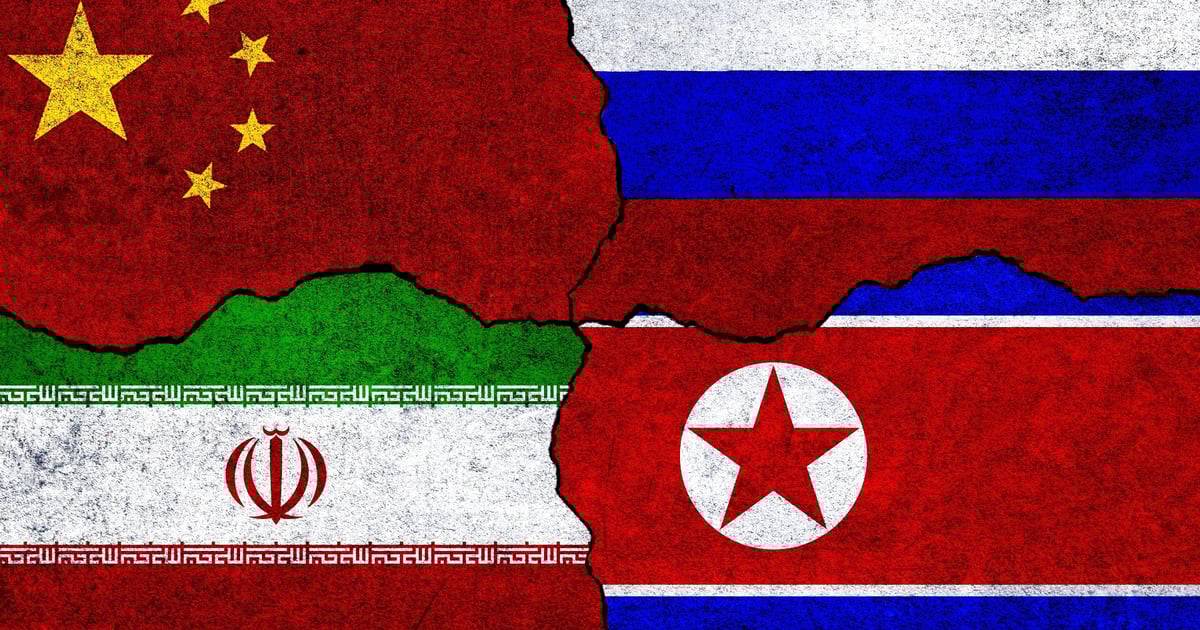
As the dawn of the millennium gave way to the 21st century, geopolitical tensions have continued to intensify in ways that have influenced the actions of the “Big Four” nations in recent years. With the United States and the UK identifying Russia, China, Iran, and North Korea as the countries posing the greatest threat to the Western world, industry analysts have found ample evidence linking cybersecurity offenses around the globe to state-sponsored groups associated with these powerhouses.
Russia, for its part, has seen its actions influenced by a multitude of geopolitical factors, including its concerns over NATO’s expansion eastward. Seeking greater economic and military partnerships with China, Iran, and North Korea, the country has had to pivot strategically after Europe closed its doors to Russian oil, finding new markets in India, resulting in a significant uptick in economic reliance on and influence from these Asian nations. This has resulted in an increase in overt cyberattacks, with reports indicating a surge in wiper malware usage against Ukraine, as well as targeting of the United States, Germany, and the United Kingdom.
In 2023, China emerged as the world’s second great power, with extensive ambitions to further its influence globally. With strategic interests focused on preserving the Chinese Communist Party (CCP) and expanding its national interests and power, China has been investing in technology and infrastructure to establish itself as a global power player and counter Western dominance. Its cyber-espionage capabilities are considered to be the most advanced among the Big Four, with plans aimed at undermining Taiwan’s semiconductor dominance and bolstering its own defenses.
Meanwhile, since the establishment of the Islamic Republic in 1979, Iran has emerged as a significant player in the Middle East, with extensive influence and a strong stance against perceived threats. In recent years, Iranian threat groups have deployed cyber-enabled influence operations, combining offensive operations with messaging to further Iran’s geopolitical objectives. While initially possessing basic cyber capabilities, Iran has developed increasingly sophisticated tradecraft and custom implants in recent years, demonstrating a clear jump in its cyber capabilities.
Rounding out the Big Four nations, North Korea has sought to shield itself from perceived threats from the United States and its allies by developing nuclear weapons and intercontinental ballistic missiles. These aggressive tactics have been met with strict economic sanctions, leading to financial cyberattacks and crypto heists to prop up the government and fund weapons. This has led to the United States being the most targeted nation, followed by South Korea and Japan.
In the next 12 months, it is anticipated that around two-thirds of eligible citizens in democratic nations will have the opportunity to vote in presidential or national elections. As a result, cyber-influence campaigns targeting elections are expected to increase throughout 2024 by all Big Four nations. These developments raise alarms about cybersecurity and geopolitics and underscore the potential impact of these global powers on the future landscape of international relations.