
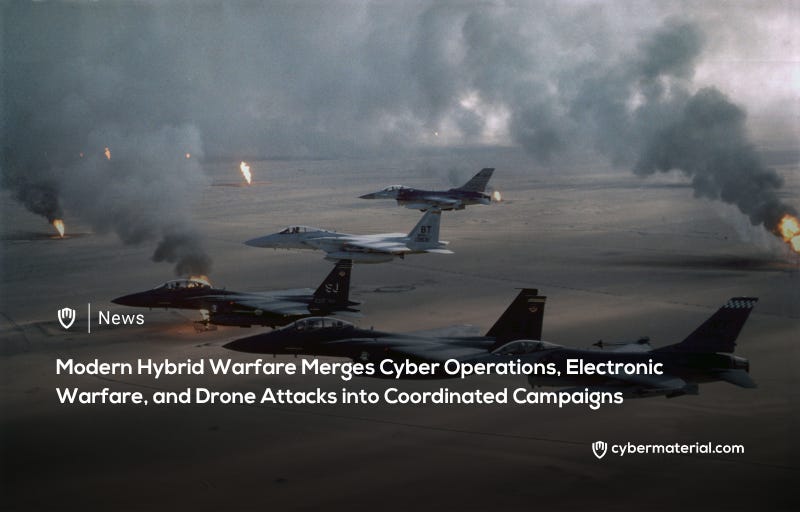


The Convergence of Electronic Warfare: A New Era in Hybrid Combat
In a significant evolution of modern warfare, electronic warfare, drone operations, and cyber intrusions have converged into a cohesive weapon system, dramatically changing how nations engage in conflict. This integrated approach allows adversaries to synchronize digital attacks with physical assaults, maximizing their impact on both military and civilian infrastructures. This transformation marks a critical departure from traditional hybrid warfare strategies, where cyber operations typically functioned as auxiliary elements rather than as coordinated components of kinetic military efforts.
The electromagnetic spectrum has emerged as a new battleground, where operations like jamming and spoofing increasingly disrupt not only military engagements but also civilian aviation, shipping, and navigation systems, extending potentially hundreds of miles beyond active combat zones. The implications of this trend are profound and far-reaching, affecting both national security and everyday life.
Two prominent examples that demonstrate this integration are the escalating tensions between Iran and Israel and the ongoing conflict in Ukraine. Iranian-aligned groups have engaged in coordinated assaults that include spear-phishing campaigns, ransomware attacks, and intrusions into critical infrastructures like energy systems, airports, and government networks. These cyber operations have been synchronized with missile and drone strikes against physical targets, illustrating a concerning trend in modern conflict strategies.
Meanwhile, Ukraine showcases a stark imbalance in warfare costs. The affordability of drones—often costing as little as $500—enables them to effectively destroy high-value military assets, including tanks that can be worth up to $12 million. This economic disparity forces both sides in the conflict to inundate the battlefield with unmanned systems. Concurrently, electronic warfare teams scramble to jam communication links, leading to innovative responses. For instance, Ukrainian developers have turned to frequency-hopping radios and even fiber-optic guided drones that utilize nearly invisible glass filaments to entirely avoid radio emissions, thus minimizing their detection by adversaries.
The ramifications of these tactics stretch far beyond the immediate battlefield. In January 2026, 13 European nations and Iceland jointly issued alerts concerning GPS jamming and spoofing that jeopardized maritime safety and commercial shipping. The aviation sector has also experienced similar disruptions; for example, in May, a UK Defence Secretary’s flight from Estonia faced jamming throughout its journey. As a consequence, crews had to rely on inertial navigation systems, highlighting vulnerabilities in civilian air traffic management.
Civilian infrastructures are under escalating threats as adversaries engage in "pre-positioning" strategies, quietly laying the groundwork for future attacks. This approach allows adversaries to gain undetected access to critical systems—energy grids, water supplies, and industrial control networks—months or even years before they unleash visible attacks. It is estimated that over one-third of global energy and utility infrastructures have experienced such pre-positioning by state-affiliated actors and adversaries leveraging artificial intelligence.
Legacy operational technology in industrial settings exacerbates these risks. Designed primarily for reliability rather than security, these systems are often outdated and tough to patch, poorly segmented, and difficult to monitor for intrusions, making them prime targets for malicious actors.
Organizations must regard this convergence of warfare tactics as a pressing operational risk. Security teams are advised to map out dependencies within their operational technology environments, enforce robust network segmentation between IT and industrial control systems, and establish monitoring protocols for unusual access patterns—indicators that could signal pre-positioning efforts by adversaries. The supply chain also demands enhanced scrutiny as interdependencies mean that a single breach can trigger a cascade of failures across multiple organizations.
For aviation and maritime sectors, preparing alternative navigation protocols that do not depend solely on GPS is increasingly vital. Meanwhile, critical infrastructure operators must adopt a defensive posture that assumes adversaries may already possess some level of access to their systems. The focus should shift from mere prevention to robust detection and containment strategies.
In summary, the convergence of electronic warfare, cyber operations, and drone technology signifies a new chapter in hybrid warfare that presents not just a military concern but also a tactical crisis for organizations and societies at large. As this trend evolves, comprehensive strategies emphasizing resilience, awareness, and proactive security measures will be critical in safeguarding both national security and civilian life against increasingly sophisticated threats.