
Emergence of Dark Project: A Rising Threat in Financially Motivated Ransomware Operations
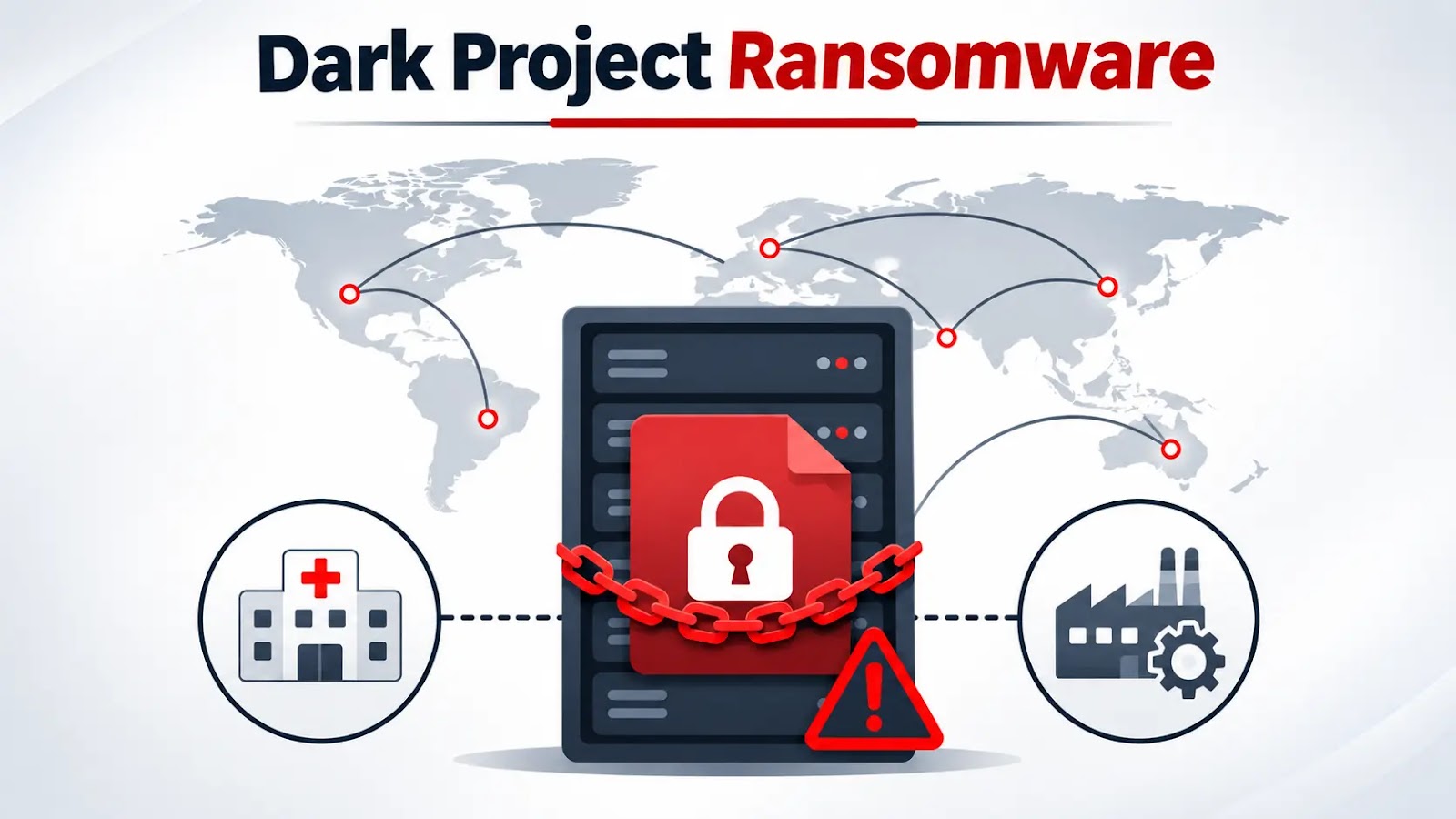
Dark Project, a nascent ransomware operation focused on financial gain, has recently come to light, presenting alarming statistics regarding its impact across various sectors. According to a threat intelligence snapshot, the group has claimed 38 victims spanning across eight different countries. The sectors most affected by this operation include manufacturing and healthcare, which have borne the brunt of these cyberattacks.
The operational model of Dark Project is not only to encrypt systems, but also to steal data and threaten public disclosure, effectively employing a strategy synonymous with the "double extortion" method. This approach combines direct monetary demands with the added leverage of potentially releasing sensitive information if the ransom is not paid. Furthermore, the group has implemented an affiliate program, which is pivotal for scaling their intrusions and expanding their reach.
It is important to note that the figures presented in the snapshot are based on allegations put forth through criminal infrastructure. These allegations have not yet been independently verified, raising questions regarding the accuracy and reliability of such data. The discrepancies in victim counts further emphasize the need for caution, as the Ransomware.live platform lists 40 victims. This highlights that the reported total of 38 should be viewed as an initial overview rather than an exhaustive enumeration of cases.
Diving deeper into the statistics, manufacturing has registered the highest victim count, with 12 reported incidents, while healthcare has faced seven, and the construction sector has recorded four. Collectively, these two sectors account for half of the disclosed victim information, indicating a significant focus on industries that play critical roles in everyday life and infrastructure.
In terms of payment methods, Dark Project has reportedly suggested Bitcoin as the preferred currency for ransom settlements. They have also made references to online platforms like Coinbase and Binance, but these mentions should not be misconstrued as endorsements or participatory engagement by these exchanges in the group’s activities.
The data reveals that the earliest reported activity linked to Dark Project dates back to June 2026, with four disclosures. The extent of their activity surged in August, where 20 listings were recorded. Following that, September and October saw five listings each, while November reflected four additional disclosures. As observed, the distribution of victims indicates a strong presence in the United States, which accounts for 30 organizations, followed by two in the United Kingdom. Other countries, such as Germany, Brazil, the Philippines, Turkey, Mexico, and Canada, each show one listing.
Interestingly, while public trackers highlight August as the month for initial observations, the earlier timeline provided remains uncorroborated. The established disclosure dates should not be misinterpreted as the actual dates of intrusion, as this nuance is crucial in understanding the timeline of events more accurately.
According to Gurucul researchers, the affiliate program offered by Dark Project boasts an impressive commission rate of 80%, with only 20% retained for platform services and administrative reporting. The recruitment process is structured; it involves initial contact through the messaging service Tox, followed by a vetting process, onboarding, assignment of identifiers, payload deployment, and the subsequent settlement of commissions. This structured approach signifies a well-organized operation that promises potential partners a clear pathway to involvement.
Operators within the group assume responsibility for communications with victims regarding ransom negotiations, while affiliates are tasked with the deployment of the ransomware. This division of labor signifies a strategic approach that utilizes a ransomware-as-a-service (RaaS) model, which further entrenches the operational efficiency of Dark Project.
Dark Project’s modus operandi includes a range of tactics for initial access to systems, such as phishing, exploiting exposed Remote Desktop Protocol (RDP), and using compromised credentials gleaned from infostealer logs or access brokers. The attack vectors utilized are varied and sophisticated, encompassing techniques associated with lateral movement and maintaining persistence within compromised networks.
This alarming rise of Dark Project is illustrative of a broader trend in the ransomware landscape, as operators refine their methods and broaden their impacts. With the advent of their affiliate program and the dual threat of encryption and disclosure, organizations across various sectors must remain vigilant and proactive in addressing potential vulnerabilities. The cybersecurity community must continually adapt to these evolving threats, striving to mitigate risks before they can manifest into significant breaches or data exposures.