
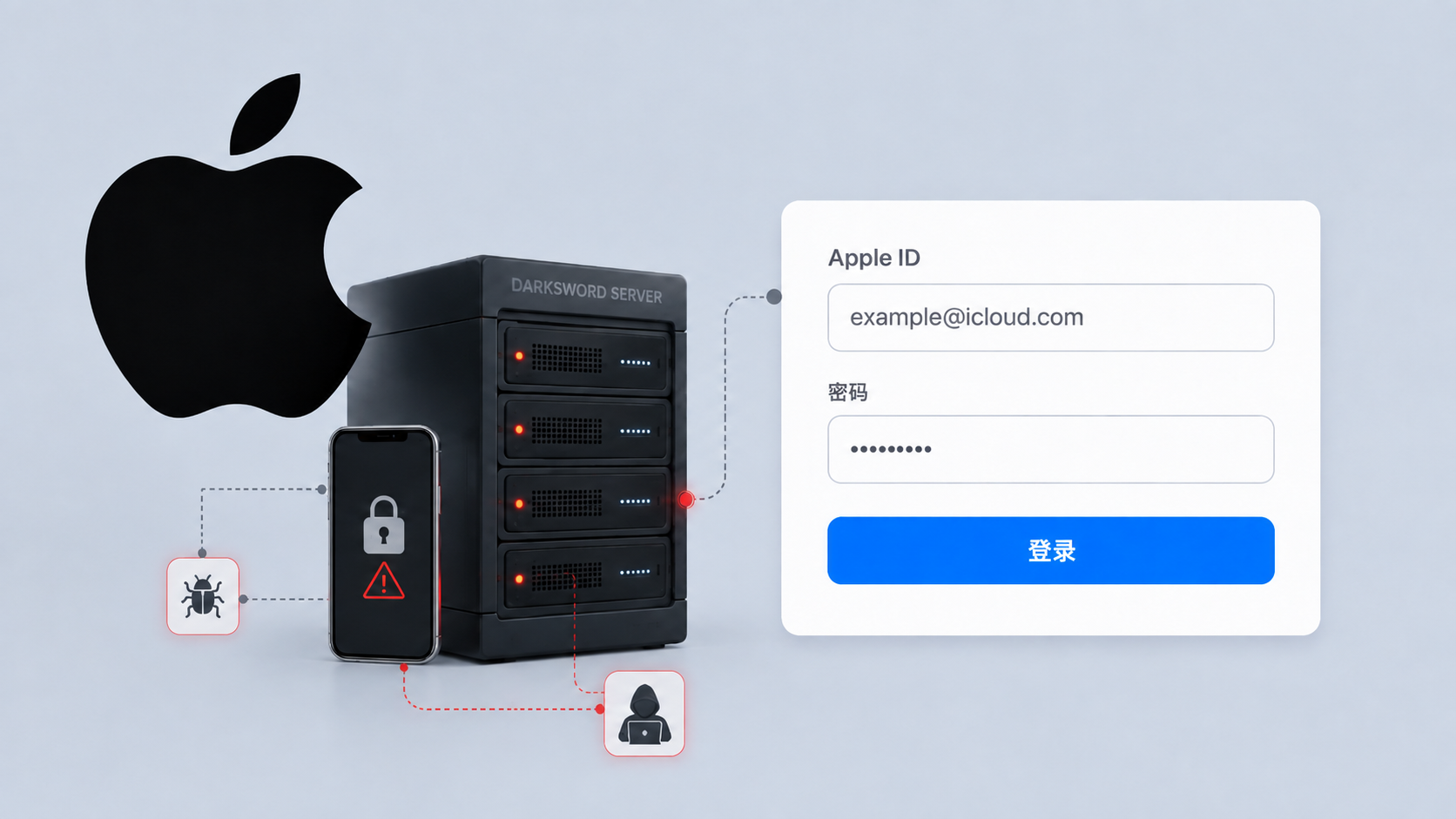


DarkSword Exposes Millions to iOS Credential Theft Through Revealed Exploit Chain
Recently, the cybersecurity community has raised alarms over a newly discovered exploit chain known as DarkSword, which poses significant risks to millions of iPhone users. Initially revealed by major players like Google’s Threat Intelligence Group, iVerify, and Lookout, the exploit set is a sophisticated tool that combines one-click Safari exploitation with a strikingly realistic fake Apple ID login page. This alarming blend creates a seamless pathway for potential device compromises and the theft of sensitive user credentials.
The exploit kit, which utilizes a JavaScript-based chain, comprises multiple vulnerabilities and was later leaked onto GitHub, where its code became publicly accessible. The leak indicated the presence of various security weaknesses, including PAC bypass and sandbox escape strategies, prompting serious concerns about user security. In a disturbing turn of events, it has been found that at least seven to eight different operators are now leveraging this leaked chain, opting for reuse instead of creating their own codes. This is evident from the similarities in the staging-page hashes and the presence of unchanged Russian-language code comments that have been lifted directly into live operations.
Among the most worrisome operators is a group that speaks Chinese and manages over a hundred web properties across regions including Hong Kong, Japan, the United States, and several European countries. Most of their lures masquerade as fake AWS sign-in pages, but in a new and particularly concerning trend, they have begun to utilize an Apple ID login page. This fake page is co-hosted on infrastructure associated with DarkSword, effectively intertwining their deceptive operations.
Investigation into this vulnerability did not even necessitate access to the source code; researchers were able to deduce the full operational capabilities through analysis of live infrastructure. They employed methods like hashing panel bodies and exploit files, tracking which components remained stable as domain names and hosts changed frequently.
Efforts to track DarkSword have been considerably aided by Censys, which uses a specific threat label to identify and monitor the kit. As of late July 2026, this label encompasses 27 hosts and 180 separate web properties, although this number fluctuates as operators continuously create and dismantle domains. While the Censys label provides initial insight, researchers have taken additional steps, employing exact SHA-256 body hashes to monitor panels and exploit staging pages that may have initially escaped detection.
Currently, the DarkSword admin login panel has been identified across seven distinct hosts in places like Hong Kong, Japan, and the United States. This panel operates on unconventional ports such as :3000, :8443, and :8888, presenting Chinese-language interface elements for user credentials. Alarmingly, while the panel hash has remained consistent, the underlying host infrastructure shows rapid turnover, changing within one week. This unique characteristic makes the body-hash equality a more reliable measure for cybersecurity professionals monitoring the cluster.
Perhaps the most alarming revelation is that one of the newest operators has been found hosting an Apple-themed credential-harvesting page that appears to be a legitimate “iCloud – Apple” sign-in prompt, complete with localized labels in Chinese. This page is co-hosted on the same IP address as DarkSword’s staging pages, demonstrating the seamless integration of credential theft and exploit staging in their operations.
According to Censys researchers, DarkSword functions as a commercial iOS exploit kit that is notably efficient, chaining together multiple vulnerabilities across WebKit, the GPU, the dynamic linker, and the kernel to gain complete access to iPhones operating on iOS versions 18.4 through 18.7. Previous iterations of DarkSword’s approach featured various impersonations of AWS consoles or generic Chinese web services. However, this new tactic integrates Apple-branded phishing directly into exploit staging methods, indicating a worrying evolution in their strategy.
From the victim’s perspective, the attack process is alarmingly seamless. Users unwittingly land on what appears to be a legitimate Apple ID login page or a cloud console. Behind the scenes, however, the server quietly returns a known exploit staging page, utilizing an iframe that loads the necessary scripts to execute the DarkSword vulnerabilities.
Further engagements with the exploit reveal that the facilitated process leading to credential exfiltration is equally sophisticated. The malware is designed to extract keychain data, iCloud information, and Wi-Fi credentials before forwarding this valuable data to collector endpoints. Users’ files can be monitored through the DarkSword admin or C2 Control Panel logins, creating significant privacy and security concerns.
In conclusion, the dissemination of the DarkSword exploit kit exemplifies a troubling new phase in cybercriminal activities targeting iOS devices. With numerous operators leveraging this toolkit, iPhone users worldwide face an escalating risk of credential theft and device compromise. The need for enhanced cybersecurity measures and user awareness has never been more pressing, as the ramifications of these exploits extend far beyond individual victims, threatening the very foundation of digital trust and security.