


Dell Conference Speakers Say 67% of AI Innovation Is Running Outside the Cloud
By Rahul Neel Mani
May 19, 2026
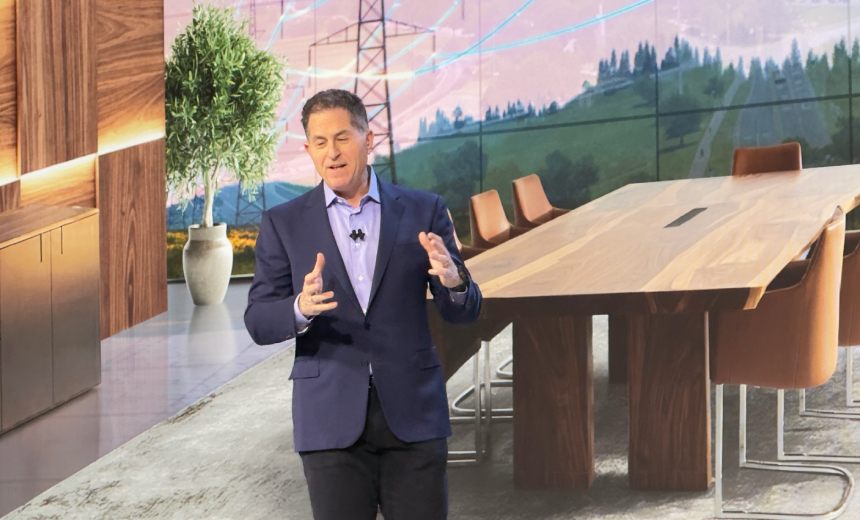
At the recent Dell Technologies World 2026 conference held in Las Vegas, a significant discussion emerged surrounding the future of artificial intelligence (AI) and its execution within enterprise settings. Michael Dell, the founder, CEO, and chairman of Dell Technologies, stressed a pivotal revelation in his keynote address: a staggering 67% of AI workloads are currently processed outside of public cloud infrastructures. This perspective challenges the prevalent narrative that positions cloud environments as the primary venue for enterprise AI.
Dell’s insights raise critical questions about the prevailing assumptions surrounding AI innovations and investments. He predicted a robust investment of up to $4 trillion in AI infrastructure by the year 2030. This forecast suggests a broader shift in how enterprises will manage their AI workload, emphasizing the need for tailored infrastructure that is more aligned with the unique demands of various organizations. The statistic that a significant majority of AI implementations occur outside regular cloud services confronts the conventional wisdom regarding cloud dependency in AI capabilities.
The Execution Gap: A Major Concern
During his address, Dell articulated that the core issue many companies face isn’t the ambition to implement AI but the practicality of actualizing those ambitions. There has been an industry-wide preoccupation with pilot projects and demonstrations, which has resulted in numerous stalled initiatives over recent years. These setbacks are often attributed to two crucial factors: the availability and quality of data. The lack of AI-ready data infrastructure has rendered many businesses unable to realize the full potential of even the most sophisticated AI models.
In this context, Dell’s focus shifts into a notable systems-level argument. He posits that AI models can be rendered ineffective if they are hampered by an inadequate data ecosystem. Critical data—whether operational, regulated, or proprietary—often resides in on-premises legacy systems rather than in the cloud. This implies that a new approach is needed, one that allows enterprises to harness AI capabilities without solely relying on cloud infrastructure.
Dell advocates for an architectural model that positions AI closer to where the data is stored, rather than transferring massive datasets to AI applications. Though this principle is not new, implementing it on a large scale in the domain of agentic AI is an innovative challenge.
Key Announcements and Innovations
During Dell Technologies World, a range of announcements revealed a cohesive strategy for enhancing AI deployment across multiple layers of enterprise infrastructure. The introduction of the Deskside Agentic AI platform stands out as a transformative development. This initiative signals a shift in the economic feasibility of agentic AI. Dell argued that enterprises could potentially recover costs associated with public cloud API usage within three months, proposing a model that could mitigate the rapidly escalating expenses of relying solely on cloud-based AI solutions.
Further innovations highlighted by Dell included enhancements to the Dell AI Data Platform, which aims to optimize the effective use of data through indexing billions of unstructured files and implementing GPU-accelerated analytics. These improvements address the underlying issue of data governance and preparation—a critical area where many AI efforts typically falter.
At the infrastructure level, notable advancements with Dell PowerRack, PowerStore Elite, and PowerEdge servers were showcased, providing bespoke solutions tailored for evolving AI workloads. These offerings target real operational challenges, such as storage refresh cycles and vendor lock-in, showcasing Dell’s commitment to addressing practical issues faced by enterprises.
Strategic Partnerships: Expanding the Ecosystem
Dell’s recent partnership announcements signify a proactive strategy to address traditional on-prem AI deployment challenges. Collaborations with industry titans such as Google, OpenAI, Palantir, and Hugging Face represent deliberate efforts to enhance access to advanced models while ensuring that data governance and security measures are upheld.
The ongoing critique of on-prem AI deployment often cites its perceived limitations in agility and access to cutting-edge models. Dell’s approach counters this notion by enabling businesses to leverage state-of-the-art models within their secure infrastructures. By allowing firms to host models behind their own firewalls, the advantages typically associated with cloud-based solutions can be reassessed.
However, it is essential to note that many of these partnerships are still in nascent stages, making the framework of Dell’s AI Ecosystem an ongoing endeavor rather than a fully realized marketplace.
Customer Success Stories: Real-World Evidence
Dell presented compelling case studies from prominent enterprises like Eli Lilly, Samsung Electronics, and Honeywell, illustrating the tangible benefits of robust infrastructure deployments. For instance, Eli Lilly operates over 1,000 GPUs at nearly 2 terabytes per second of read bandwidth for drug discovery, showcasing the critical role of scalable AI in expediting the delivery of medications. Meanwhile, Samsung has integrated AI across its semiconductor operations, aiming to transition from mere automation to genuine operational intelligence—a transformation crucial for the global tech supply chain. Honeywell’s deployment of AI at scale across industrial assets underscores the practical applications of AI in sectors often underestimated in discussions of cloud-native solutions.
Implications for CIOs and the Future Landscape
In conclusion, the insights shared during Dell Technologies World 2026 suggest a pivotal transition for Dell from being seen merely as a hardware vendor to emerging as a vital infrastructure provider with a complete architecture for AI deployment. However, as highlighted by Dell, successful execution requires disciplined data infrastructure practices—a challenge many enterprises currently struggle with.
As the industry grapples with the realities of AI deployment, the focus seems to be shifting from cloud-centric models to hybrid and on-prem solutions that integrate data with compute capabilities. This shift, underscored by Dell’s recent announcements, portrays an evolving landscape where enterprises are increasingly empowered to dictate their AI deployment frameworks based on their unique needs, rather than being dictated to by cloud providers.