


Agentic AI,
Artificial Intelligence & Machine Learning,
Next-Generation Technologies & Secure Development
Retailer Uses Adobe Platform, Agentic AI to Boost Engagement, Capture Customer Data
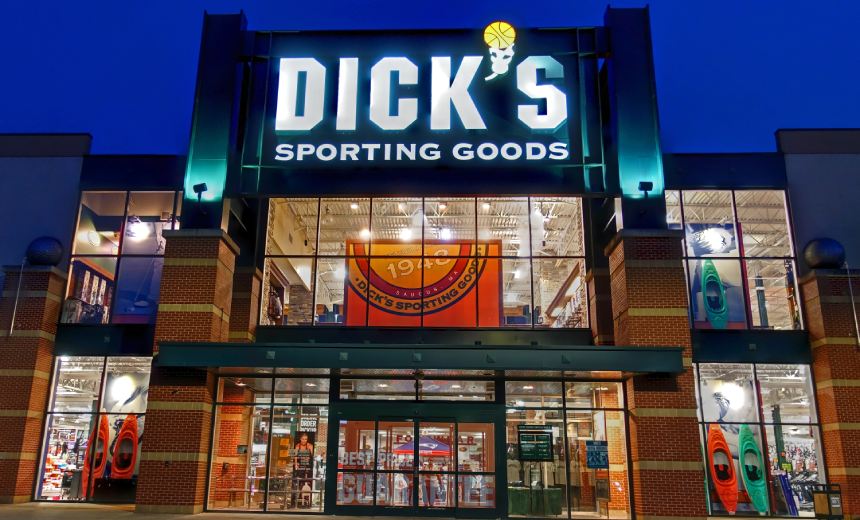
In February 2026, Dick’s Sporting Goods achieved a notable milestone as it temporarily climbed to the top three positions on Apple’s App Store free-download chart. This surge saw it surpass competing applications like Google’s Gemini, lagging only behind the prominent ChatGPT and Claude from Anthropic. This spike in downloads can be attributed to the controversy surrounding Anthropic’s federal contracts, which piqued public curiosity and led to increased traffic towards Claude. Consequently, applications adjacent to it on the chart, including Dick’s Sporting Goods, also enjoyed a boost in downloads, albeit without undertaking any significant promotional efforts to escalate their ranking.
See Also: AI Agents Introduce a New Insider Threat Model
However, this ranking surge shouldn’t be viewed purely as an accident. It reflected a calculated outcome derived from the app’s existing install base, impressive engagement metrics, and its strong relevance to the retail category, which ultimately allowed it to capture the attention of consumers more effectively.
Three months later in June, the retailer introduced an AI assistant named “Coach by Dick’s,” developed on Adobe’s Brand Concierge platform, which rolled out within the mobile application. This marks a major advancement in their long-standing infrastructure investment strategy, highlighting that Coach by Dick’s is not a standalone initiative but rather the most tangible representation of the company’s broader AI strategy that has been evolving over the years.
The Flywheel Underneath
To enhance customer engagement, Dick’s Sporting Goods initiated ScoreCard, a free loyalty program allowing customers to earn one point per dollar spent, redeeming a $10 reward once they reach 300 points. This simple yet effective loyalty scheme is augmented by a standout feature called Move, a fitness tracker integrated into the app. Move syncs seamlessly with popular health apps, allowing users to earn points by achieving activities such as step-count goals or active minutes—regardless of whether they have made a purchase. This initiative allows Dick’s to collect valuable data not typically gathered during standard transactions.
The Move feature effectively transforms the app from merely a transactional interface into a broader behavioral tracker, incentivizing consumers to engage even on days they do not plan to shop. Furthermore, Dick’s operates another app named GameChanger, designed to manage youth sports teams, overseeing aspects like scheduling, live scoring, statistics, and video streaming. This platform is not solely focused on facilitating product sales; instead, it is aimed at gathering critical data about youth participation in sports—covering which sports are played, frequency, and duration of engagement. The company has reported over 6.5 million unique active users on GameChanger, with daily active users showing an impressive year-over-year increase of 28%, reaching about 2.2 million. Users of GameChanger have proven to be among Dick’s most engaged and valuable customers.
By effectively merging these components, Dick’s Sporting Goods has established a comprehensive understanding of customer involvement in sports that goes beyond mere purchase history. This extensive dataset forms the essential foundation upon which the Coach platform is built.
What the Coach App Is and Isn’t
Coach is powered by Adobe Brand Concierge, an offering introduced during a partnership announced at Adobe Summit in April 2026. It brings forth a conversational interface within the app, soliciting information about a user’s specific sport, skill level, and individual goals, subsequently offering tailored product recommendations, training advice, and purchasing guidance. In addition, Dick’s has embraced Adobe’s broader suite of tools for collecting behavioral data and content creation at scale.
Importantly, the functionality offered by Coach is neither a generic out-of-the-box solution nor a purely internal innovation. Instead, it involves licensing Adobe’s agentic AI platform and customizing its capabilities to suit Dick’s own product catalog and content requirements.
While the numbers pertaining to user adoption are currently not available—given that Coach was only launched recently in June—all indications thus far are aspirational, outlining intended features and the anticipated evolution of its functionality. Dick’s Sporting Goods’ CTO, Vlad Rak, remains optimistic. He envisions that the AI capabilities harnessed from their extensive expertise in sports will become a cornerstone of the company’s overall strategy across various channels, ranging from physical stores to digital platforms.
The CMO, Emily Silver, emphasizes that scaling Coach is a critical priority. “This allows us to amplify our unique selling propositions—our people, our perspective, and our deep-rooted connection to sports—while providing trusted recommendations through our app in a personalized manner,” she stated. By the time Coach was rolled out, an infrastructural strategy had already been laid in place. During the Q3 2025 earnings call, CEO Lauren Hobart distinctly articulated the company’s focus on enhancing the app experience as central to its e-commerce strategy. She elaborated that while Coach is aligned with this vision, it does not solely define it, creating a consistent strategic narrative, even if it has yet to yield tangible outcomes.
The Data Architecture Question
For tech leaders, a more pertinent discussion arises when comparing Dick’s approach to AI integration with Nike’s focus on developing proprietary platforms. Over the years, Nike has invested significantly in building an in-house direct-to-consumer infrastructure, citing a preference for proprietary control. Conversely, Dick’s has opted to license an AI vendor’s platform, enabling quicker deployment while integrating it seamlessly with internal datasets. Both strategies exhibit validity and represent varying focuses regarding the source of competitive advantage—whether rooted in the model layer or the data layer.
A crucial takeaway from this analysis points to Dick’s investment in the data layer. While the AI assistant is replaceable, the unique blend of purchase history, fitness behavior, and youth sports engagement data provides a competitive edge that is not easily replicable by industry rivals, regardless of the AI provider they might choose.
However, concerns regarding data governance within the organization remain unaddressed publicly. The integration of purchase data, biometric fitness data, and youth sports participation into a singular personalized system raises potential risks that differ from traditional retail applications. Presently, Dick’s has not clarified the boundaries surrounding consent for these data sources or whether data from GameChanger will feed into the same systems as Coach. Addressing such critical questions is imperative before the system’s broader rollout occurs.
What to Watch
The deployment of Coach has only just begun, and significant metrics remain unavailable. Analysts and stakeholders will be keen to monitor whether engagement within the app increases and if conversion rates for purchases guided by Coach surpass those from standard browsing. Additionally, there will be anticipation regarding the potential for Dick’s to extend the assistant’s functionality into other services such as fittings, training plans, and integrations with GameChanger, rather than restricting it merely to product recommendations. The horizon is still unclear.
At this juncture, Coach by Dick’s epitomizes how a mid-sized retailer has strategically accumulated a behavioral dataset in the background. Traditionally, it is expected that AI vendors request clients to supply such data. However, with Coach, Dick’s aims to ascertain whether the actual value lies in this rich dataset, rather than the chatbot functionality itself, marking a new chapter in its technological evolution.