
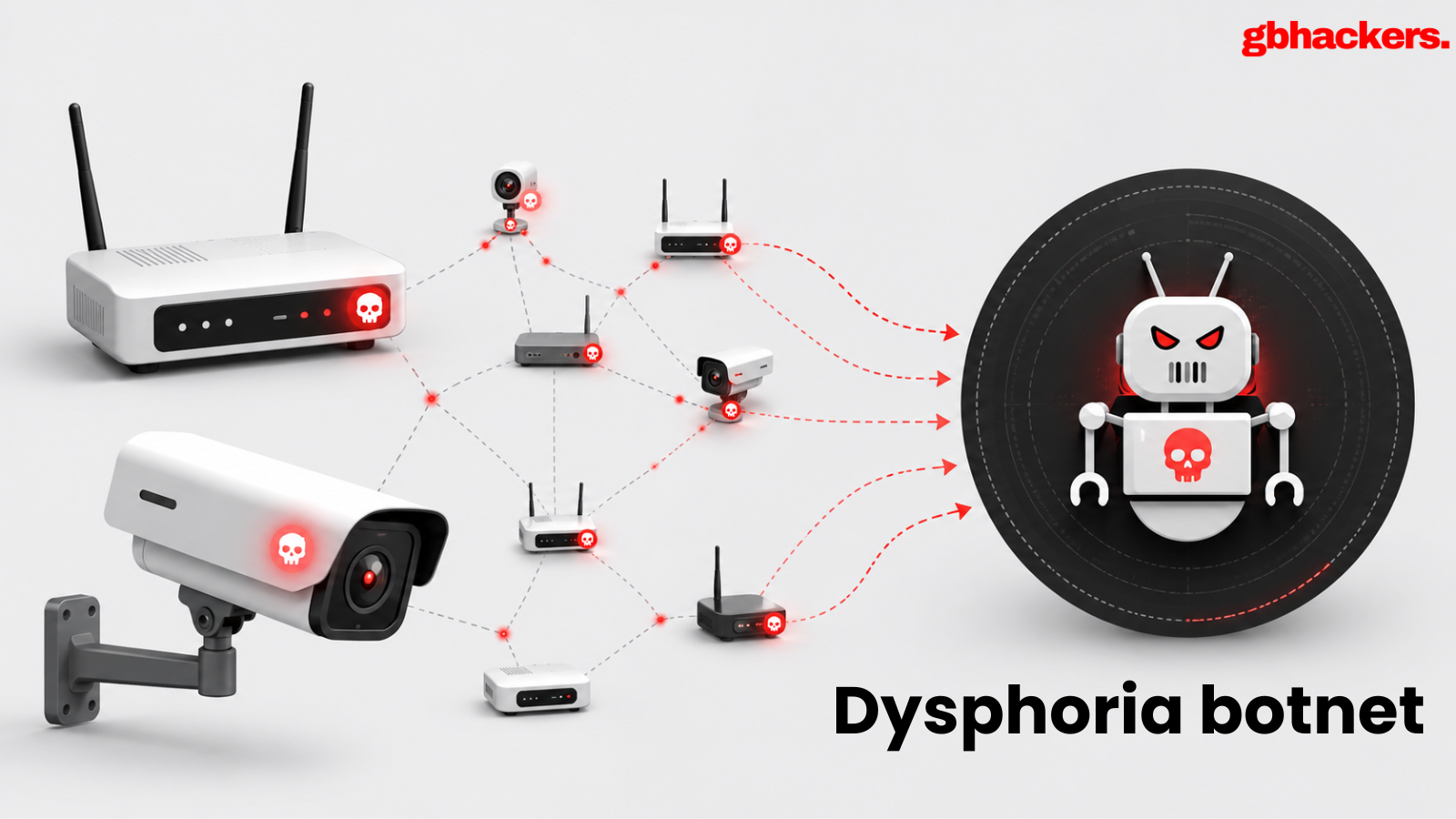
Dysphoria Botnet Emerges as Significant Threat in the Internet of Things (IoT) Landscape
The rapidly evolving landscape of cyber threats has witnessed the emergence of the Dysphoria botnet, which is now being characterized as a major hazard within the Internet of Things (IoT) domain. A recent Shadowserver Special Report has revealed that approximately 296,000 devices have been compromised, marking a significant escalation in the botnet’s scale and impact.
Targeted Devices
Dysphoria’s operation primarily focuses on a diverse array of internet-connected equipment, including exposed routers, gateways, IP cameras, and various types of embedded Linux systems. The botnet has effectively converted these inadequately secured devices into a distributed platform capable of launching Distributed Denial of Service (DDoS) attacks. Additionally, it is increasingly being exploited for residential proxy and relay services, showcasing an alarming breadth of functionality that extends beyond mere DDoS operations.
The significant scale of Dysphoria stems from its ability to exploit device categories that often fall outside traditional endpoint management strategies. Common household items such as consumer routers, digital video recorders (DVRs), surveillance cameras, and small-office gateways typically remain internet-facing for extended periods. Many of these devices operate on outdated firmware and feature vulnerabilities, including the exposure of Telnet or SSH protocols and maintaining weak or default login credentials.
Exploitation Techniques
Shadowserver’s research has established a direct correlation between Dysphoria’s activities and the exploitation of well-known vulnerabilities affecting numerous router models, gateways, cameras, repeaters, and other embedded Linux products. The botnet operators leverage these weaknesses through various means, including password guessing and manipulation of known remote-code execution vulnerabilities, thereby silently recruiting these vulnerable systems into their expansive botnet.
The recent dataset compiled by Shadowserver indicates a sharp increase in the number of affected devices, presenting a larger target for defenders aiming to mitigate the threat. The report categorizes all related events as CRITICAL, underlining the severe risk that an infected device poses—such risks range from remote involvement in volumetric attacks to the concealment of command-and-control (C2) infrastructure and relaying malicious traffic through compromised networks.
Unique Resilience Architecture
What sets Dysphoria apart from traditional IoT DDoS botnets is its unique resilience architecture. Dysphoria employs blockchain-backed naming systems such as Ethereum Name Service and Solana Name Service, which serve to resolve the botnet’s command-and-control infrastructure. This method complicates attempts at seizing control or disrupting operations, as these blockchain names allow operators to alter associated records without relying on conventional registrar-hosting workflows.
Dysphoria’s ability to exploit operational gaps through methods like password guessing makes it particularly insidious. It was reported that the active population of this botnet exceeds 200,000 devices, with researchers detecting a one-day peak of 239,000 active bots within a foreign context. Additional observations reveal that the botnet employs infected devices as intermediaries, effectively masking the actual controllers and complicating efforts to trace backend infrastructure.
Implications of Relay Functionality
The sophistication of Dysphoria escalates with its newly integrated relay functionality. A variant of the malware, captured in late June, demonstrated a departure from conventional DDoS operations to solely functioning as a proxy node. This capability allows the botnet to scan for Universal Plug and Play (UPnP)-enabled gateways within local networks and create inbound access through router port mapping. Researchers have noted an instance where the malware opened port 155, facilitating external clients to traverse through infected hosts to reach other destinations.
This transformation of compromised residential and small-business devices into an on-demand proxy layer is particularly concerning. It enables threat actors to anonymize their malicious activities, circumvent IP-based restrictions, and potentially mask C2 servers behind victim-owned addresses.
Recommendations for Network Defenders
For those tasked with defending networks, the Shadowserver Special Report serves as a retrospective and high-value alert rather than a standard daily update. While the report is timestamped for distribution on August 12, 2026, it provides precise, up-to-date observations for each compromised IP address.
The dataset encompasses vital information, including IP addresses, port numbers, protocols, geographic data, device vendor models, firmware versions, and timestamps for the first and last observed instances of infection. Armed with this detailed context, Internet Service Providers (ISPs), national Computer Security Incident Response Teams (CSIRTs), enterprises, and managed service providers can prioritize their remediation strategies and identify patterns of ongoing exposure.
Immediate response actions should include isolating suspected devices, changing all administrative, Telnet, and SSH credentials, disabling unnecessary remote administration protocols, applying vendor firmware updates, and replacing any devices that have reached their end-of-life. Additionally, networks must scrutinize router port-forwarding rules and investigate any unexplained outbound connections or unusual traffic relays.
The Changing Nature of IoT Threats
The proliferation of the Dysphoria botnet exemplifies how IoT compromises are evolving beyond purely brute-force-driven DDoS capacities. Its emergence as a decentralized relay and residential proxy ecosystem highlights the pressing need for robust security measures. Every unpatched edge device could become an asset for attackers while simultaneously posing a significant liability for the networks that own them. This intricate weave of vulnerabilities necessitates a comprehensive approach to cybersecurity that safeguards not only individual devices but the broader infrastructure interconnected through them.