
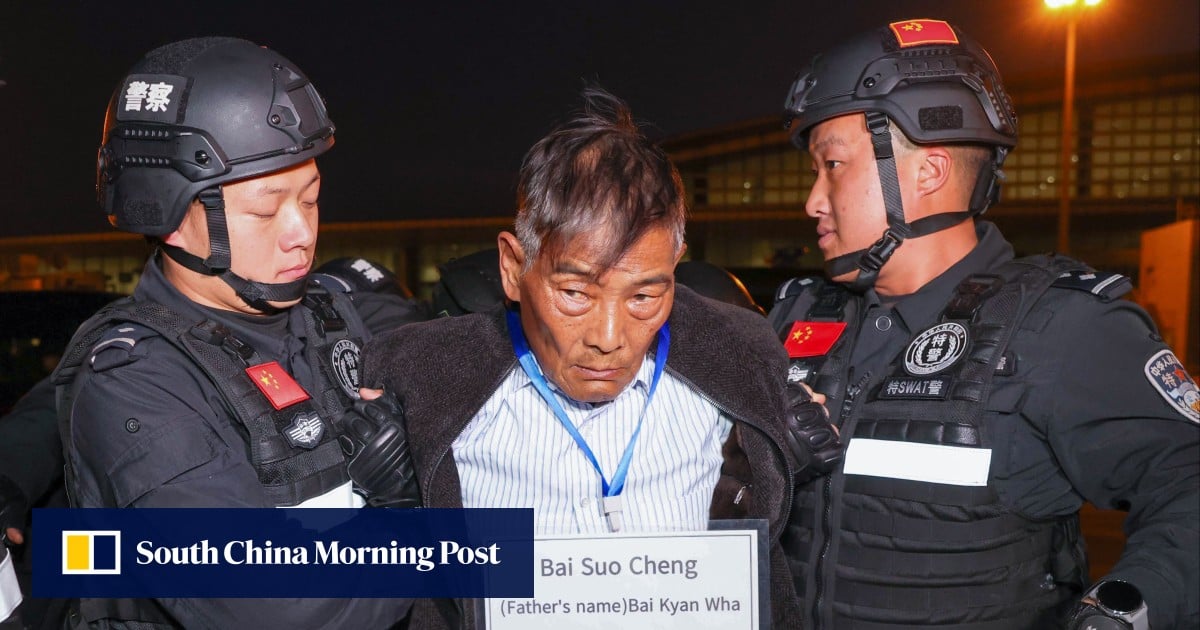


Myanmar officials handed over 10 suspected cybercriminals to China on Tuesday as part of a groundbreaking move to combat online fraud. The suspects included six alleged leaders of cybercrime syndicates and four other individuals considered “major criminal suspects” in a crackdown against online fraud that Beijing initiated last year.
Among the suspects were Bai Suocheng, a former chairman of northern Myanmar’s Kokang self-administered zone, his son, and daughter. Members of two other alleged crime families, the Wei and Liu families, as well as Xu Laofa, who is accused of leading another fraud gang, were also extradited to China, according to the Chinese Ministry of Public Security.
The Chinese authorities had named the 10 suspects on Beijing’s wanted list in December, offering rewards of up to 500,000 yuan (US$70,000) for any information leading to their arrests. The Ministry said the suspects had vigorously organized and established fraudulent hideouts and openly armed themselves to protect their criminal activities.
The crimes the suspects are accused of include intentional murder, intentional injury, and illegal detention. Since Myanmar and China began their crack down in September, Myanmar has handed over 44,000 fraud suspects to China, including 171 core members and financiers linked to the criminal enterprises.
A Beijing employee expressed that the progress reflected the “historic and significant” results of their collaborative efforts in fighting these crimes and dealt a “heavy blow to arrogant overseas fraud syndicates.” Beijing has been intensifying measures to tackle the rise in online fraud cases that have prompted growing concern from the public. The scams often lure Chinese nationals to northern Myanmar, where they are then coerced into taking part in investment fraud, romance scams, and extortion on behalf of the syndicates.
The money generated from the scams is often funneled through casinos and converted into hard-to-trace cryptocurrencies. Beijing has increased its focus on apprehending Chinese fugitives believed to be at the top of the criminal enterprises. In November, members of the Ming crime family, whose leader owned a large telecommunications scam compound in Kokang, were arrested.
The head of the family, Ming Xuechang, also known as Myin Shaw Chang, is believed to have committed suicide while on the run from Myanmar police, according to Chinese authorities. In November, China’s assistant foreign minister Nong Rong visited Myanmar and called for joint efforts in tackling cross-border crime and maintaining border stability.
Since October, Myanmar’s military regime has faced attacks in the country’s borderlands as an alliance of ethnic minority insurgent groups and pro-democracy fighters have joined forces to challenge the junta’s rule. Amidst these challenges, the extradition of these cybercrime suspects to China is seen as a significant step in addressing transnational crime and fostering stronger collaboration between the two countries in addressing online fraud and cybercrime.