
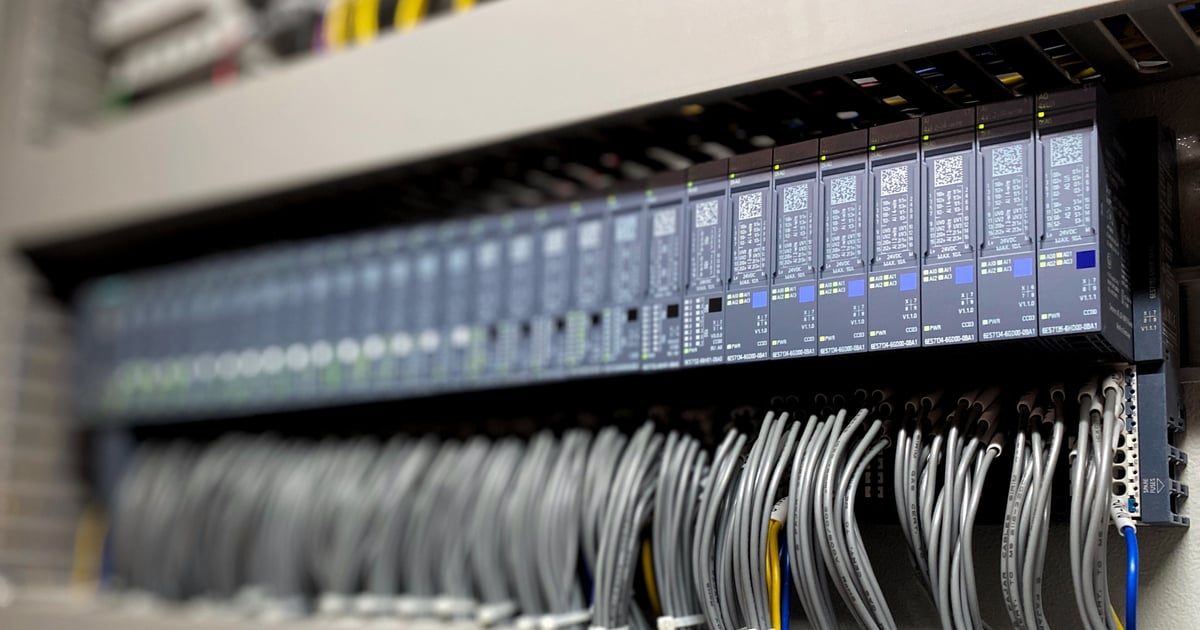
Researchers from the Georgia Institute of Technology have unveiled a new type of malware that poses a significant threat to industrial control systems (ICS) in critical infrastructure sectors. This innovative malware targets programmable logic controllers (PLCs) with embedded Web servers, providing attackers with a means to launch remote attacks that could have disastrous consequences.
Traditionally, malware targeting PLCs and ICS systems has required attackers to have prior physical or network access to the target environment. Moreover, previous malware strains have been platform-specific and easily erasable through factory resets. However, the new Web-based PLC malware developed by the Georgia Tech team represents a paradigm shift in the field.
Unlike conventional PLC malware that infects firmware or control logic, the new Web-based malware attacks the front-end Web layer of PLCs using malicious JavaScript. The researchers, including Ryan Pickren, Tohid Shekari, Saman Zonouz, and Raheem Beyah, highlighted the advantages of this approach, such as platform independence, ease of deployment, and higher levels of persistence.
Despite these differences, the cyberattack outcomes associated with the new strain mirror those of past successful PLC attacks. For example, the infamous Stuxnet campaign, attributed to the US and Israeli governments, targeted Siemens PLCs to sabotage Iran’s Natanz uranium-enrichment facility. Similarly, recent incidents like the BlackEnergy attack on Ukraine’s power grid, the Triton/Trisis attack on a Saudi petrochemical plant, and the INCONTROLLER malware targeting Schneider and Omron PLCs underscore the real-world impact of such cyber threats.
In a proof-of-concept cyberattack scenario, the Georgia Tech researchers demonstrated how a threat actor could execute a Stuxnet-like attack on a widely used PLC controlling an industrial motor. By leveraging the PLC’s Web-based interface for remote monitoring and control, the attacker could remotely inject malicious code and disrupt the underlying machinery.
One particularly concerning aspect of the Web-based PLC malware is its ability to inflict physical damage on industrial equipment, manipulate admin settings for further compromise, and steal sensitive data for espionage purposes. The malware resides in PLC memory and leverages browser-based credentials to interact with the PLC’s legitimate Web APIs, enabling attacks on real-world machinery.
The researchers emphasized that this type of malware is easier to deploy and control compared to traditional PLC malware, making it a versatile and potent tool for malicious actors. With its platform-agnostic nature and potential for devastating outcomes, the Web-based PLC malware represents a significant cybersecurity risk for critical infrastructure worldwide.
As the threat landscape continues to evolve, organizations operating ICS and PLCs must remain vigilant against emerging cyber threats. Implementing robust security measures, conducting regular vulnerability assessments, and staying informed about the latest cybersecurity developments are essential for safeguarding industrial control systems from malicious attacks. The research carried out by the Georgia Tech team serves as a stark reminder of the urgent need to strengthen cybersecurity defenses in critical infrastructure sectors to protect against potentially catastrophic cyber incidents.