
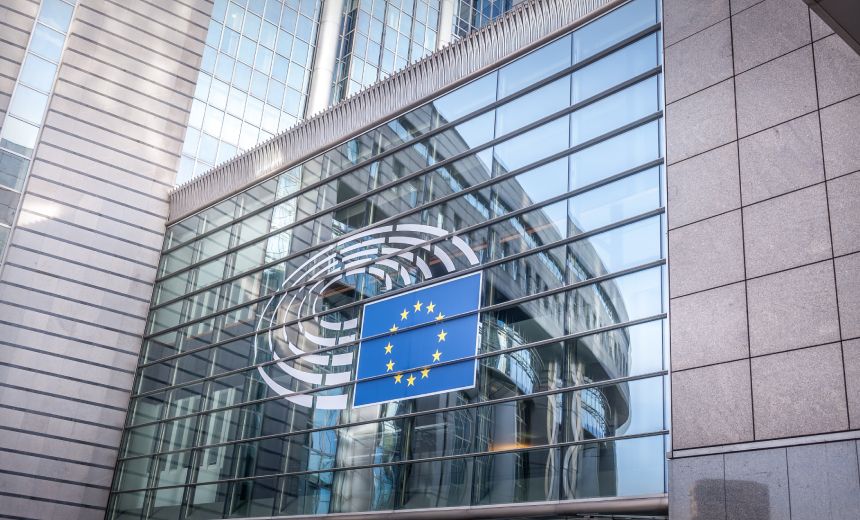


The European Union Is Cutting Ties With US Tech Companies
In a strategic move toward enhancing "digital sovereignty," the European Commission has awarded a substantial cloud contract worth 180 million euros (approximately $213 million) to four European cloud providers. This initiative aims to bolster the EU’s independence by establishing a framework for sovereign cloud services. The selected providers include Luxembourg’s Post Telecom, Germany’s StackIT, France’s Scaleway, and Belgium’s Proximus. This contract, set to run for six years, allows the Commission, along with the European Parliament and various agencies, to procure cloud services from these domestic entities.
Commission spokesperson Thomas Regnier emphasized that these providers align with the Commission’s goals of achieving digital sovereignty, which encompasses core values such as transparency, environmental sustainability, technological openness, and security. Importantly, while this contract is portrayed as a step toward fostering European digital autonomy, the Commission clarified that the initiative is not designed to completely exclude technology from U.S. companies.
One noteworthy aspect of this arrangement is that Proximus collaborates with S3NS, a venture formed between Google Cloud and the French aerospace-and-cybersecurity firm Thales. This indicates that, under certain strict regulatory frameworks, the use of non-European technologies can still satisfy the minimum sovereignty criteria stipulated by the Commission. To qualify for this contract, providers needed to demonstrate rigorous assurance levels that limit the control of non-European entities over the technologies or services they offer.
This recent development comes in the wake of significant security concerns surrounding U.S.-based cloud services. Notably, in March, a data breach involving one of the Commission’s Amazon Web Services (AWS) accounts resulted in the theft of over 90 gigabytes of sensitive data from the Europa website platform. The data extortion group known as ShinyHunters later leaked the stolen data on the dark web. Although Amazon denied responsibility for any security lapses, the breach underscored vulnerabilities associated with reliance on foreign cloud providers.
Schwarz Group’s StackIT has made headlines in recent years as it promotes its own sovereign cloud services. Identifying itself as a "hyperscaler," StackIT aims to fill a gap in Europe where the market has been significantly dependent on U.S. counterparts. This ambition was recently reinforced through a strategic partnership with the German Federal Office for Information Security, aiming to jointly develop "highly secure and sovereign" cloud services tailored for the public sector.
The Commission’s announcement reflects broader efforts across Europe to mitigate reliance on U.S. technology companies. Decision-makers within the EU have increasingly contemplated the implications of possible political shifts in the United States, particularly amid concerns surrounding past statements from U.S. President Donald Trump regarding potential repercussions for European users of American tech services. The narrative often involves anxiety over a hypothetical "kill switch" that could render essential services inaccessible.
This trend towards "digital sovereignty" is not confined to cloud services alone. Various European governments are taking steps to distance themselves from U.S. technology in multiple sectors. For example, France’s digital affairs directorate recently transitioned from Microsoft Windows to Linux, with plans to shift the entire public sector away from non-European suppliers in categories including workstations, antivirus software, artificial intelligence, databases, virtualization, network equipment, and collaborative tools. Similarly, Denmark is executing a departure from Microsoft tools, while both the Austrian military and certain German states have adopted open-source productivity software.
Moreover, the momentum toward sovereignty has also manifested in messaging services. Politico reported that governments from France, Germany, Poland, Belgium, Luxembourg, and the Netherlands are migrating away from U.S.-based secure messaging platforms such as WhatsApp and Signal. The European Commission is also set to follow this trend later this year, as highlighted by Dutch digital minister Willemijn Aerdts, who stated, "Our communication currently often takes place via platforms over which we have no control. In a world where technology is increasingly being used as a tool of power, that poses a risk.”
Ultimately, this move toward digital sovereignty represents a significant step for the European Union as it aims to foster independence from U.S. tech giants. By supporting local providers and enhancing security standards, the EU is forging a path that emphasizes control, transparency, and sustainable digital solutions. The implications of this shift could resonate far beyond the continent, shaping international tech landscapes and prompting broader discussions about data sovereignty and control over technology. The landscape of digital communication, infrastructure, and governance is poised for a transformation that reflects the changing dynamics of global technology dependence.