
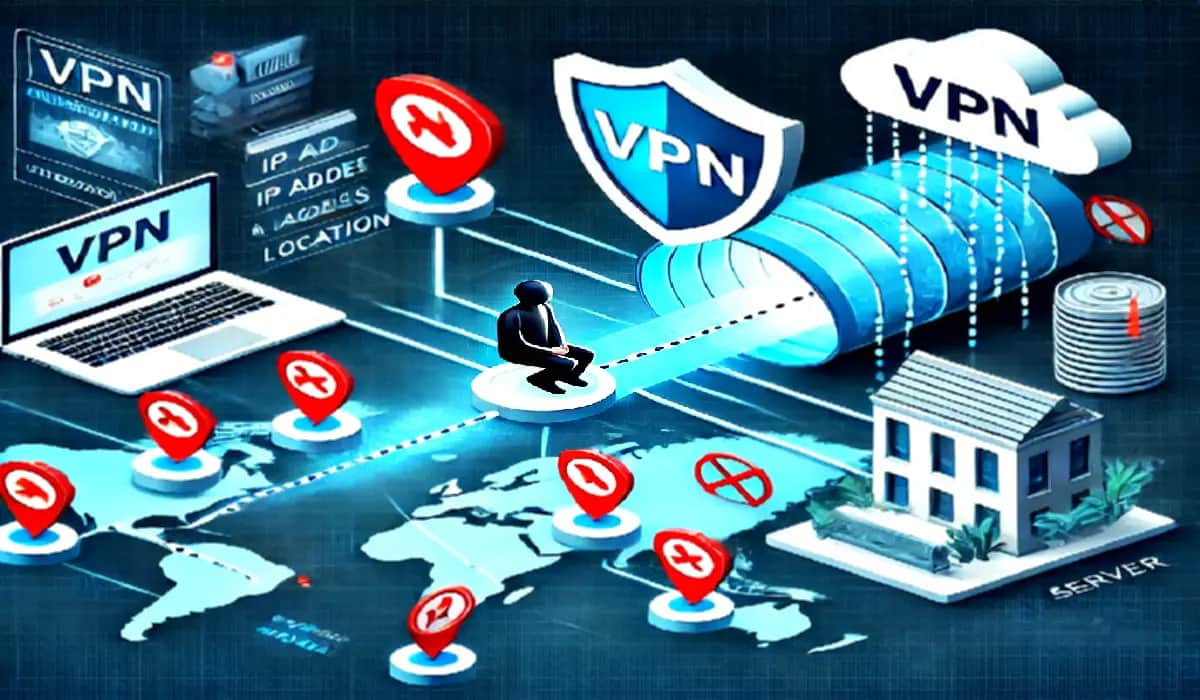
The use of Virtual Private Networks (VPNs) has become increasingly popular as internet users seek to add privacy and security to their online activities. However, the question of whether VPNs truly provide anonymity remains a subject of debate. While VPNs do offer some level of protection by masking your IP address and encrypting your internet traffic, they are not foolproof in ensuring complete privacy.
To understand why VPNs may not provide total anonymity, it’s important to consider who wants to track your online activities and why. Internet Service Providers (ISPs), government entities, browsers, cybercriminals, and websites/advertisers are among the key actors interested in monitoring users’ online behavior. ISPs, for example, can track your browsing habits and metadata, while government agencies may request activity logs from ISPs for various reasons, including national security concerns and combating crime.
Browsers like Chrome and Firefox also collect data for targeted advertising and personalization, while cybercriminals are constantly looking for ways to exploit vulnerabilities for their gain. Websites and advertisers track user data to enhance engagement and profitability, creating a multi-faceted landscape of entities seeking to monitor online activities.
While VPNs can hide your IP address and enhance privacy, they are not immune to certain tracking methods. Malware, cookies, and digital fingerprinting are techniques that can still be used to track users even when using a VPN. Additionally, entities can detect and block VPN traffic through methods such as deep packet inspection, known VPN IP addresses, port blocking, and digital fingerprinting, further limiting the effectiveness of VPNs in ensuring complete anonymity.
Furthermore, there is the issue of whether VPN providers themselves can track user activities. While VPNs promise encrypted connections and “no-logs” policies, there have been instances where providers have been found to log user data despite their claims. This raises concerns about the trustworthiness of VPN providers and the potential risks of user data being compromised or shared with authorities.
In response to these concerns, decentralized VPNs (dVPNs) have emerged as a more secure alternative to traditional VPNs. dVPNs operate on a peer-to-peer network of community-driven nodes, eliminating the reliance on centralized servers and offering greater anonymity. These decentralized networks provide enhanced privacy by default, making it harder for entities to track users and ensuring that logs cannot be collected even if compelled by authorities.
Overall, the debate around the true anonymity provided by VPNs continues, with the emergence of decentralized VPNs offering a promising solution to address the limitations of traditional VPNs. As technology evolves and consumer demand for privacy grows, the shift towards decentralized VPNs may signify a new era where true anonymity is not just an ideal but a default standard for online security.