
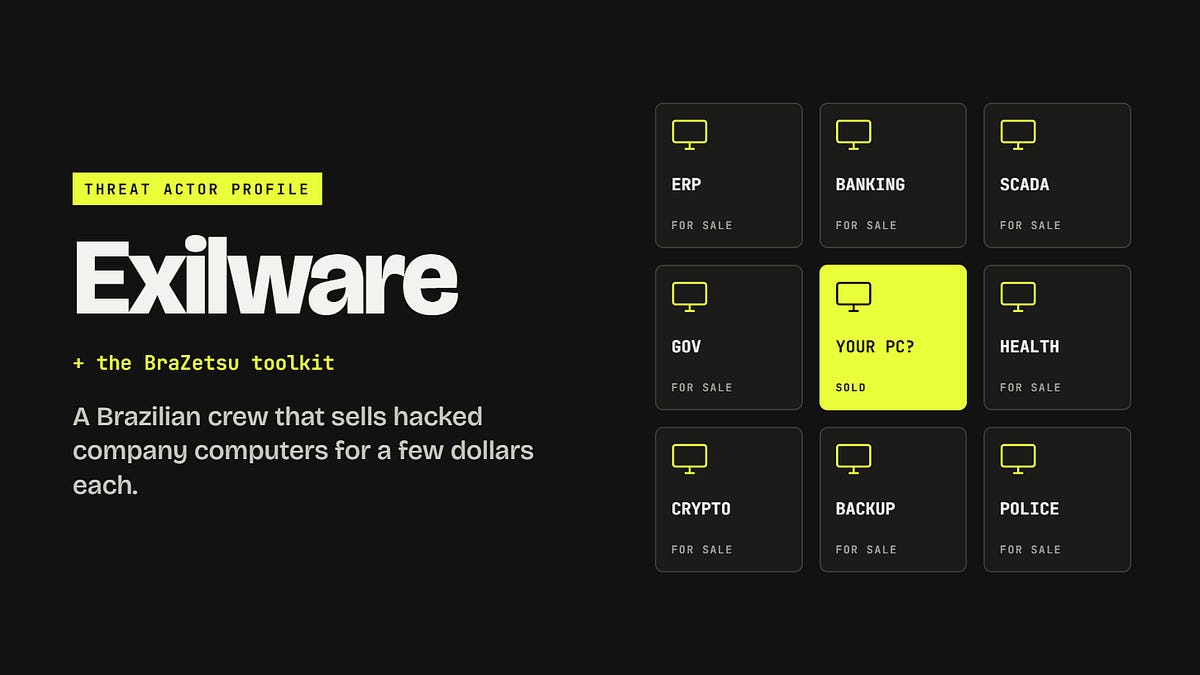


Criminal Enterprises Adapt to Modern Tech: The Emergence of the Exilware Marketplace
In a chilling development within the cybercrime landscape, a criminal syndicate operating out of Brazil has been found to be implementing an innovative strategy by infiltrating corporate computers and subsequently categorizing them based on perceived value. This gang is essentially constructing a marketplace for stolen access, where entry into this dark domain requires a mere deposit of a few dollars.
The operation, known as Exilware, diverges from conventional cybercriminal activities that typically revolve around data theft or espionage. Instead, its modus operandi involves deploying a sophisticated piece of malware named BraZetsu. This malware seamlessly commandeers Windows machines, assesses the type and prominence of the business associated with each machine, and subsequently lists these machines on an exclusive online store. This store is targeted at other criminals looking to purchase the compromised access, creating a disturbing ecosystem of cybercriminal transactions.
Recent investigations into this operation have been carried out by two dedicated research teams, shedding light on the machinations underpinning this advanced criminal enterprise. In August 2026, the first team, Group-IB, managed to expose the intricacies of both the BraZetsu malware and the associated online marketplace. Their revelations detailed not just the functionality of the malware but also the operational tactics employed by the Exilware crew.
However, mere weeks after this report went public, another research entity, Hunt.io, discovered that Exilware’s operations had already shifted to new servers. This swift relocation highlights a key characteristic of modern cybercriminals: their ability to adapt and evolve almost instantaneously in response to scrutiny. This ability to stay one step ahead of law enforcement and cybersecurity experts paints a grim picture of the evolving cybercrime landscape.
The significance of the Exilware operation extends beyond its immediate impact. It illustrates a troubling trend where cybercrime is increasingly becoming commodified, enabling various actors within the digital underworld to capitalize on stolen access without having to develop complex attacks themselves. With the rise of such platforms, a marketplace mentality is beginning to flourish in the cybercriminal sphere, akin to the thriving dark web platforms seen in illicit drug and arms trades.
Moreover, the Exilware operation underscores the increasing sophistication of tools available to criminals. With advancements in technology, including the integration of artificial intelligence in malware development, these actors are not only speeding up their operations but also increasing their efficiency in identifying and exploiting vulnerabilities in corporate systems. This cunning adaptability poses a significant challenge for cybersecurity professionals who are tasked with defending against such evolving threats.
As the cybercrime supply chain continues to mature, it is becoming apparent that traditional methods of defense may no longer suffice. The collaboration between researchers and cybersecurity firms must expand to include more proactive measures, such as threat intelligence sharing and real-time monitoring of emerging threats. Additionally, corporations must invest in robust cybersecurity frameworks that go beyond the basics, integrating advanced detection systems capable of identifying unusual activities typical of such malicious operations.
Furthermore, the fallout from incidents like those perpetuated by Exilware impacts not only the immediate victims but also the wider public. Disruptions in services, unauthorized data access, and the potential for financial losses pose risks to consumer trust and confidence in organizations’ ability to protect sensitive information. To mitigate these risks, businesses must recognize that cybersecurity is an ongoing commitment that requires constant vigilance, updates, and education.
In summary, the Exilware case serves as a stark reminder of the adaptability and ingenuity of cybercriminals in the digital realm. While the business model of selling access to compromised systems may be novel, it demonstrates the pressing need for collective action among cybersecurity professionals to combat the growing ease and accessibility of cybercrime. As threats continue to evolve, the response to them must also dynamically adapt, employing innovative strategies and collaborative efforts to secure the digital environment for all.