
The importance of indicators of compromise (IOCs) in cybersecurity cannot be overstated. These IOCs are crucial in identifying and neutralizing threats, and one of the most valuable sources of these indicators is malware configurations. Accessing these configurations is essentially like uncovering the attacker’s playbook, providing invaluable insights into the operational capabilities of the malware.
Malware configurations contain instructions for the malware, including URLs for connecting to command-and-control servers, encryption keys, targeted operating systems, and other functions performed by the malicious software. Understanding these configuration settings is essential for analyzing the behavior of the malware and determining how it interacts with the target system.
Extracting malware configurations is no easy task, as it involves breaking through lines of heavily obfuscated code, delving into memory dumps of malware samples, reverse engineering, and debugging. This process can be particularly challenging with modern malware that uses a modular architecture, allowing for the addition of new components and altering their behavior.
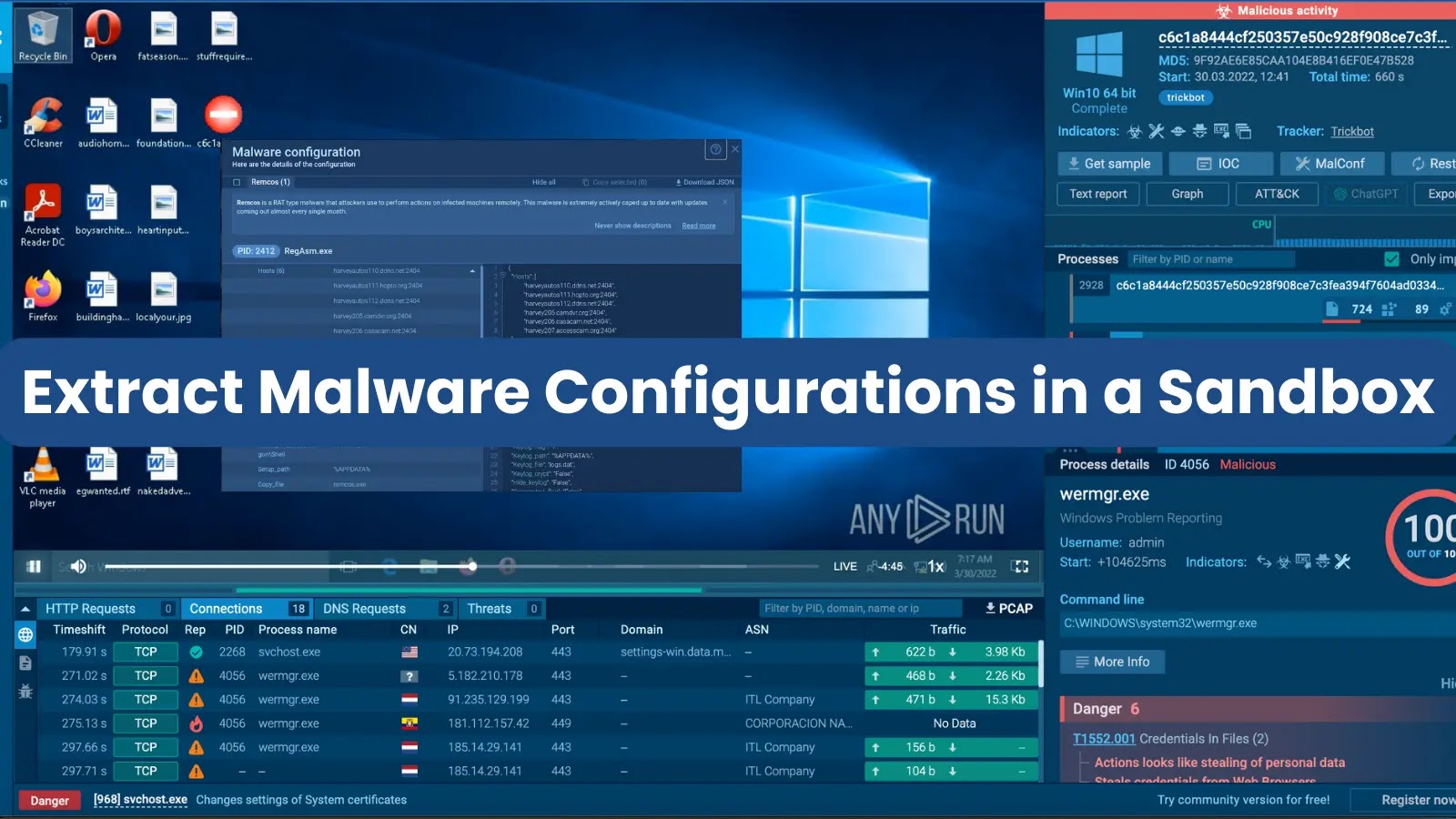
However, the process of obtaining malware configurations has been significantly streamlined with the use of malware analysis sandboxes. These sandboxes, such as ANY.RUN, provide a platform for security operations center (SOC) and digital forensics and incident response (DFIR) teams to analyze and extract malware configurations with ease.
ANY.RUN’s sandbox database features malware configurations for over 50 common malware families, allowing analysts to access crucial information with the click of a button. The interface provides concise descriptions of the malware and offers the option to export the extracted data in JSON format for further analysis. Tools like ANY.RUN also allow for the swift detection and extraction of configurations, even in the case of malware known for stalling tactics.
Furthermore, by providing access to interactive cloud virtual machines, ANY.RUN enables analysts to analyze malware and collect IOCs, extract configurations, and generate comprehensive threat reports in seconds. This streamlined approach to malware analysis significantly enhances the productivity of security professionals, empowering them to stay one step ahead of emerging threats.
In conclusion, the importance of malware configurations in cybersecurity cannot be understated. These configurations are essential for understanding the behavior and capabilities of malware, and tools like ANY.RUN provide a valuable resource for analysts to analyze and extract malware configurations with ease. By leveraging these resources, cybersecurity professionals can effectively identify and neutralize threats, thereby enhancing the overall security posture of organizations.