
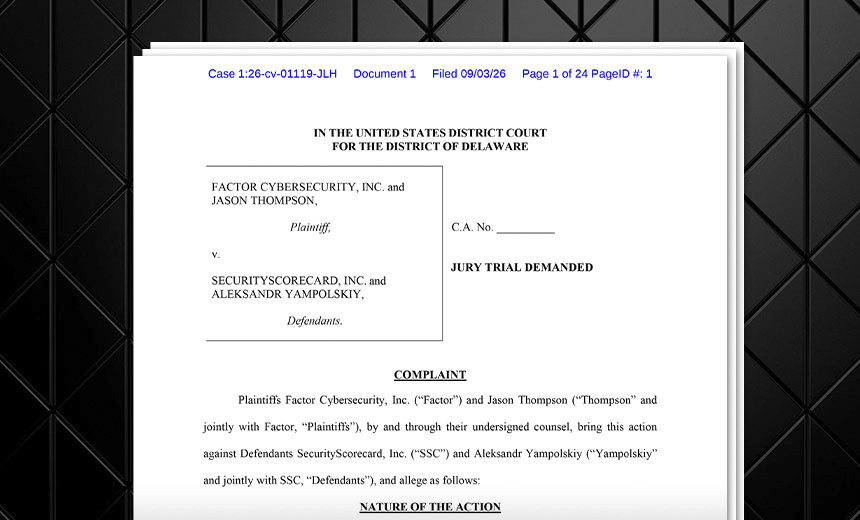
Factor Cybersecurity Files Lawsuit Against SecurityScorecard Over Alleged Retaliation Campaign
Recently, Factor Cybersecurity initiated legal action against SecurityScorecard, accusing the third-party risk management vendor of orchestrating a deliberate campaign aimed at damaging Factor’s reputation, business operations, and commercial partnerships. This lawsuit, filed in the U.S. District Court for the District of Delaware, highlights a myriad of troubling behaviors that Factor claims are characteristic of a retaliatory strategy deployed by SecurityScorecard.
The Wilmington, Delaware-based company asserts that concerns were raised by its CEO, Jason Thompson, regarding alleged misconduct by SecurityScorecard’s leadership, particularly its CEO, Aleksandr Yampolskiy. Thompson reported that during his time as a contractor for SecurityScorecard, he became aware that certain individuals within the company were improperly acquiring confidential information about competitors. Following these disclosures, Thompson faced what Factor describes as retaliation from SecurityScorecard, which culminated in unfounded accusations of intellectual property misappropriation directed at Factor itself.
In its complaint, Factor outlined a series of accusations implicating SecurityScorecard in a concerted effort to tarnish its business integrity. “This action arises from defendants’ campaign to interfere with the business, reputation, and commercial relationships of Factor,” the lawsuit states, emphasizing that the retaliatory actions were unfounded and lacked factual support. This current legal dispute unfolds two years after SecurityScorecard had filed its own lawsuit against another cyber risk management competitor, Safe Security, which was ultimately dismissed in October 2025.
The lawsuit further reveals that after reporting his concerns about SecurityScorecard’s practices, Thompson experienced significant retaliation, including threats from Yampolskiy. The complaint alleges that upon returning to SecurityScorecard as a contractor in May 2023, Thompson’s agreement contained provisions that improperly used Factor’s email address and invoicing under Factor’s name. Once Thompson resigned from his role in July 2025, the lawsuit contends that SecurityScorecard attempted to register trademarks for "Factor Security" and "Factor Cybersecurity," despite having no products associated with these names.
Factor asserts that it holds rightful claims to the "Factor" brand, having been established as a Delaware corporation in July 2021, well before SecurityScorecard’s trademark application. This timeline suggests that Factor clearly laid claim to the name before SecurityScorecard’s actions, which they argue are an infringement on their rights.
The lawsuit also points to Yampolskiy’s alleged communications with various stakeholders connected to Factor, where he purportedly made serious claims about Factor and Thompson misappropriating SecurityScorecard’s intellectual property. Such communications not only attempted to intimidate recipients but also threatened potential legal repercussions for continued association with Factor, thereby creating a chilling effect around Factor’s commercial engagements.
Factor notes that these alleged intimidation tactics severely disrupted their business relationships and hindered potential partnerships worth millions. Specifically, the lawsuit claims that Yampolskiy and his associates engaged in tactics designed not just to damage Factor’s reputation but also to discourage others from doing business with them. These actions directly impacted Factor’s growth trajectory, leading to a loss of a prospective commercial deal projected to yield $3 million in revenue.
Moreover, the legal filing indicates that Thompson sent a cease-and-desist notice to SecurityScorecard’s board in May 2026, demanding that they halt their campaign against Factor and its affiliates. However, according to Factor’s claims, such communications intensified rather than subsided following the formal notice.
SecurityScorecard, on the other hand, has indicated through its representatives that it intends to contest Factor’s lawsuit vigorously but has refrained from providing detailed comments on the matter as it progresses through the legal system.
In an age where corporate reputations can pivot on the slightest insinuation, the stakes in this case are undeniably high. Factor argues that its innovative contributions to the cybersecurity landscape are overshadowed by SecurityScorecard’s unfounded allegations, all while claiming that it independently developed its technology without relying on any alleged trade secrets of SecurityScorecard.
As this case unfolds, it serves as a stark reminder of the potential repercussions that can arise within the highly competitive environment of cyber risk management and underscores the critical importance of maintaining ethical standards in corporate conduct. Each party’s claims will be examined closely, as the outcome could potentially reshape industry practices related to reputation management and competitive conduct in the cybersecurity sector.