
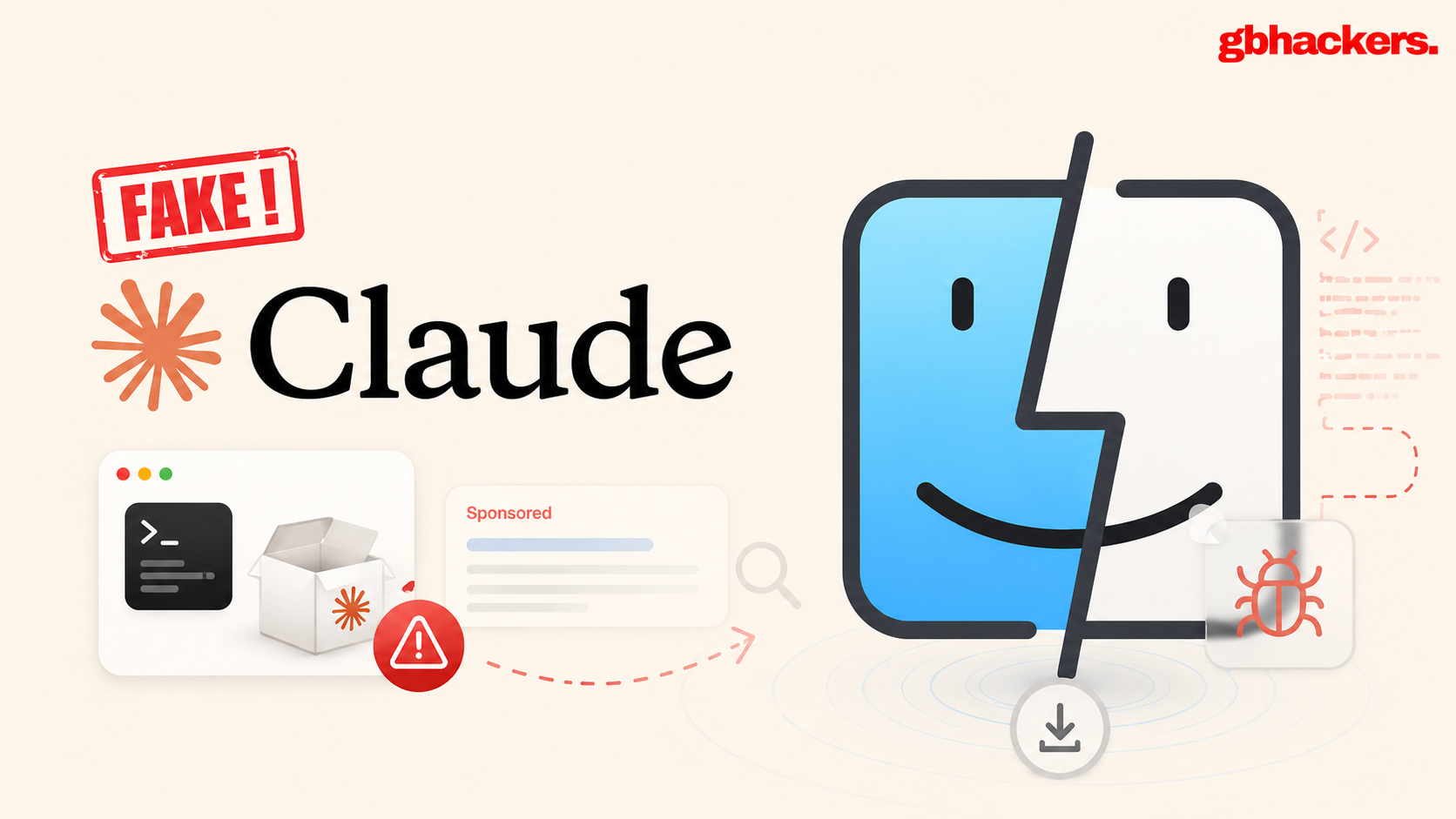
A recent malvertising campaign has emerged, specifically targeting macOS users who are searching for instructions on how to install the Claude Code application. This insidious attack is spreading a sophisticated infostealer known as MacSync. The deceptive strategy relies on a seemingly trustworthy workflow that leverages legitimate online infrastructures rather than exploiting software vulnerabilities, illustrating a worrying trend in cyber attacks known as trust-based compromise.
The malicious effort is designed to fool users by utilizing reputable platforms such as Google Ads and the claude.ai domain. By masquerading as a legitimate ad, the attackers manage to bypass the conventional scrutiny that users typically apply when evaluating the authenticity of web content. This shift towards relying on authentic platforms makes it increasingly difficult for average users to distinguish between genuine and fraudulent offerings.
Upon clicking the sponsored link promising to guide users through the installation of Claude Code, individuals are redirected to a page that superficially resembles an installation guide attributed to “Apple Support.” This clever tactic uses both a legitimate domain and a recognizable brand to create a false illusion of trustworthiness. Unlike traditional phishing attacks, which often involve entirely fictional or spoofed landing pages, this operation employs an authentic Claude share link to present content under the attackers’ control.
Embedded within the so-called installation guide is a cleverly hidden command that uses Base64 encoding and shell command substitution to disguise its actual functionality. This technique dynamically obscures the true intent of the code that is executed, decoding a hidden string before proceeding with a command to download content from the web. The command also includes the use of the “-k” flag within the curl command line tool, which disables TLS certificate validation. By doing so, the command can appear innocuous while masking critical details until the point of execution.
Deeper analysis of the attack’s infrastructure reveals connections to the domain hybridcustomhomes[.]com, which is part of a broader command-and-control ecosystem. Various endpoints, such as ‘/dynamic?txd=’, serve as beaconing channels, while ‘/gate’ facilitates secondary communication with the command and control servers. Further investigation suggests that additional pathways may indicate a focus on cryptocurrency targeting due to their correlation with Ledger Live trojanization efforts.
The campaign begins with an enticing sponsored Google ad labeled “Claude Code Mac,” prominently placed above organic search results. The domain field in question is an older asset that has been repurposed for malicious activities—a tactic increasingly adopted to evade reputation-based detection systems. The existence of similar domains, such as houstongaragedoorinstallers[.]com and mansfieldpediatrics[.]com, indicates that this campaign likely utilizes a scalable model for deployment.
Research from SubStack has identified multiple claude.ai/share URLs associated with the same Google Ads campaign ID, suggesting a redundancy designed to maintain persistence even if specific lures are removed from circulation. Furthermore, findings from CrowdStrike Intelligence have confirmed that these activities line up with previously identified MacSync campaigns, as evidenced by matching payload hashes and Cloudflare-fronted IP addresses.
The MacSync malware itself is notorious for its ability to extract sensitive information, focusing on stealing credentials and session data. It specifically targets valuable information stored in macOS’s Keychain, including browser cookies, SSH keys, cloud credentials, Kubernetes configurations, and developer tokens. Not only that, but it can also exfiltrate data from over 80 cryptocurrency wallets and even swipe session information from Telegram, indicating a broad spectrum of potential victimization.
Of particular concern is its capability to trojanize Ledger Live applications, providing attackers a means of maintaining long-term access even after the initial infection has been addressed. This long-lasting threat is sustained through a LaunchAgent disguised as a Google Keystone updater, strategically located within the system’s Library directories.
The effectiveness of this malvertising campaign lies in its clever mimicry of standard security checks. Users encounter a legitimate domain, an authentic-looking interface, and a workflow that mirrors normal developer behavior. Moreover, even attempts to manually inspect the command can prove futile, as the crucial destination is encoded to obscure its true nature.
This incident serves as a stark reminder that domain validation alone is insufficient as a security measure. Attackers are increasingly adept at leveraging trusted platforms to distribute their payloads, raising the stakes for cybersecurity awareness and protection. As a result, it is imperative for security practices to evolve beyond superficial checks. A more exhaustive approach should include the decoding of obfuscated commands and a thorough validation of all outbound connections prior to execution.
As cybercriminals become more sophisticated in their social engineering techniques and exploitations within legitimate ecosystems, the call for heightened security awareness is louder than ever. It is crucial that users, businesses, and security professionals adopt more advanced methods for analyzing behavior and context, as reliance on basic indicators may no longer suffice in deterring these emerging threats.