
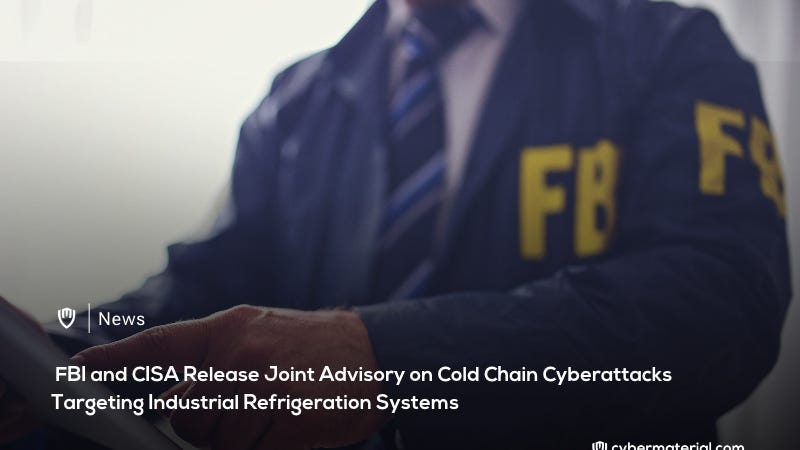
FBI Confirms Cyberattacks Targeting Cold Chain Systems in Europe
The Federal Bureau of Investigation (FBI) has recently confirmed a troubling trend in cyberattacks aimed at cold chain systems operating across Europe. These breaches are attributed to fundamental security flaws present in industrial refrigeration controllers, which are essential for maintaining the integrity of temperature-sensitive products. Brett Leatherman, the head of FBI Cyber, relayed this information through a video statement, shedding light on the seriousness of the situation.
Earlier this month, attackers succeeded in infiltrating the temperature control systems at three sites associated with France’s national blood service. Fortunately, quick action by staff members mitigated what could have been a disastrous loss of blood inventory. However, this incident serves as a stark reminder of a broader vulnerability impacting the healthcare, food, and transportation sectors, all of which rely on automated refrigeration systems to ensure the safety of their products.
A joint advisory issued by the FBI, the Cybersecurity and Infrastructure Security Agency (CISA), and the Departments of Health and Human Services, Agriculture, and Transportation has identified three primary vectors through which these attacks are being executed. The vulnerabilities include authentication bypass, arbitrary code injection, and weak configurations, which frequently involve unchanged default passwords.
These vulnerabilities have grave implications. Cybercriminals are exploiting internet-connected electronic temperature controllers and commercial refrigeration systems to remotely manipulate settings. This typically forces these units into continuous heating or defrost cycles, leading to the potential destruction of perishable inventory. Furthermore, these attacks can pose fire hazards, shorten the lifespan of expensive equipment, and jeopardize consumer safety by allowing improperly stored products to be consumed.
The technical weaknesses targeted by attackers primarily focus on controllers that are either unpatched or directly accessible from the public internet, often safeguarded solely by default credentials set by manufacturers. Once a hacker gains entry, they can easily modify critical temperature setpoints. This level of compromise can lead to denial-of-view conditions, where operators lose real-time visibility into the status of the systems they are responsible for.
The advisory highlights that these systems are not limited to isolated industrial environments; they are widespread in retail grocery stores, cold storage facilities, and refrigerated transport operations. These systems play pivotal roles in automated temperature monitoring, continuous logging, defrost cycle management, and energy optimization. The vulnerability of these systems represents an evolving threat landscape, where traditional defenses may no longer suffice.
The implications of these cyberattacks extend beyond immediate logistical concerns. In healthcare settings, compromised refrigeration systems could spoil crucial medications and biological materials, which may result in life-threatening consequences. Similarly, disruptions in the food supply chain could endanger public health if contaminated or spoiled products reach consumers. The incident involving the French blood service demonstrates that even successful attacks can be mitigated through proper monitoring and quick human response, potentially preventing devastating outcomes.
In light of these threats, agencies across the board are recommending immediate and concrete defensive actions. These include eliminating all internet exposure from controller panels, segmenting operational technology onto dedicated networks separate from general business systems, and replacing default passwords with strong, unique credentials. Additionally, implementing multifactor authentication is emphasized as a critical step in safeguarding these systems.
Maintaining up-to-date firmware patches is essential, alongside retiring any end-of-life devices that can’t be secured adequately. Configuration changes should be restricted through IP allowlists, and comprehensive logging should be in place to allow for detailed investigations of any anomalies. Alerts for temperature fluctuations outside of designated safe ranges should also be configured. These measures align with CISA’s Cross-Sector Cybersecurity Performance Goals and echo valuable lessons learned from the recent European incidents, where timely monitoring and rapid response proved vital.
The FBI’s advisory serves as a clarion call for organizations relying on cold chain systems to reevaluate their cybersecurity protocols. The protection of public health and safety hangs in the balance, as these interconnected systems play an increasingly vital role in modern supply chains. As the landscape of cyber threats continues to evolve, proactive measures are necessary to defend against these risks and safeguard crucial infrastructures.