
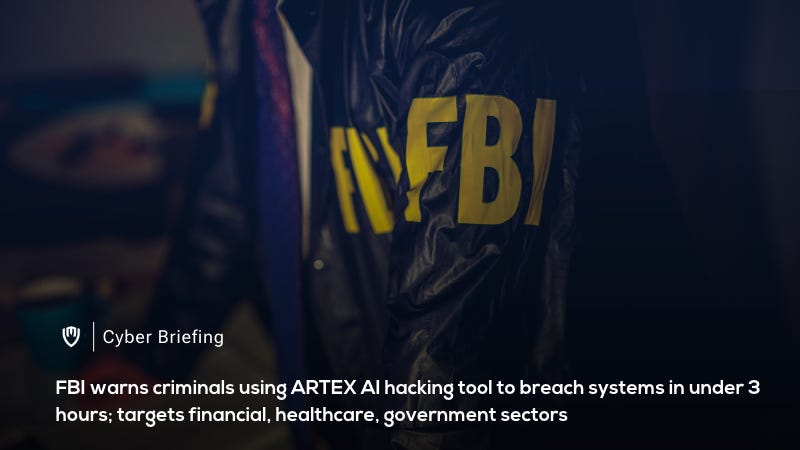
The Federal Bureau of Investigation (FBI) has issued a critical warning regarding the rise of sophisticated cybercriminal activities facilitated by an AI-powered hacking framework known as ARTEX. This alarming trend was detailed in a security advisory released on November 13, 2024, where the FBI highlighted how cybercriminals are utilizing ARTEX to automate complex cyberattacks targeting a range of sectors, including financial institutions, healthcare providers, government agencies, and tech companies. Notably, some of these breaches escalate from initial targeting to privileged administrator access in under three hours, leaving organizations scant time to detect and respond to such intrusions.
Originally, ARTEX was designed as a legitimate tool for penetration testing, aimed at helping cybersecurity professionals identify vulnerabilities within systems. However, its purpose has been subverted by malicious actors who have repurposed the framework to execute unauthorized attacks with relative ease. The sophistication of the framework lies in its ability to integrate with external artificial intelligence models such as OpenAI’s GPT, Anthropic’s Claude, and DeepSeek. This integration allows the tool to interpret commands and automate intricate hacking tasks, enabling attackers to identify security weaknesses, exploit them, escalate their access privileges, and extract sensitive information without requiring extensive technical expertise.
The ramifications of ARTEX have become increasingly evident through various high-profile incidents. For instance, in October 2024, hackers exploited compromised application credentials related to ConnectWise Cloud Backup (previously known as SkyKick Cloud Backup), launching an attack on Microsoft 365 environments. This incident was attributed to a hacking group known as Storm-0940, allegedly backed by the Chinese state. The group utilized ARTEX to target over 2,250 Microsoft 365 customer environments, leading to unauthorized sign-ins in at least 162 of these environments during an early investigation by cybersecurity firm Huntress. Notably, the attack leveraged existing permissions granted to a trusted third-party application, circumventing robust security measures like strong passwords and multi-factor authentication, showcasing the vulnerabilities within organizational security protocols.
The global impact of ARTEX-enabled attacks has also risen to prominence, particularly highlighted by a recent incident in South Korea, where hackers employed the tool to breach financial institutions, compromising the personal data of around 67,000 individuals. This wave of attacks resulted in the arrest of seven suspects linked to infiltrations of over 90 organizations, culminating in the theft of about 8.2 million data records. Additionally, CrowdStrike, a prominent cybersecurity firm, reported that a group associated with China, known as Vapor Panda, has utilized ARTEX in extensive attacks that affected more than 200 organizations across 14 nations, successfully breaching at least nine of them.
Despite the original developer removing the ARTEX repository from GitHub in October 2024 following reports of misuse, the framework remains accessible through archived copies and modified versions, including a commercial variant branded ARTEX PRO. This continued availability presents ongoing risks for organizations seeking to bolster their cybersecurity defenses.
In light of these developments, the FBI emphasizes the need for individuals and organizations to adopt robust protective measures to safeguard against potential breaches. Recommendations include employing unique passwords for all critical accounts through a password manager, enabling multifactor authentication—preferably using passkeys or authenticator apps—for both email and financial services, and regularly auditing third-party application permissions linked to Google and Microsoft accounts. Monitoring financial accounts with transaction alerts, reviewing credit reports for any unusual activity via AnnualCreditReport.com, and considering credit freezes with major bureaus like Equifax, Experian, and TransUnion are also advisable actions, especially following the exposure of Social Security numbers.
Moreover, individuals are encouraged to stay alert to phishing attempts, which tend to spike after major security incidents. Installing security updates without delay, utilizing reputable antivirus solutions, and maintaining a vigilant approach to online activities can significantly diminish the likelihood of successful breaches. While these measures may not entirely prevent organizational breaches, they can play a crucial role in mitigating damage should companies that store personal information fall victim to cyberattacks.
Overall, the FBI’s advisory serves as a stark reminder of the evolving landscape of cybercrime and the urgent need for enhanced cybersecurity awareness and practices across all sectors.