


$6.5 Billion Takedown Highlights AI’s Growing Role in Fraud Detection
In a significant development in the realm of healthcare fraud detection, U.S. government officials announced a federal initiative that has led to the identification of $6.5 billion in fraudulent healthcare claims. The concerted effort, bolstered by cutting-edge data analytics and artificial intelligence (AI), promises to enhance the ability to identify suspicious activities before they result in financial losses. This advancement indicates a shift towards a more proactive stance in combating healthcare fraud.
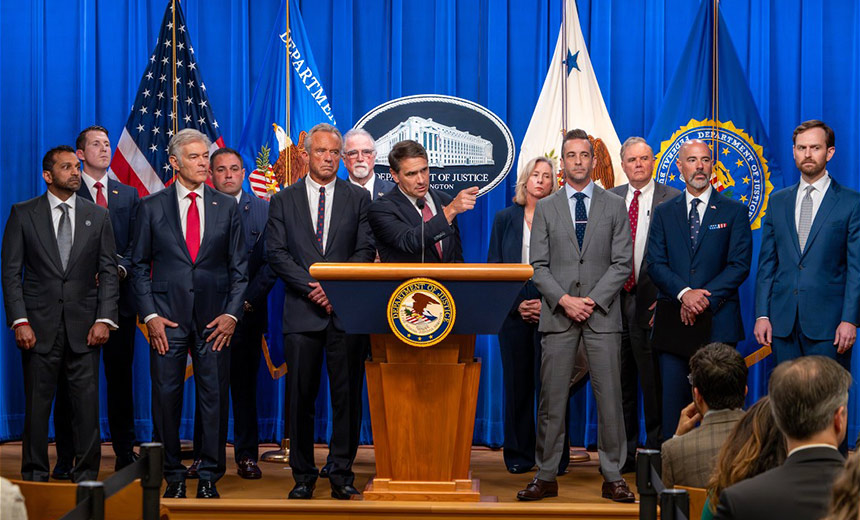
The recent National Health Care Fraud Takedown of 2026 showcased the power of collaboration among multiple federal agencies, including the Department of Justice (DOJ) and the Department of Health and Human Services (HHS). It also involved the Medicaid fraud control units from all 50 states. This collaborative approach resulted in criminal cases against 455 defendants, among whom were nearly 100 physicians and licensed clinicians implicated in schemes involving Medicare and Medicaid fraud, along with opioid abuse practices.
The success of this takedown highlights the effectiveness of advanced technological tools employed in detecting fraudulent activities. Authorities reported that some of the most audacious schemes were uncovered through the implementation of AI technologies designed to analyze vast amounts of data for unusual patterns. For instance, in one case, advanced technology identified a fraudster accused of billing Illinois Medicaid for $67 million in behavioral health services that were never delivered to patients. Investigators observed that the clinician had submitted claims for hundreds of hours of care for patients who were, in reality, hospitalized at other facilities on the same days.
The efforts reflect a significant transformation in how healthcare fraud is addressed, shifting from a primarily reactive approach to one that anticipates and intervenes in fraudulent activity before any financial damage occurs. Federal agencies have made clear their commitment to expanding the deployment of AI-powered fraud detection mechanisms in the future. HHS Secretary Robert Kennedy, Jr. articulated this forward-thinking approach, stating, “We are deploying advanced AI and analytics to identify fraudulent billing — our objective is to stop the fraud before it happens.” This sentiment underscores the necessity of advancing these capabilities further.
In a recently disclosed arrangement, the Centers for Medicare and Medicaid Services will grant access to cloud computing resources within its integrated data repository, allowing the DOJ’s fraud division to implement sophisticated data analytics algorithms and tools aimed at enhancing the detection of healthcare fraud. Last year, the DOJ and HHS reported uncovering an unprecedented $14.6 billion in various healthcare fraud incidents through their national crackdown, although the scale of prosecutions saw fewer criminal charges compared to this year’s endeavor.
Experts in the field believe that advanced analytics and AI have the potential to revolutionize how healthcare fraud is detected and prevented. Traditionally, fraudulent claims were often recognized only after they had been paid, prompting investigators to identify fraudulent patterns post-factum. However, AI’s capacity to analyze large volumes of claims and provider data in real-time could facilitate the early identification of suspicious behaviors.
Peter Justen, founder and CEO of AmeriTrust Solutions, emphasizes that the efficacy of AI tools is fundamentally contingent upon the quality of the underlying data. He cautions, “If the underlying enrollment or identity data is incomplete or inaccurate, AI simply becomes better at analyzing bad information.” Therefore, ensuring data integrity from the initial stages of Medicaid application and eligibility processes is as vital as enhancing fraud detection capabilities.
Nevertheless, experts stress that a thoughtful implementation of advanced analytics is critical, as false positives remain a pressing concern. AI models might highlight patterns and probabilities without considering intent, which could lead to legitimate healthcare providers facing undue scrutiny if automated outputs are relied upon excessively, devoid of human oversight.
Moreover, the handling of sensitive personal information raises significant privacy issues. Justen underscores the importance of maintaining stringent security measures, clear governance, and transparency concerning data usage, stating that public trust hinges on responsible data management practices.
Importantly, organizations are advised not to view AI as a standalone solution. As Justen notes, “Successful fraud prevention requires accurate data, well-designed business processes, cross-agency collaboration, and experienced investigators.” While AI is undoubtedly a powerful tool in the arsenal against healthcare fraud, it functions most effectively as a complement to human expertise and robust operational controls, rather than as a replacement.