


Officials Warned New Models Could Accelerate Cyber Risks Faster Than Rules
In a recent series of statements, senior international financial officials have expressed grave concerns regarding the latest generation of artificial intelligence (AI) models emerging from U.S. technology companies. These officials have indicated that such advances could expose not just vulnerabilities within individual institutions, but also pose significant risks to the stability of the global banking system as a whole.
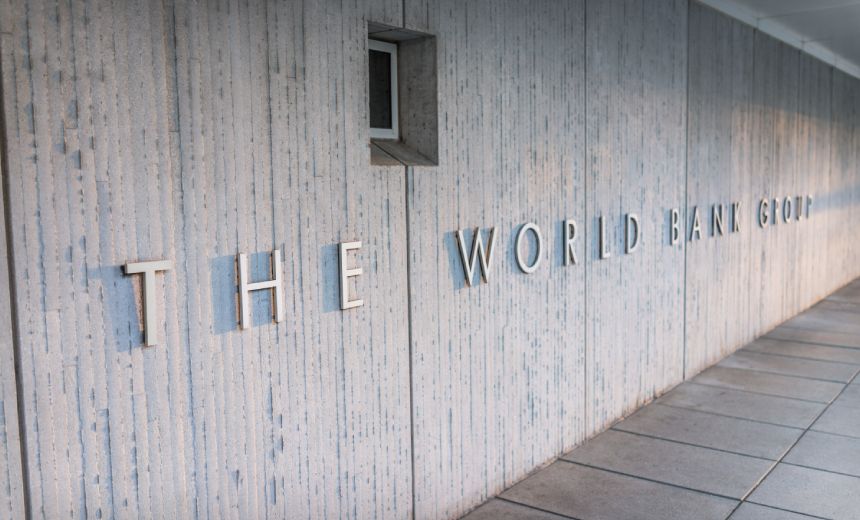
During discussions held in Washington amid the spring meetings of the International Monetary Fund (IMF) and World Bank, finance ministers, central bank governors, and regulatory bodies highlighted the fact that large-scale AI systems, such as Anthropic’s new model called Mythos, could potentially act as disruptive forces unless they are deployed under proper oversight and control.
IMF Managing Director Kristalina Georgieva was vocal during an interview with CBS News, emphasizing the lack of current capabilities to shield the international monetary system from significant cyber risks. “We don’t have the ability… to protect the international monetary system against massive cyber risks,” she stated. Georgieva urged for immediate focus on establishing protective measures, or "guardrails," essential to maintain financial stability in light of emerging AI technologies.
The concerns shared among the financial leadership ecosystem were echoed by other significant figures in the industry, marking AI as an urgent operational challenge. Specifically, Christine Lagarde, President of the European Central Bank, pointed to Anthropic’s Mythos model as a demonstration of how well-intentioned technology could morph into significant risks when placed in the wrong hands. Lagarde cautioned that while beneficial applications exist, the potential for misuse underscores the necessity for vigilance and regulation. “The development we’ve seen with Anthropic and Mythos is a good example… that could be really good…but if it falls in the wrong hands, it could be really bad,” she shared during a conversation with Bloomberg TV.
In light of these warnings, the European Central Bank has initiated discussions with Eurozone banks concerning the implications of Mythos on their cybersecurity infrastructure. Bloomberg reported that U.S. Treasury Secretary Scott Bessent and Federal Reserve Chair Jay Powell have engaged in similar conversations with major U.S. banks earlier this month, highlighting a cross-border effort to mitigate emerging cyber threats linked to advanced AI technologies.
Serious worries surround the capabilities of these advanced AI models, which can potentially facilitate the identification of system vulnerabilities, generate exploit scripts, and expedite cyberattacks on banking institutions and payment infrastructures. Bank of England Governor Andrew Bailey voiced his concerns regarding the rapid technological developments in AI during an interview with BBC. He characterized this evolution as a “very serious challenge” for regulators striving to keep pace with the speed of these advancements. Canada’s Finance Minister, François-Philippe Champagne, further underscored the uncertainty that these AI developments pose, referring to them as an "unknown unknown" for policymakers.
These stark warnings from financial leaders reveal increasing apprehension regarding the potential for automated systems to simulate complex attack paths and discover vulnerabilities in a scale never seen before. This, they believe, could dramatically compress the timeline between identifying weaknesses and exploiting them, effectively giving nefarious actors new tools to address systemic weaknesses at an alarming rate.
In response to the mounting threats, major financial institutions are beginning to confront the harsh realities linked to burgeoning AI developments. David Solomon, the CEO of Goldman Sachs, reflected on a heightened awareness within the banking sector about the vulnerabilities tied to emerging AI technologies. He indicated that the firm is "hyperaware" of these risks, underlining a broader understanding that financial institutions must prioritize defenses against AI-enabled cyber threats.
In conclusion, the collective concerns voiced by financial executives signal a critical juncture for the intersection of advanced AI technologies and the global banking system. It is clear that as these technologies evolve, so too will the strategies to exploit them, leaving regulatory bodies and financial institutions scrambling to keep pace. The ongoing discussions hint at a future where the benefits of AI must be balanced against the substantial risks it poses, necessitating an urgent call for regulatory frameworks and collaborative strategies to safeguard the integrity and security of the international financial landscape.