


GigaWiper: The Malware that Redefines Cyber Threats
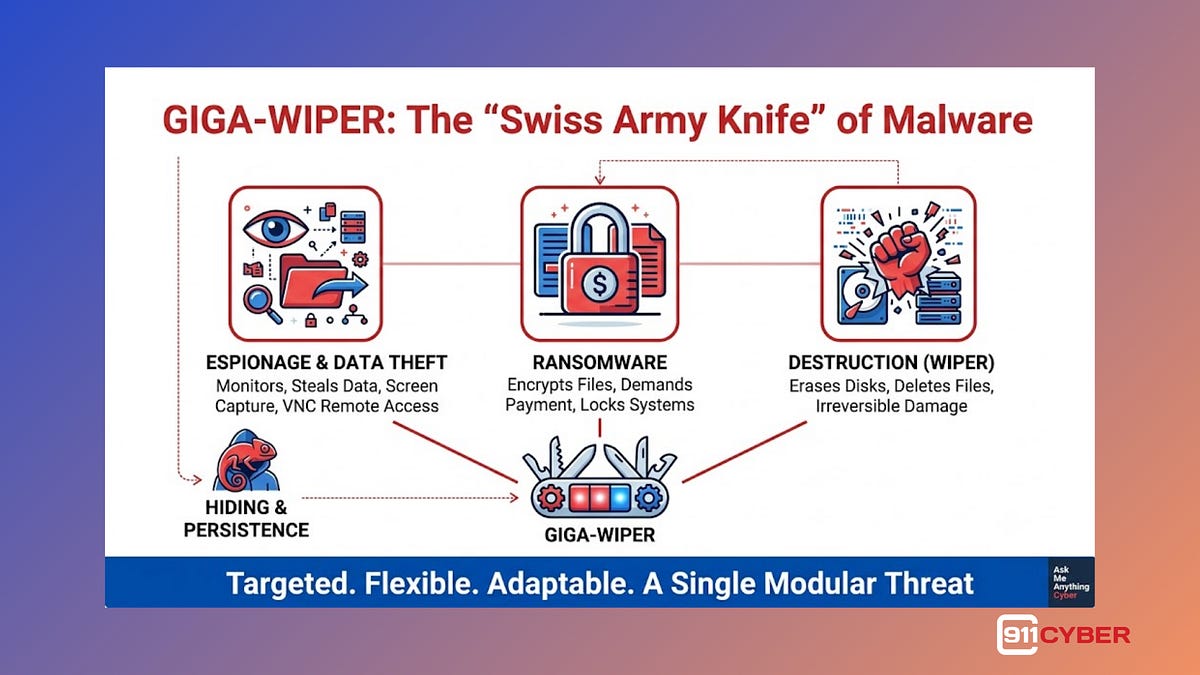
In the realm of cybersecurity, malware has traditionally been categorized into three primary types: ransomware, spyware, and wiper malware. Each category serves a distinct purpose: ransomware encrypts files for financial extortion; spyware covertly steals sensitive information; and wiper malware is designed to obliterate data, creating maximum disruption. However, new developments in cyber threats have blurred these lines, posing significant challenges for cybersecurity professionals. A leading example of this evolution is GigaWiper, a sophisticated malware framework recently identified by Microsoft and attributed to the Iranian-affiliated group known as CyberAv3ngers.
A Multifaceted Threat
GigaWiper’s distinguishing characteristic lies in its ability to blend the functionalities of ransomware, spyware, and wiper malware into a singular, highly adaptable framework. This capability poses a profound challenge to cybersecurity defenses, as GigaWiper operates with remarkable versatility. It can not only encrypt or destroy data but also engage in stealing sensitive information, providing attackers with a comprehensive toolkit tailored to the specific needs of each operation.
As CyberAv3ngers deploys GigaWiper, they can effortlessly adapt their approach depending on their objectives at any given moment. For instance, during an attack, GigaWiper can initiate mass data destruction while simultaneously infiltrating a system to extract sensitive information. This multifaceted nature enhances the threat’s complexity and increases its potential impact.
Implications for Cybersecurity
The emergence of GigaWiper raises several pressing questions regarding the effectiveness of existing cybersecurity frameworks. Traditional defenses are often built to recognize and respond to specific types of malware independently. GigaWiper’s unique amalgamation requires cybersecurity experts to develop a more nuanced understanding and response strategies.
One significant concern is the potential for such adaptable malware to resonate with various threat actors, not only those aligned with CyberAv3ngers. If GigaWiper gains traction, it could serve as a template for other cybercriminals looking to maximize the effectiveness of their attacks. This scenario could lead to an alarming proliferation of similar tools in the cyber threat landscape.
Understanding the Attack Vector
While details regarding the exact methods used by GigaWiper remain partially obscure, analysts suggest that its primary attack vector is likely through phishing campaigns or software vulnerabilities. These initial points of entry allow the malware to infiltrate systems, build footholds, and deploy its multifaceted attack strategy. With this in mind, the cybersecurity community must remain vigilant and proactive, as the threat can evolve rapidly.
The Need for Enhanced Cyber Hygiene
As GigaWiper exemplifies the increasing complexity of cyber threats, it underscores the critical importance of robust cybersecurity practices. Organizations must move beyond basic security measures to adopt a more comprehensive approach. This includes regular software updates, employee training on recognizing phishing attempts, and robust data backup strategies to mitigate the potential fallout should a breach occur.
Furthermore, a collaborative approach among cybersecurity professionals is essential. Sharing intelligence and insights on threats like GigaWiper is crucial to staying a step ahead of malicious actors. Collaboration can lead to the development of broader strategies that not only identify but also neutralize multifaceted threats effectively.
Conclusion
In summary, GigaWiper exemplifies a significant shift in the malware landscape, uniting the distinct functions of ransomware, spyware, and wiper malware into a single framework. As the cybersecurity community grapples with the implications of this evolving threat, the need for enhanced security protocols and proactive measures becomes ever more pressing. The emerging threat landscape prompted by GigaWiper and similar malware underscores the necessity for continuous vigilance and adaptability in cybersecurity practices to safeguard sensitive data and mitigate potential damages. Organizations must educate themselves and invest in advanced security measures to defend against this dynamic threat. As the cyber world continues to evolve, so too must the strategies employed to combat these unprecedented challenges.