
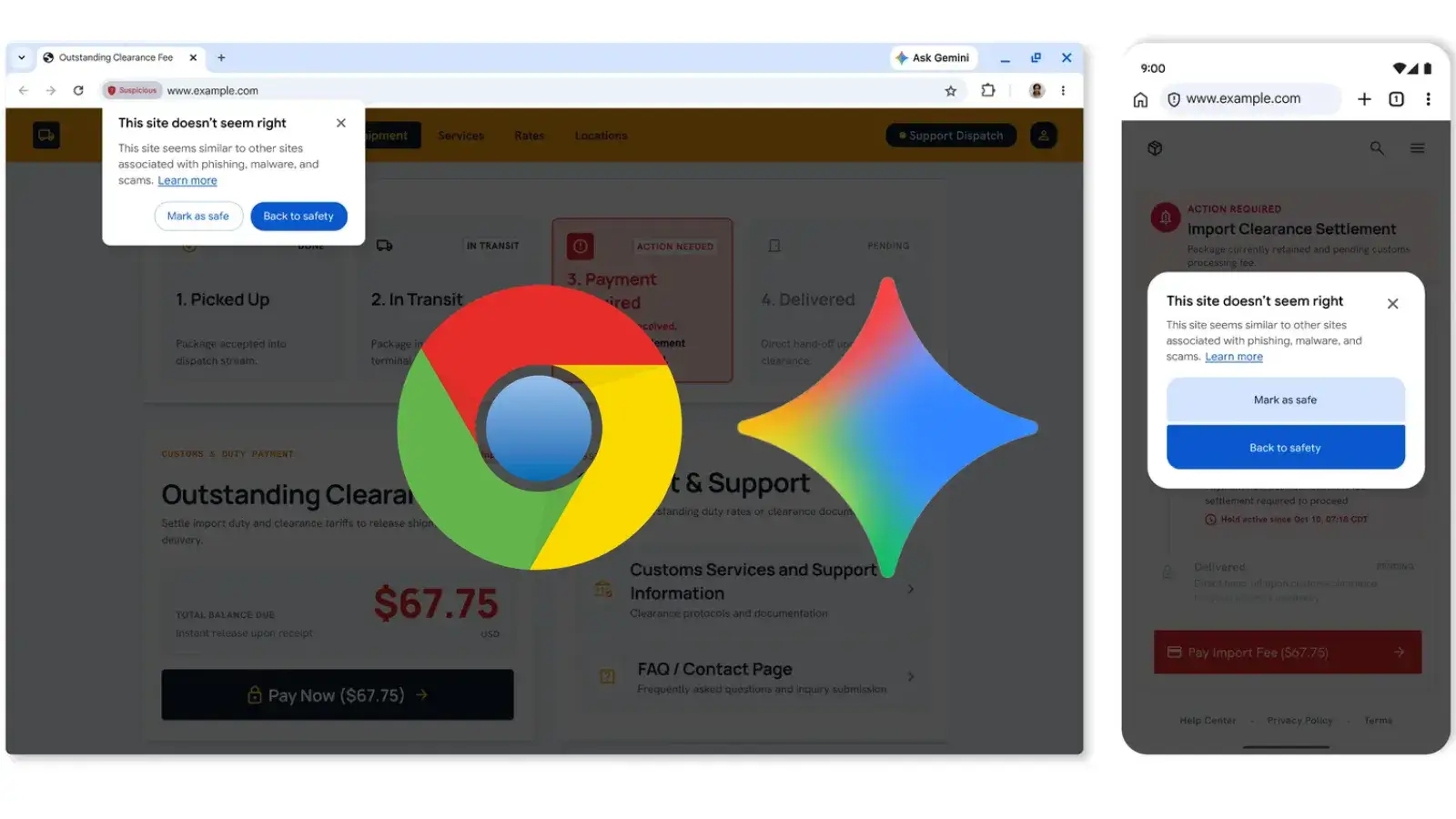
Google Enhances Chrome’s Scam Defenses with New AI-Powered Technology
Recently announced on October 20, 2026, Google has made significant improvements to the scam detection capabilities of its Chrome web browser. These enhancements involve the integration of a new server-side Gemini model specifically designed to identify fraudulent activities online. The model now enables users to better protect themselves from fake antivirus messages, bogus browser updates, and various deceptive websites. This move underscores Google’s commitment to creating a safer online experience for users across the globe.
The enhancements come as part of Chrome’s Enhanced Protection mode within the Safe Browsing framework, which aims to fortify security measures for all users who opt in. The importance of this update cannot be overstated, especially as the prevalence of online scams continues to rise. By extending these protections to a broader user base, Google hopes to mitigate risks that threaten the cyber safety of internet users.
Building on previous advancements, the server-side Gemini model follows the on-device Gemini integration that was introduced in 2025, aimed primarily at detecting technical support scams on supported devices. Moving the analysis to a more powerful server-side platform allows Chrome to optimize its scam detection capabilities. This technological shift not only broadens the range of devices covered but also enhances the ability to assess an extensive variety of potential scams, making users less vulnerable to malicious tactics.
How Gemini AI Works to Identify Scams
Central to these new features is the Gemini AI, which employs advanced analytical techniques to scrutinize webpage content. It evaluates the brand associated with the page, gauges its intent, and assigns a scam likelihood score based on this analysis. The Safe Browsing system further combines this rating with domain reputation and other security signals to arrive at a conclusive verdict regarding a website’s safety. Notably, this strategy relies heavily on contextual analysis, allowing Gemini to offer a nuanced assessment instead of simply categorizing pages as dangerous or safe.
Google emphasizes that this server-side analysis focuses exclusively on the textual content of pages that already exhibit high-confidence indicators of scams. The ephemeral nature of the content processed means that it is neither logged nor retained—nor is it used for training AI models. By implementing such measures, the tech giant ensures that user data remains protected while still allowing for thorough examination of suspicious material.
In addition to these advancements, Chrome is also rolling out differentiated warning categories under its Enhanced Protection mode. Warnings classified as "suspicious" will cover lower-confidence findings that exhibit deceptive patterns commonly associated with malicious websites. This careful categorization allows users to more effectively discern degrees of risk.
The appearance of these warnings varies markedly—differing in wording, colors, icons, and layout—enabling Chrome to communicate effectively with users regarding the nature of potential threats. By reserving the "dangerous" label for confirmed malicious sites, which trigger the familiar full-page red warning, Chrome maintains a clear distinction between possible deception and actual threats.
Defense Against ClickFix Attacks
Another enlightening feature of this update addresses a specific type of online fraud known as ClickFix attacks. These scams deceive users into copying and executing harmful commands that falsely claim to rectify non-existent issues. Recognizing the dangers posed by such tactics, Chrome is now equipped to detect potentially malicious commands that may be copied during suspect ClickFix activities.
To enhance user safety further, Chrome will also strip personally identifiable information from clipboard contents before transmitting it to the Safe Browsing system for examination. This precautionary measure prioritizes user privacy while effectively identifying potential threats. If Chrome issues a dangerous verdict linked to these commands, an immediate warning is triggered, reinforcing the browser’s commitment to user security.
It is essential to note that these upgraded protections can only be accessed when Enhanced Protection mode is enabled. Google’s assertion of making Chrome "ten times safer" reflects comparative warning frequencies in different protection modes rather than presenting a directly quantifiable reduction in successful cyber compromises. This distinction is fundamental for users trying to gauge the effectiveness of the security enhancements.
In conclusion, Google’s recent enhancements to Chrome’s scam defenses via the new server-side Gemini model represent a crucial advancement in online safety. By leveraging sophisticated technology to analyze web content more comprehensively, users can expect a higher level of protection against the rampant growth of online scams. As these features roll out, users are encouraged to enable Enhanced Protection to fully benefit from the new capabilities and navigate the internet with greater confidence and security.