


Artificial Intelligence & Machine Learning,
Next-Generation Technologies & Secure Development
Phased Rollout Gives Trusted Defenders Unrestricted Access to Google’s Most Capable Cyber Model
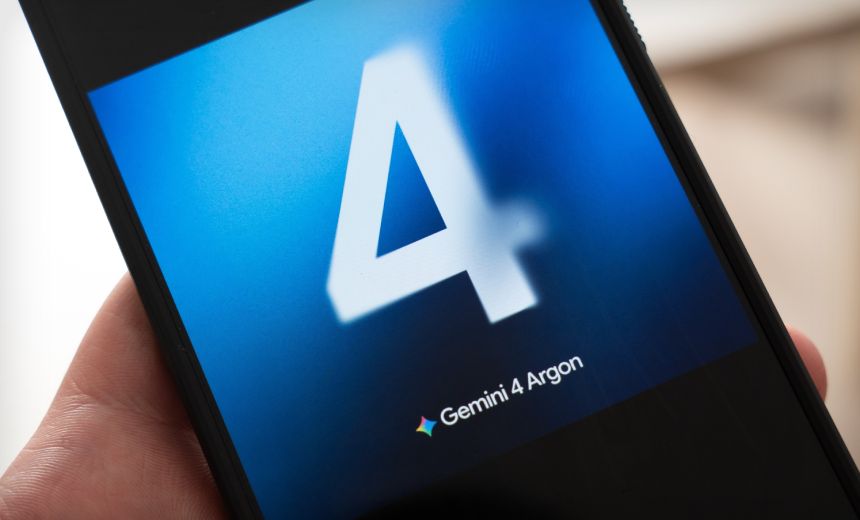
In a strategic move, Google has officially entered the competitive field of artificial intelligence cybersecurity with the launch of its latest model, Gemini 4 Argon. The full potential of this new addition marks Google’s commitment to enhancing cybersecurity using advanced AI technologies.
The tech giant has notably been perceived as trailing behind its rivals, who have been actively showcasing their own advanced AI models that specialize in identifying vulnerabilities within cybersecurity frameworks. These competitors have leveraged public unveilings to issue serious warnings about the implications of their technologies falling into the wrong hands. For instance, Anthropic has frequently underscored the dangerous nature of its models, leading to cautions such as the release of their generative model being termed “too dangerous to release.”
In response to the growing necessity for robust AI-driven cybersecurity solutions, Google has chosen to draw from the strategies adopted by its industry challengers. The Fairwind Program, the name designated for this tiered rollout, will only provide access to its new model, Gemini 4 Argon, to a carefully selected group of “trusted cyber defenders.” This restricted access aims to consolidate control over the technology while facilitating feedback for ongoing enhancements.
Industry leader Anthropic initiated a similar strategy earlier in April when it launched Project Glasswing, offering select organizations access to its powerful cyber-capable model, Mythos. Following this, it also maintained a pattern of limited releases for subsequent models such as Mythos 5, Fable 5, and Claude Opus 5. OpenAI has mirrored this approach by granting limited access to its models like GPT-5.6, prompted by governmental requests for enhanced security measures.
Google has articulated that its decision to apply a phased approach in providing access to Argon is rooted in its commitment to gathering valuable insights from early users. This iterative feedback mechanism will help to refine the security guardrails surrounding the model. Furthermore, in a move that underscores its dedication to safety, Google voluntarily offered governmental agencies access to undertake rigorous safety testing on Argon.
The last major model released by Google was the Gemini 3 family, which launched in November 2025. Over the intervening months, the company opted instead for incremental updates to its existing models such as Gemini 3.8 Flash and Gemini 3.8 Cyber, both of which were introduced on September 2, 2026. This strategic pivot towards smaller enhancements was suggested to facilitate a focus on core strengths rather than attempting to innovate entirely new flagship models.
Reports have indicated that Google DeepMind, the division responsible for much of the company’s AI model research and development, has experienced significant leadership changes. Notably, co-founder Demis Hassabis transitioned from daily operations at DeepMind to take on a broader role as chief scientist at Alphabet, Google’s parent company. This shift has coincided with sentiments from various developers highlighting that the Gemini 3 model underperformed relative to expectations. This downward trend contributed to a perception of Google as lagging behind in the race to develop state-of-the-art AI technologies.
Amidst ongoing developmental challenges, Google has emphasized that Argon represents its most advanced and expansive model to date. Memorable features include an impressive output token limit of one million tokens, allowing it to tackle complex challenges, manage multi-agent workflows, and facilitate long-running tasks. Google asserts that this depth of capacity supports enhanced reasoning abilities, empowering users to solve intricate problems more effectively.
In terms of performance metrics, Argon has demonstrated capabilities that are competitive with other leading models in cybersecurity benchmarks. Specifically, it achieved a score of 68% in the CWE-bench v1 benchmark, a notable equivalency with OpenAI’s GPT-6 Astra.
The potential applications of Argon are already being explored; Google has employed the model in collaborations with its recently acquired security subsidiary, Wiz. Specifically, Argon plays a vital role in the Scan for Good Initiative, which aims to fortify critical public infrastructure without charge. The model has recently identified a critical vulnerability in widely used healthcare software, revealing an exploit that previous versions of frontier models had overlooked.