
Google Enhances Ransomware Protection for Google Drive Users Globally
In a significant move to bolster cybersecurity, Google has officially transitioned its advanced ransomware detection and file restoration features for Google Drive out of beta, making these vital tools generally available to organizations worldwide. This critical advancement in cybersecurity technology is poised to protect data from increasingly sophisticated ransomware attacks, enhancing the overall safety for both personal users and corporate entities.
A Response to Growing Cyber Threats
The beta testing phase began in September 2025, and during this period, the features were rigorously evaluated by thousands of participants who provided valuable feedback. With ransomware attacks becoming more common and destructive, these enhancements were developed to minimize damage across multiple endpoints, whether personal or organizational. The newly released features aim to offer robust defenses against the rapidly evolving landscape of cyber threats, ensuring that sensitive data can be safeguarded effectively.
The general availability release marks a significant upgrade to Google’s threat detection engine. Leveraging an advanced AI model, the system now boasts the capability to identify 14 times more infections than the previous beta version. This improvement underscores Google’s commitment to staying ahead of cybercriminals and their ever-adapting strategies.
Advanced Detection and Response Mechanisms
The updated mechanisms operate by recognizing a wide range of modern ransomware encryption methods, allowing for much quicker detection of harmful activities. This enhanced speed is crucial in a landscape where cyber threats are continually evolving. By providing comprehensive protection, Google is effectively fortifying its defenses against malicious actors who aim to exploit vulnerabilities for financial gain.
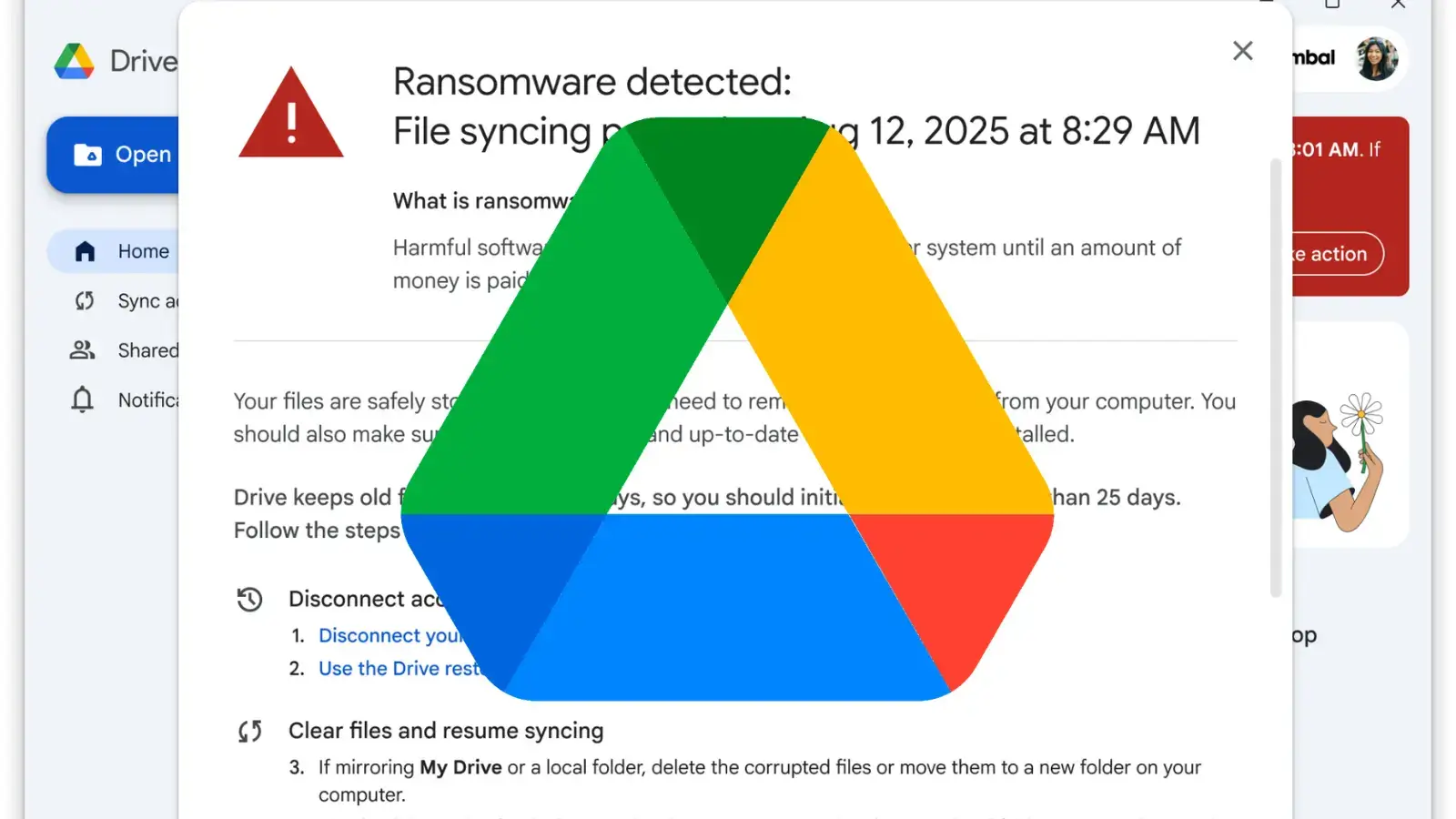
Google’s cyber protection architecture includes several core capabilities specifically designed to thwart active attacks and facilitate the recovery of compromised data. Among these is an automated ransomware detection feature that halts file syncing on Google Drive for desktop immediately upon identifying malicious encryption behavior. This measure is vital in preventing the overwriting of clean backups with corrupted files.
Additionally, a dual notification system is in place. When a threat is detected, the affected user receives local desktop alerts while simultaneous notifications are sent via email and logged into the Admin console security center. This dual approach ensures that users remain informed and can quickly respond to potential threats.
Another critical component is the bulk file restoration capability. Victims of ransomware attacks can easily revert their Google Drive to a previous, unencrypted state, effectively negating the necessity to pay ransom demands. Users have the flexibility to select multiple affected files and restore them to their precise versions from before the malware infection occurred.
Streamlined Deployment for Administrators
For IT departments and security teams, implementing these advanced defenses involves minimal overhead. Both the ransomware detection and file restoration features are enabled by default for all users across an organization. Administrators retain control, possessing the ability to toggle these security measures on or off at the Organizational Unit level through the Google Workspace Admin console.
When a potential ransomware threat is identified, administrators receive automated email alerts that include detailed diagnostic data within the Alert Center, thus equipping them with necessary insights to manage the situation effectively.
To maximize these new capabilities, organizations are advised to deploy Google Drive for desktop version 114 or later. While earlier versions can pause file syncing during an attack, they lack the functionality to display endpoint warning notifications, which diminishes a user’s ability to react promptly.
Licensing and Availability
Access to these security tools is contingent upon the specific account type and subscription tier. Notably, the bulk file restoration feature is universally available to all Google Workspace customers, as well as Workspace Individual subscribers and users with standard personal Google accounts. In contrast, the automated ransomware detection feature requires specific organizational licensing tiers, which include options for Business, Enterprise, Education, and Frontline accounts.
Conclusion
In conclusion, Google’s proactive measures in enhancing its ransomware detection and file restoration features significantly bolster the cybersecurity posture of Google Drive users around the globe. As cyber threats become increasingly sophisticated, these advancements provide users with essential tools to safeguard their data and respond effectively to potential breaches. As organizations face escalating risks in the digital landscape, Google’s commitment to evolving its security infrastructure offers a promising solution to protect sensitive information and combat the threats posed by ransomware attacks.