
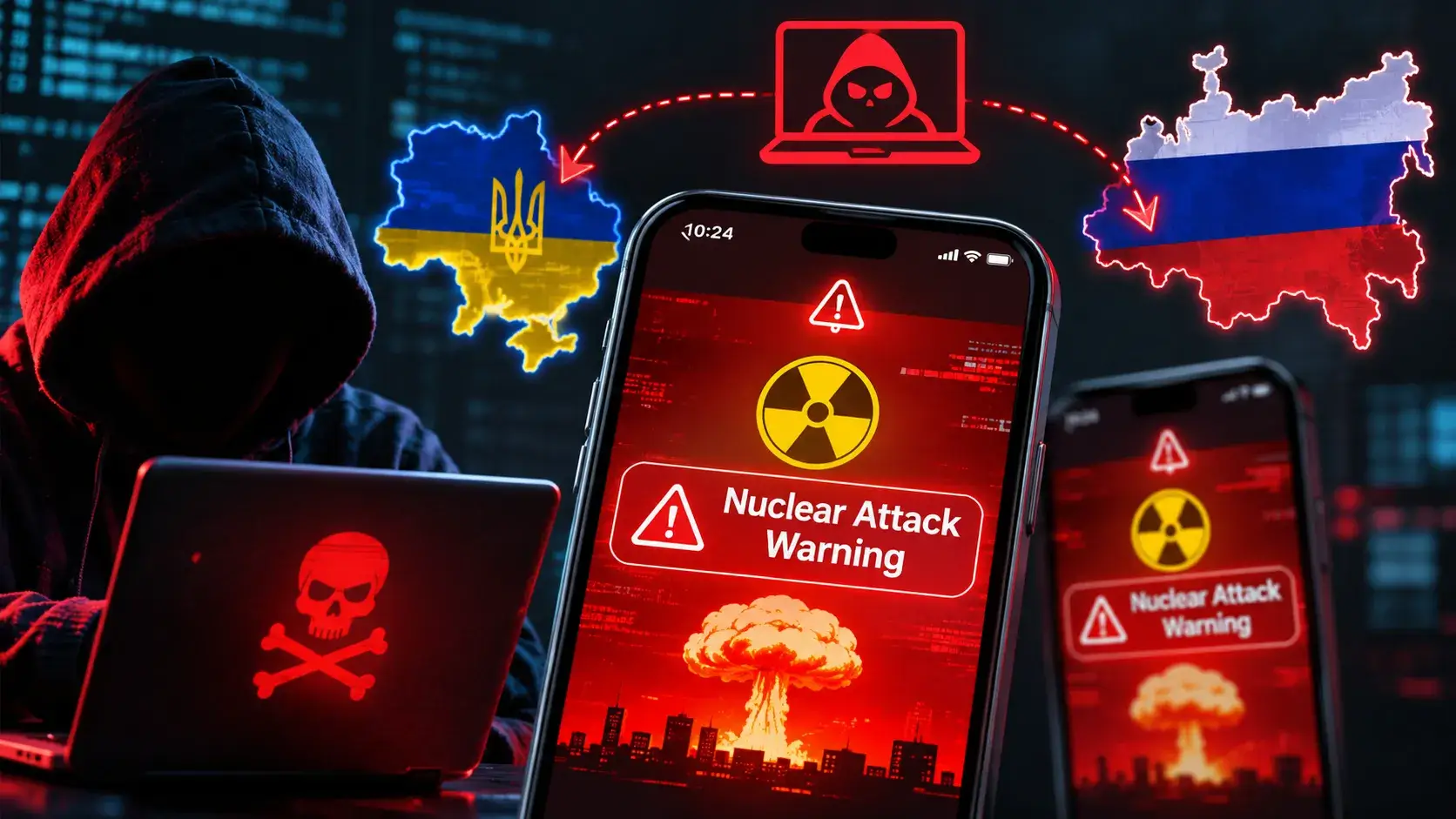
Hackers have compromised emergency alert applications in Ukraine and Russia, disseminating false warnings related to nuclear threats and radiation levels just as officials were working to reassure the public that no emergencies were occurring. This alarming incident highlights the vulnerabilities present in trusted civilian warning systems amid the ongoing conflict in the region.
On November 1, Ukraine reported significant disruptions to its emergency services, noting that falsified alerts were interfering with the messaging systems designed to keep citizens informed about threats. Hours later, Russian officials also disclosed that a “massive cyberattack” had targeted their emergency ministry’s mobile application. The timing and nature of these cyberattacks raise profound concerns about the reliability of civilian warning channels at a time when both countries face ongoing military tensions.
The integrity of the messaging systems assumes a pivotal role in maintaining public safety during wartime. As residents rely on these alerts for timely and accurate information, any misinformation can create panic or confusion. While the two incidents were temporally close, authorities have not yet determined if they were executed by the same group or utilized similar infrastructure or methods.
In the case of Ukraine, the Air Alert application was the primary target. It displayed incorrect notifications that included alarming messages about potential radiation hazards, chemical threats, and even ongoing street fighting. One particularly provocative message claimed that Russia had deployed its Oreshnik missile. The Ukrainian Air Force was swift to counter these claims, urging the public to remain calm and to rely on verified updates from official channels. This reflects not only an immediate response to an urgent situation but also a broader strategy to maintain public trust in government communications.
In light of these events, the operators of the Air Alert application revealed that unauthorized parties had indeed tampered with its functionality. As a preventive measure, they temporarily suspended the application’s operations. Subsequently, services were restored overnight, but users were cautioned against clicking on any links present in suspicious notifications. This warning underscores a secondary risk posed by the attack: recipients may inadvertently fall victim to phishing scams or other malicious activities by responding hastily to what they believe to be legitimate notifications.
While investigators are currently looking into these breaches, no public confirmations have indicated credential theft, malware insertion, or overt phishing tactics linked to this wave of misinformation. Meanwhile, separate incidents involving a trojanized Red Alert application aimed at Israeli users exemplify the broader trend of bad actors exploiting public reliance on emergency alert systems through diverse attack vectors.
On the Russian side, the emergency ministry confirmed that cyber intruders gained access to their mobile application, relaying false public safety information that reportedly included messaging about nuclear warheads. However, in their communications, Russian officials classified this misleading content more generally as “fake information.” They reassured the public that this application is intended to complement other warning systems, such as SMS alerts, broadcast messages, municipal sirens, and loudspeakers. They asserted that these other mechanisms were operating as intended despite the turmoil caused by the cyberattacks.
Interestingly, a root-cause analysis of either incident has yet to be published, leaving many questions unanswered about how such breaches could occur without a clear identification of vulnerabilities or compromised accounts. Without pointing to any specific exploits, such as a CVE (Common Vulnerabilities and Exposures), there is insufficient evidence to categorize these breaches as either a supply-chain intrusion or a device-level infection.
Amid these tumultuous events, Ukraine’s strategic communications center has placed the blame squarely on Russia, though Moscow has refrained from attributing the hack to a particular entity. The attacks coincided with the conclusion of a temporary humanitarian ceasefire in southern Kherson. However, merely timing does not substantiate claims of out-and-out coordination or retaliation between the two nations.
The ongoing conflict has also seen various other cyber exploitation attempts against Ukrainian surveillance systems and systemic phishing campaigns aimed at undermining critical infrastructure. While these incidents provide a broader context of cyber threats in the region, they do not definitively establish linkages or attribution for the recent breach incidents. In the wake of the attacks, Ukrainian authorities have directed the public towards legitimate emergency channels and reliable physical alerts, affirming the need for caution when confronted with suspicious messages.
As the situation unfolds, the emphasis on maintaining the integrity and security of emergency notification systems continues to grow, especially as tensions remain high between Ukraine and Russia.