


Cyberattack on Slovenian Meat-Processing Plant Highlights Vulnerabilities in Refrigeration Systems
In a troubling incident, Salamerija Alpija, a meat-processing facility managed by the Tolmin Agricultural Cooperative in Slovenia, fell victim to a significant cyberattack that compromised its remote cold-chain management platform. This incident, disclosed on November 26, 2026, underscores the escalating trend of cyberattacks targeting European refrigeration infrastructure, causing alarm for industry stakeholders and consumers alike.
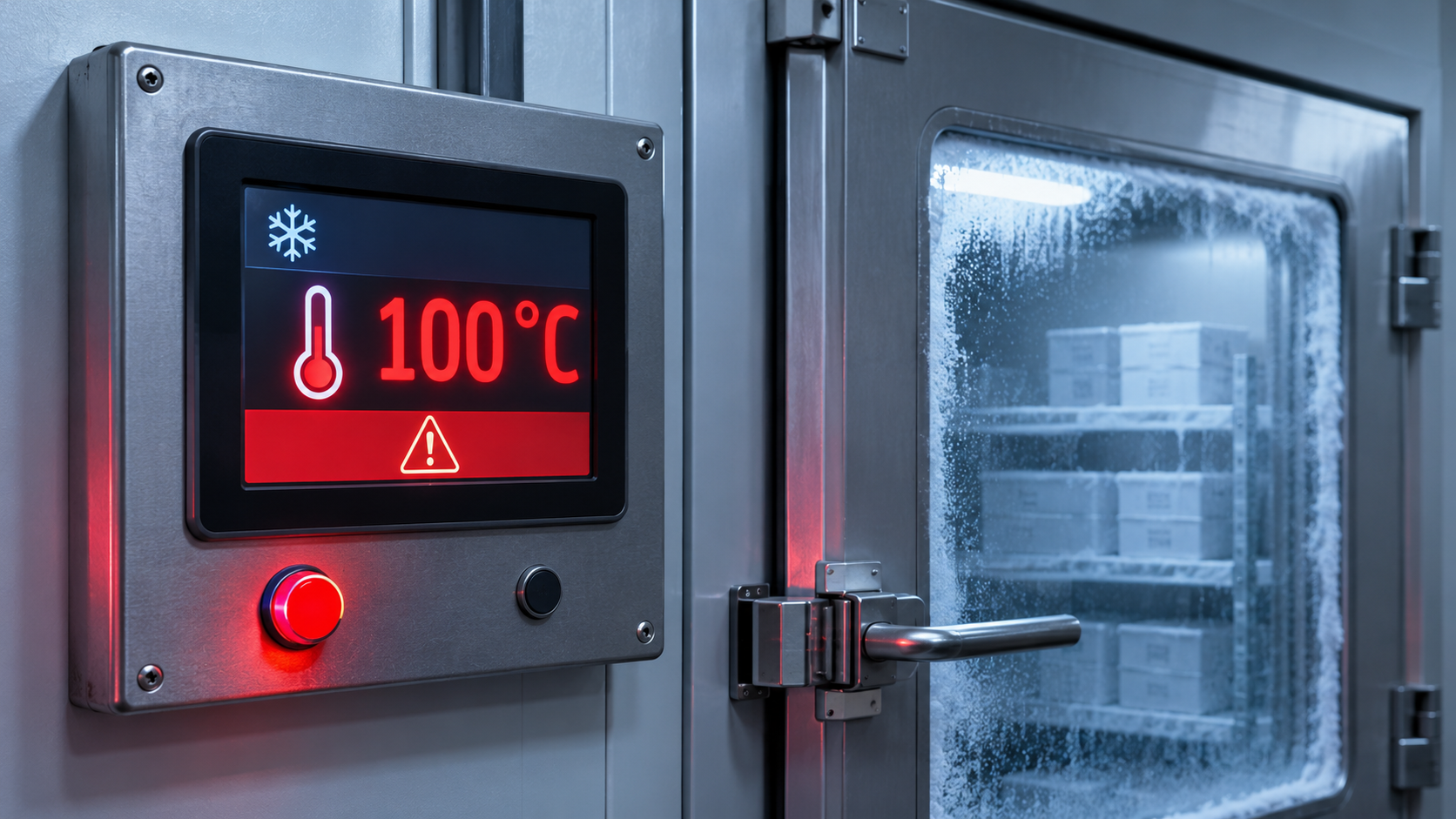
The breach was detected during a routine operational inspection shortly after noon. An employee noticed a drastic and unusual adjustment in a freezer chamber where the temperature setpoint had been altered to a staggering 100°C. Immediately suspecting foul play, the staff conducted checks across other sites associated with the plant. Alarmingly, they discovered similar manipulations in a slaughterhouse and a retail store refrigerator, where setpoints had been altered from their normal range of 2–3°C to an unexpected 20°C.
A Disturbing Discovery: Signs of Sabotage
Following the alarming discovery, a service technician attempted to authenticate access to the supervisory control interface of the plant’s management system. However, the access attempt was blocked. The screen presented an unsettling image of Italian politician Matteo Salvini alongside an Italian caption, indicating a successful administrative takeover of the web-based management console. This tactic has drawn comparisons to the actions of Iranian-affiliated groups known for exploiting industrial programmable logic controllers (PLCs) and manipulating human-machine interface (HMI) displays—essentially disguising real-time process states from operators.
The attackers’ actions bypassed the facility’s alarm logic, which is designed to issue alerts when unexpected temperature fluctuations occur. By altering the parameters within the digital control layer, the hackers ensured that deviations from setpoint thresholds went unnoticed, adding another layer of complexity to the breach.
In response to the unauthorized intervention, Slovenian law enforcement has launched an investigation into the incident. The cooperative promptly disconnected all refrigeration controllers from the network and reverted to manual setpoints, with staff now conducting temperature checks every few hours to mitigate risk.
Financial Risks and Near Misses
The financial implications of this attack are significant; Tolmin reported that goods valued at approximately €250,000 were potentially at risk. Fortunately, staff were able to catch the setpoint alterations before any product was compromised, emphasizing the critical importance of constant vigilance in these operational environments. Director Nikola Šavle acknowledged that the outcome could have been far worse had the incident occurred over a weekend when staffing levels are reduced, thereby increasing the likelihood of undetected spoilage.
The incident highlights a critical vulnerability inherent in modern industrial systems. Internet-reachable controllers lacking robust authentication measures remain prime targets for such cyberattacks. A passive analysis conducted using Shodan revealed a staggering 6,330 internet-exposed industrial control systems (ICS) devices near U.S.-based data centers, including BACnet controllers and Niagara Framework instances responsible for managing cooling and power functions.
Broader Context: A Wave of Similar Attacks
This breach in Slovenia fits into a broader context of similar attacks across Europe. Just weeks earlier, numerous stores in Belgium, Luxembourg, Sweden, Ireland, the Netherlands, and Estonia reported abnormally high refrigeration temperatures reaching up to 50°C. An Estonian cold-technology distributor disclosed that attackers gained access to an older Danfoss refrigeration system control computer, revealing the potential risks associated with outdated technology that had not been updated following a prior attack that affected numerous facilities in France.
Investigators have not yet identified the perpetrators behind the Slovenian attack, although prevailing patterns suggest opportunistic exploitation of unprotected operational technology management systems. The techniques employed in this breach resemble those used by known malicious actors, such as CyberAv3ngers, who exploit default or weak credentials to alter setpoints and obstruct legitimate users.
Recommendations for Enhanced Security
To better safeguard against such incidents, experts recommend critical security measures. Organizations should prioritize removing refrigeration controllers from direct internet exposure and implement remote access solutions that operate behind virtual private networks (VPNs) with multi-factor authentication. Additionally, enforcing unique credentials and segmenting operational technology from corporate IT networks can mitigate risks significantly.
Monitoring systems should be in place to flag any abnormal setpoint changes, as well as unexpected writes over Modbus TCP and EtherNet/IP protocols. Incorporating independent temperature sensors that operate independently of the primary control platform can also enhance alarm coverage in case of a compromise.
Furthermore, maintaining offline, integrity-checked backups of controller configurations, disabling default administrative interfaces, and ensuring that firmware on legacy units is kept up to date are all vital strategies for minimizing vulnerabilities.
As cyber threats continue to evolve, the imperative to bolster system security within critical infrastructure becomes more pressing. The recent incident at Salamerija Alpija serves as a stark reminder of the ongoing challenges faced in protecting vital industries from cyberattacks.