
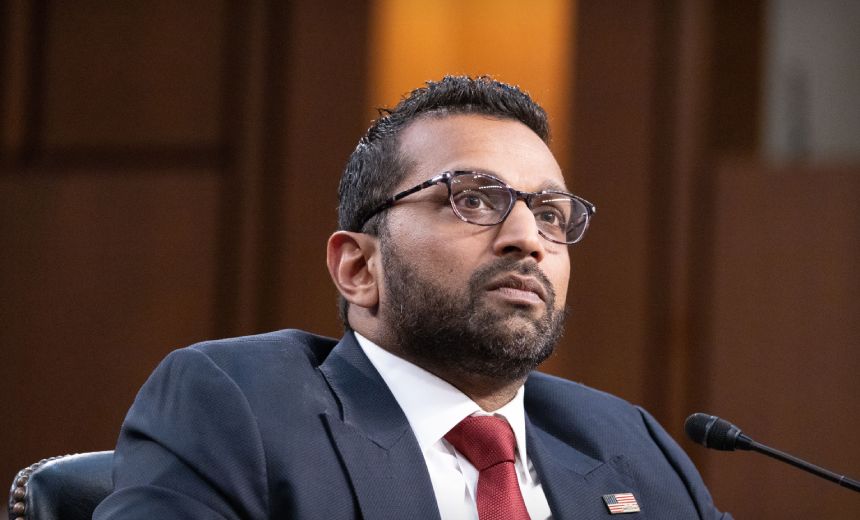


FBI Director’s Email Hack Linked to Iranian Intelligence Group
Recent cybersecurity events have raised significant concerns regarding the security of high-profile government officials, notably FBI Director Kash Patel, whose personal emails were allegedly compromised by hackers believed to be associated with Iranian intelligence. This breach, characterized by the publication of personal communications online, highlights the increasing cyber threats faced by government entities.
The breach involves photos and a series of emails reportedly extracted from Patel’s Gmail account, with timestamps ranging from early 2010 to 2019. Notably, at least one of the published emails dates back to February 6, 2022. While the scope of the leaked information raises eyebrows, the FBI downplayed the incident, indicating that "the information in question is historical in nature and involves no government information." The agency assured the public that it has taken all necessary precautions to mitigate risks linked to this compromise and has vowed to pursue those responsible for the breach.
The hackers responsible for this incident operate under the name Handala, a group thought to be a front for Iranian intelligence. Their activities intensified following the initiation of a bombing campaign against Iran by the United States and Israel on February 28, 2026. This spike in cyber activity aligns with predictions made by cybersecurity experts, who had forewarned that Tehran might retaliate against increasing military pressures through enhanced hacking campaigns.
Remarkably, Handala managed to launch its website shortly after the FBI seized four domain names linked to the Iranian Ministry of Intelligence on March 19. This rapid response underscores a sophisticated operational capability aimed at undermining Western cybersecurity measures. The group had previously claimed responsibility for breaching the Active Directory of Stryker, a U.S. medical device manufacturer, an action that led to significant disruption in data integrity and business operations.
Experts previously cautioned that such aggressive military maneuvers could evoke retaliatory responses from Iran, particularly in the realm of cyber warfare. Indeed, reports indicate that the Iranian government has imposed extensive internet restrictions domestically, initiating a near-total blackout that has lasted for nearly a month. Internet observatory NetBlocks noted that this blackout creates a two-tiered system, where only regime officials have access to online resources, further limiting the flow of information.
In addition to Patel’s leaked communications, Handala also disclosed information from various other sources. The group claimed to have released a staggering 851 gigabytes of confidential data, including identities and communications from members of the Sanzer Hasidic Jewish community. Furthermore, the group disseminated subscribers’ details from a Telegram channel belonging to an anonymous Iranian user and made public the purported identities of senior Israeli military and intelligence officers. This diversification of targets signifies a broader strategy aimed at intimidating not only government officials but also specific community groups within the geopolitical landscape.
The incident is a stark reminder of the growing landscape of cyber threats that governmental and private entities alike must navigate. While the FBI contends that the information leaked does not constitute a risk to national security, the implications of such breaches are serious. They highlight vulnerabilities in personal data security, especially for those occupying high-stakes positions in government. The repercussions of this breach could resonate beyond merely compromising personal information, as it may serve to embolden similar hacking operations against other officials and organizations.
As global tensions continue to rise amid ongoing military engagements and geopolitical maneuvering, the importance of robust cybersecurity measures has never been clearer. Experts agree that continuous vigilance, timely threat detection, and proactive mitigation strategies will be essential to safeguard sensitive information against evolving threats in the cyber landscape.
Looking forward, it becomes evident that both government agencies and private organizations must remain committed to advancing their cybersecurity frameworks to fend off relentless and increasingly sophisticated attacks. The actions of groups like Handala illustrate the necessity for collaborative efforts and intelligence sharing across borders to protect against the persistent dangers posed by state-sponsored cyber actors. Ultimately, adapting to and preparing for these threats is imperative in preserving national security and protecting sensitive personal information from potential exploitation.