
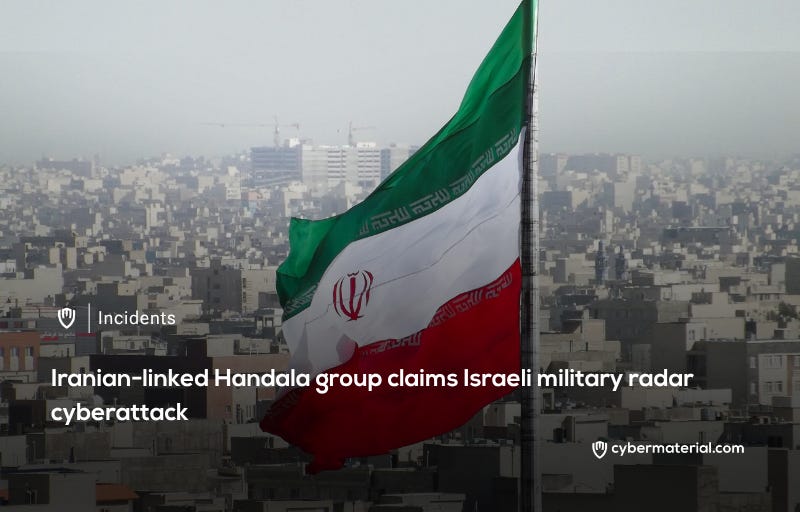


Alleged Cyber Attack on Israeli Military Radar Systems: Claims Under Scrutiny
On June 7, 2026, a hacker group identified as Handala, which has links to Iranian interests, announced it had disrupted Israeli military radar systems. This announcement came on the heels of renewed hostilities between Israel and Iran, following a brief two-month ceasefire. Handala claimed to have placed the Kfar Yona municipality under a "digital siege," positioning its actions as a warning to Israel and its allies. However, investigations led by security researchers into Handala’s claims indicate a significantly different reality.
The security firm SOCRadar conducted an in-depth analysis of the group’s assertions and shared its findings with Hackread.com. According to SOCRadar, the evidence provided by Handala contained critical inconsistencies. The group had released screenshots purportedly as proof of its capabilities; these images depicted an Interactive Voice Response (IVR) admin panel from a Tadiran Telecom Aeonix system. This system is primarily designed for managing office telephone routing, raising immediate questions about the claims of cyber warfare aimed at military infrastructure.
The images provided by Handala depicted a sample auto-attendant call routing script complete with Hebrew language settings, exemplifying the system’s operational parameters. Notably, the text within the screenshots read, "This is a sample script to demonstrate the different possibilities in Aeonix Auto Attendant," further indicating that the hackers had ventured into the realm of administrative telephone systems rather than military or tactical networks.
Indeed, the Aeonix system serves as a digital receptionist application, responsible for automatically answering and routing incoming calls for various businesses and governmental bodies. It lacks any connections to military radar networks or air defense systems, a fact that starkly contradicts the organization’s claims of disrupting Israel’s military radar systems.
This incident is not unprecedented for Handala, which has a well-documented history of timing its cyberattack claims to coincide with real-world military events. Researchers noted that this tactic appears aimed at amplifying psychological impact, capitalizing on the tensions between Iran and Israel. Handala has engaged in several verified cyber operations since the onset of the current conflict in February 2026, including a notable data-wiping attack against the medical technology firm Stryker Corporation. This particular incident led to FBI domain seizures and subsequent attribution from the Department of Justice, marking a significant escalation in the group’s activities. Moreover, Handala has claimed responsibility for breaching the personal Gmail account of FBI Director Kash Patel, as well as leaking sensitive documents.
Experts express concern that publicly unveiling an actual military breach on a platform like Telegram would be a strategically reckless move for any hacking group. This notion leads analysts to suspect that Handala’s exaggerations may be more about propaganda than actual operational success. As such, it is advised that victims and observers alike substantiate breach claims through independent technical analyses, rather than relying solely on self-reported assertions from the attackers.
While this most recent assertion from Handala appears inflated upon close examination, the threat posed by Iran-linked hacking groups is ever-present. These organizations remain technologically equipped and capable of launching damaging operations that could affect both the private sector and government targets. The cyber landscape is ever-evolving, making it crucial for organizations to remain vigilant and proactive in their cybersecurity measures.
As the conflict continues and tensions escalate, the implications of such cyber threats extend beyond immediate technical concerns. They engage with broader geopolitical dynamics, potentially shaping responses from national governments and international coalitions. For now, the veracity of Handala’s claims remains disputed, underscoring the need for heightened scrutiny in the realm of cybersecurity and cyber warfare.
Source: Hackread