
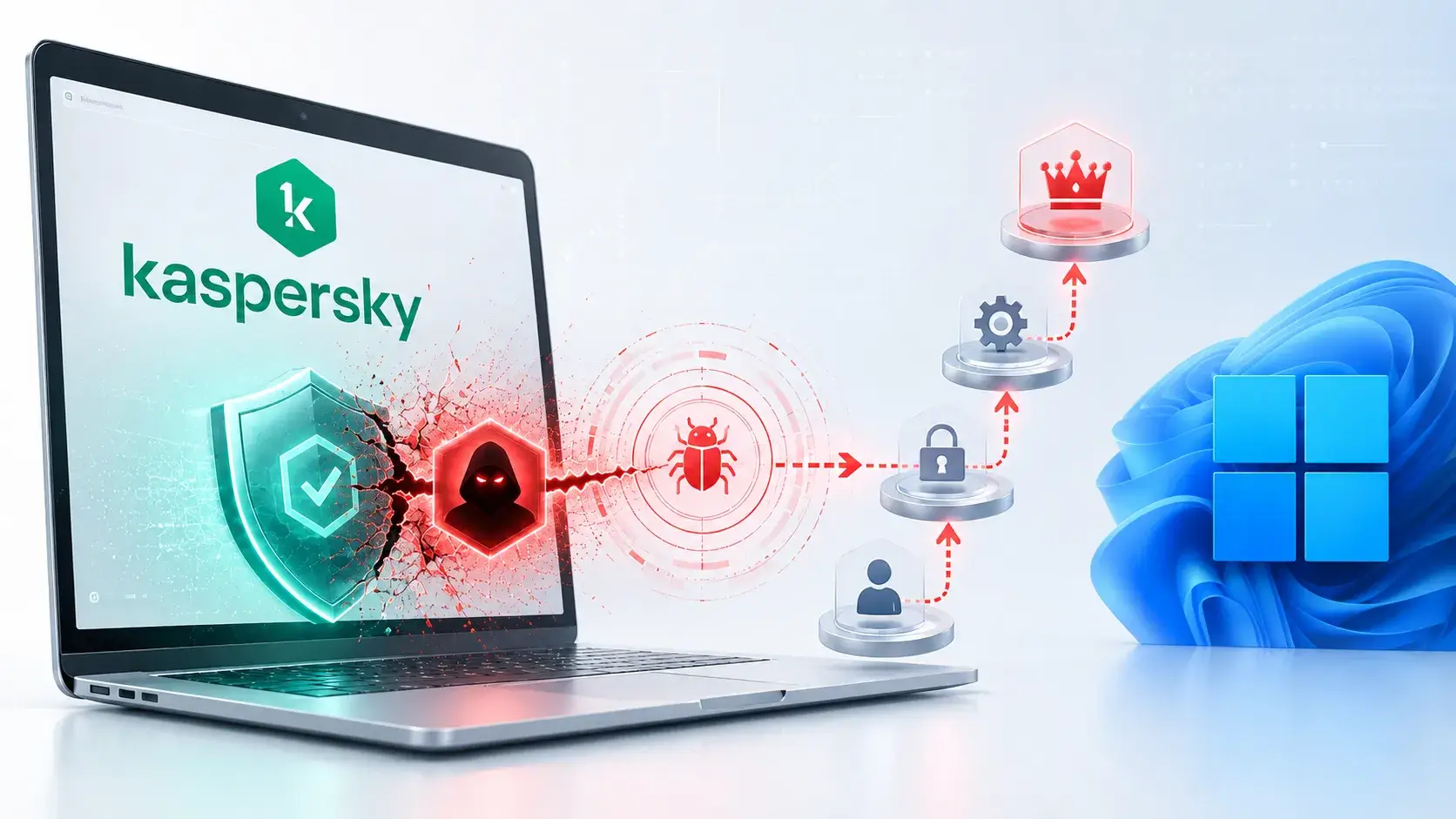


Alleged HardBreacher Exploit Targets Kaspersky Endpoint Security
Researchers have recently spotlighted a vulnerable point within Kaspersky Antivirus for Endpoint, specifically a proof of concept known as HardBreacher. This alleged local privilege escalation flaw currently remains unpatched and enables local users to manipulate a privileged component of the software. The implications of this vulnerability have significant ramifications for both security teams and end-users, emphasizing the need for heightened vigilance.
The code associated with HardBreacher surfaced through the actions of a GitHub user identified as MSNightmare, who is claiming it to be a zero-day vulnerability. However, it is essential to note that Kaspersky has not yet validated these findings. The uncertainty surrounding this exploitation has left organizations searching for clarity and assurance about their cybersecurity strategies.
The author of the project has indicated that the proof of concept was tested on a patched Windows 11 system, specifically utilizing Kaspersky for Endpoint version 14.0.0.504. The README documentation attached to the project elaborates on the nature of this privilege-escalation vulnerability. When exploited, the flaw reportedly creates a file named C:\Windows\System32\MY_SNAKE_IS_SOLID.dll, granting full permissions to the user who executes the code.
The reputation of this vulnerability is alarming, as MSNightmare describes it as a pathway that enables a standard user to ascend to SYSTEM-level privileges. However, as of the time of writing, independent validations have not yet been established, nor has there been a response from Kaspersky regarding this issue.
It is crucial to highlight that HardBreacher is not categorized as a remote initial-access exploit. For it to be effective, an attacker would need prior access to execute code or to possess local account credentials. Despite this prerequisite, the implications of local privilege escalation are concerning. Such vulnerabilities can often be exploited in combination with various tactics, including phishing schemes, malware execution, or an initial compromise.
In practical terms, these exploits pose risks of disabling defense mechanisms, accessing sensitive data, establishing persistent access to systems, or enabling lateral movements across networks via credentials or tokens that are exposed in higher-privileged settings.
While the author warns that the current code remains unreliable—potentially causing errors and requiring multiple execution attempts—this limitation should not be construed as a mitigation strategy. The availability of this proof-of-concept code reduces the barriers for both security researchers and malicious actors, allowing them to dissect the vulnerable attack surface, refine the exploit’s reliability, or incorporate this technique into a multi-stage intrusion approach.
Moreover, the README notes that taking control of Kaspersky’s user interface can lead to destabilization of its functionality. This could result in unexpected file access decisions and disruption of the software’s core security features, adding another layer of concern for enterprises relying on Kaspersky’s solutions.
Given the current situation, organizations are encouraged to treat these claims as significant yet unverified. It is crucial for security teams to conduct thorough inventories of all endpoints running Kaspersky Endpoint Security for Windows or the noted version of Kaspersky for Endpoint. Preserving version and policy data is vital while waiting for vendor advisories, Common Vulnerability and Exposure (CVE) assignments, detection guidance, or official fixes.
It is also advisable for system administrators to refrain from executing this public proof-of-concept code in production environments, as doing so could expose organizations to further risk.
To attenuate risks associated with this exploit, defenders are advised to implement the principle of least privilege and limit interactive access for regular users. Monitoring for any anomalous write actions or permission changes within the C:\Windows\System32 directory can serve as an essential deterrent.
Additionally, telemetry reviews for unexpected child processes stemming from Kaspersky user interface components, security service interruptions, abrupt configuration changes, and DLL creation in sensitive directories should become a part of the regular security protocol. Endpoint detection teams are encouraged to establish a legitimate baseline for Kaspersky processes to mitigate false positive alerts.
Organizations must also explore the testing of vendor-supplied remediation in controlled environments before prioritizing full-scale deployment across shared workstations, developer endpoints, and administrator systems.
Until Kaspersky confirms the vulnerability and releases any fix, it is paramount for organizations to maintain heightened monitoring, enforce strict local access controls, and swiftly triage any incidents indicative of unprivileged accounts modifying protected operating system paths. The proactive approach will ultimately serve to bolster defenses during a time of uncertainty in cybersecurity landscape.