
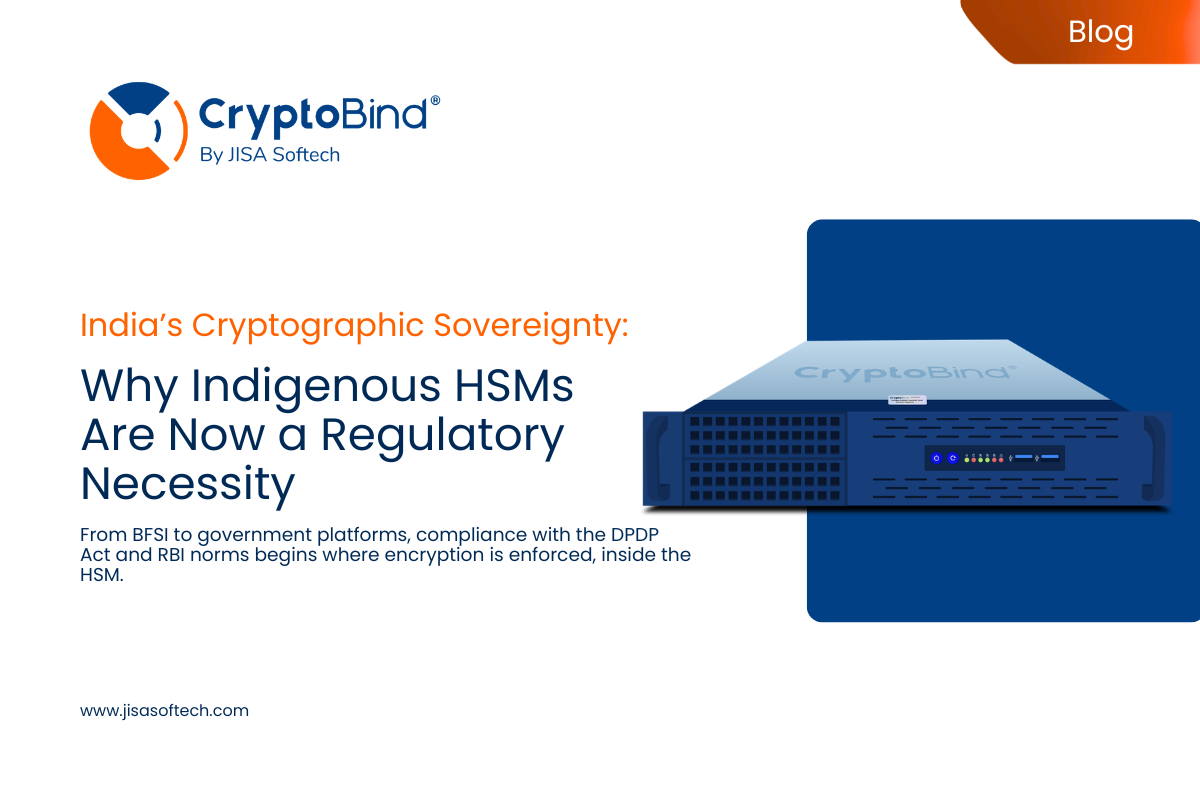


Data Sovereignty in the Digital Age: The Role of Hardware Security Modules (HSMs) in India’s Security Landscape
In the contemporary digital age, data has emerged as one of the most invaluable resources for both corporations and nations. The seamless flow of data across borders, combined with increasing system-to-system interactions, underscores the imperative for nations to protect the confidentiality, integrity, and availability of their data. This necessity is particularly pressing when it involves citizens’ information, financial transactions, and critical infrastructure. In this context, India has recognized data sovereignty as a national priority, intricately tied to the deployment of technologies such as Hardware Security Modules (HSMs).
The regulatory landscape in India is rapidly evolving, primarily due to the introduction of the Digital Personal Data Protection Act (DPDP Act). This new regulation, along with guidelines from the Reserve Bank of India (RBI) and international security frameworks like PCI DSS, has transformed HSMs from being merely beneficial components to essential requisites within a secure digital ecosystem. HSMs serve as tamper-resistant devices designed to generate, store, and manage encryption keys securely. They form the cornerstone of trust in encryption protocols, digital signatures, authentication processes, and the operations of certificate authorities.
A significant aspect of the DPDP Act is its call for stringent compliance measures regarding the handling of personal data. For entities operating under the purview of this Act, encryption and effective key management are not optional; they are vital components of demonstrating sufficient security protocols. HSMs enable organizations to establish secure methods for distributing cryptographic keys, storing them tamper-proof, and managing their lifecycle, thus mitigating operational risks inherent in the absence of hardware-based cryptographic solutions.
Additionally, the DPDP Act emphasizes the importance of sovereign cryptography. The law outlines the legal handling of personal data, mandates fiduciary responsibilities for data management, and insists on robust safeguards against data breaches. While the Act provides general guidelines for security controls, it translates into concrete requirements for strong encryption methods and reliable key control mechanisms. If encryption is used but cryptographic keys are accessible under foreign jurisdiction, issues of sovereignty arise. Consequently, HSMs developed within India will play a pivotal role in ensuring compliance by maintaining keys domestically and aligning security frameworks with local audit requirements.
Moreover, compliance with RBI regulations requires strong cybersecurity measures for financial institutions, including strict coding of sensitive data, secure digital signatures, effective authentication controls, and managed cryptographic key lifecycles. Institutions audited by the RBI have found that software-based encryption may not instill sufficient confidence in security protocols. HSMs, offering hardware-level protection against unauthorized key access, permit financial organizations to meet RBI expectations effectively. As a result, these institutions benefit from localized key custody, streamlined regulatory audits, reduced cross-border compliance issues, and enhanced defenses against potential internal and external threats.
As India’s payment ecosystem grows at an unprecedented pace, adherence to the Payment Card Industry Data Security Standard (PCI DSS) is paramount. The PCI DSS stipulates requirements for strong encryption of cardholder data, secure storage of cryptographic keys, and documented key rotation policies. By simplifying PCI DSS auditing through HSMs, organizations can not only ease the compliance burden but also bolster transaction trust, particularly in payment gateways and ATM networks.
Real-world scenarios illustrate the tangible impacts of HSMs in enhancing compliance and security for both financial institutions and government entities. For example, a prominent private sector bank confronted repeated audit challenges concerning key management and internal custody of cryptographic operations, which drew regulatory scrutiny. Following the integration of an indigenous HSM platform, the bank was able to generate all cryptographic keys in India, automate key destruction and rotation policies, and maintain tamper-evident audit logs. These adjustments led to smoother RBI audits and increased confidence in their online banking services.
Similarly, government digital identity and citizen service platforms, essential for managing sensitive personal data, benefit greatly from the implementation of HSMs. By enforcing hardware-based encryption and instituting regular key management protocols, these services not only comply with the DPDP Act but also bolster the nation’s digital infrastructure and accountability measures.
The dependency on foreign cryptographic hardware poses several risks, including inadequate regulatory transparency and elevated operational costs. Developing indigenous HSMs supports national initiatives such as Atmanirbhar Bharat, promoting a local compliance-by-design architecture, enhancing response capabilities, and fostering strategic autonomy in cyberspace. Cryptographic sovereignty, therefore, becomes crucial for a nation constructing one of the world’s largest electronic infrastructures.
CryptoBind, an emerging platform within India, exemplifies the nation’s strides toward establishing sovereignty in cryptographic infrastructure. This compliance-centric platform not only aligns with the DPDP Act but also incorporates financial controls in step with RBI guidelines and ensures payment cryptography adheres to PCI DSS. The integrated, hardware-based approach that CryptoBind offers transforms compliance into a strategic asset, enabling organizations to enhance their operations while maintaining security.
Looking ahead, the Digital Personal Data Protection Act has reshaped how Indian organizations approach data security. The enforcement of data protection laws has transitioned from being paper-based to platform-oriented. Indigenous HSMs, supported by innovative tools such as CryptoBind, will not merely be security solutions; they will serve as foundational pillars for India’s digital trust landscape, ensuring that the nation’s ambitious digital transformation initiatives remain credible and legitimate. In a world increasingly reliant on digital processes, secure cryptographic infrastructure will be essential for maintaining both public trust and national security.