


Investors Sue Oracle Over Alleged Financial Misrepresentation Related to OpenAI
In a recent legal development, Oracle has found itself embroiled in a lawsuit filed by an investor group that accuses the prominent software company of failing to disclose crucial financial risks associated with its relationship with OpenAI, a well-known customer experiencing financial difficulties. The suit, initiated by a municipal retirement system from Sterling Heights, Michigan, claims that Oracle did not adequately inform investors about OpenAI’s challenges in meeting its internal revenue and user growth targets.
The core of the lawsuit, filed on July 7, 2026, revolves around allegations that Oracle’s financial disclosures were misleading. According to the complaint, Oracle had made significant commitments, including hefty capital investments and long-term lease obligations necessary to establish the artificial intelligence (AI) infrastructure to support OpenAI and similar clients. However, the lawsuit posits that the software giant failed to convey essential information about OpenAI’s precarious financial situation, raising serious concerns about the sustainability of Oracle’s projected growth.
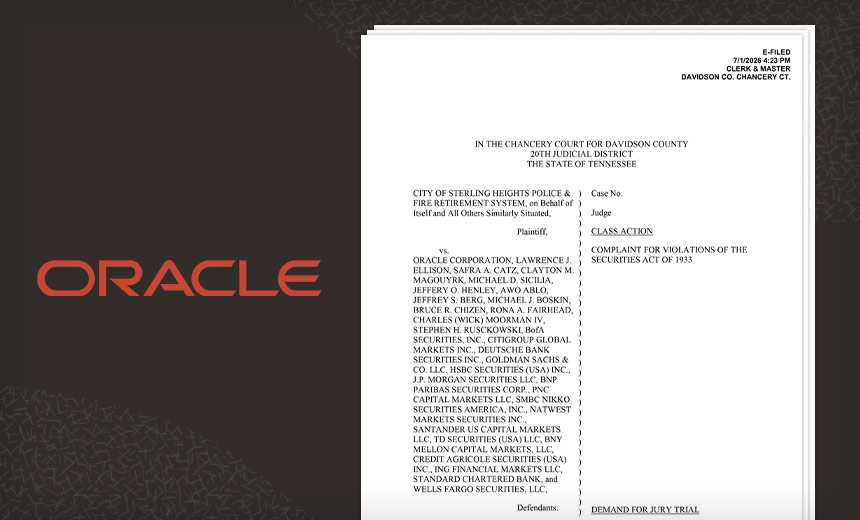
The City of Sterling Heights Police and Fire Retirement System, which leads the class-action lawsuit, articulates its discontent with Oracle’s handling of the situation in a detailed 20-page document submitted to Davidson County Chancery Court. The complaint underscores that Oracle’s “Registration Statement” was prepared with negligence, leading to the inclusion of incorrect statements and omissions that misled investors.
As part of its defense, Oracle maintained that growth in performance obligations was largely due to substantial cloud contracts, which were touted as evidence of robust long-term demand for its Oracle Cloud Infrastructure services. However, the lawsuit asserts that investors were not informed that a significant portion of this backlog hinged on OpenAI, a customer whose financial health was reportedly deteriorating at that time.
Oracle’s executives had confidently claimed that the company was seizing a unique business opportunity, positioning itself as a critical provider of essential infrastructure for the burgeoning AI sector. They showcased potential revenue worth hundreds of billions of dollars that Oracle had supposedly secured from key players in the emerging AI landscape. Nevertheless, the lawsuit argues that this portrayal was misleading and failed to consider OpenAI’s missed revenue targets and internal concerns about its financial viability.
It is noteworthy that the lawsuit cites internal communications from OpenAI’s Chief Financial Officer (CFO), who raised alarms about the company’s ability to sustain its cloud-computing obligations. The allegations in the complaint emphasize that despite boasting impressive technological innovations—such as OpenAI’s proprietary large language model powering the generative AI chatbot ChatGPT—the company was still unprofitable and generating only a fraction of the revenue required to meet its commitments to Oracle, as well as other significant obligations totaling over $1 trillion.
The complaint further alleges that Oracle engaged in significant capital expenditures, accrued increased debt, and agreed to more than $200 billion in long-term lease commitments to support its AI infrastructure. Remarkably absent from Oracle’s disclosures, the lawsuit claims, was any information indicating that these investments were significantly dependent on a customer with uncertain financial capabilities.
As stipulated in the lawsuit, U.S. Securities and Exchange Commission (SEC) regulations mandate companies to disclose any known trends or uncertainties likely to have a materially adverse impact on net sales or revenues. The city retirement system contends that Oracle overlooked these critical obligations, particularly concerning the potential risks arising from OpenAI’s financial instability.
Moreover, the lawsuit accuses Oracle of not adequately describing the investment risks associated with its February 2026 debt offering. It alleges that the offering materials emphasized astonishing AI-driven growth while conspicuously failing to address significant risks tied to OpenAI’s financial condition and Oracle’s reliance on the company for justifying its extensive AI infrastructure investments.
In response to these allegations, the City of Sterling Heights Police and Fire Retirement System seeks not only compensatory damages but also rescission for investors who acquired notes under the premise of Oracle’s misleading claims. Furthermore, the lawsuit highlights that individual defendants actively solicited investors and promoted the February 2026 Note Offering primarily for their financial benefit and that of Oracle.
As this lawsuit unfolds, the stakes appear high for Oracle and its stakeholders. If the allegations hold true, they could have serious implications not only for Oracle’s financial standing but also for investor trust in the burgeoning AI sector. The outcome may ultimately hinge on the court’s interpretation of the adequacy of Oracle’s disclosures and whether they sufficiently met SEC requirements.