


Japan’s Ambitious Bet on Physical AI: A Strategic Shift in Industrial Manufacturing
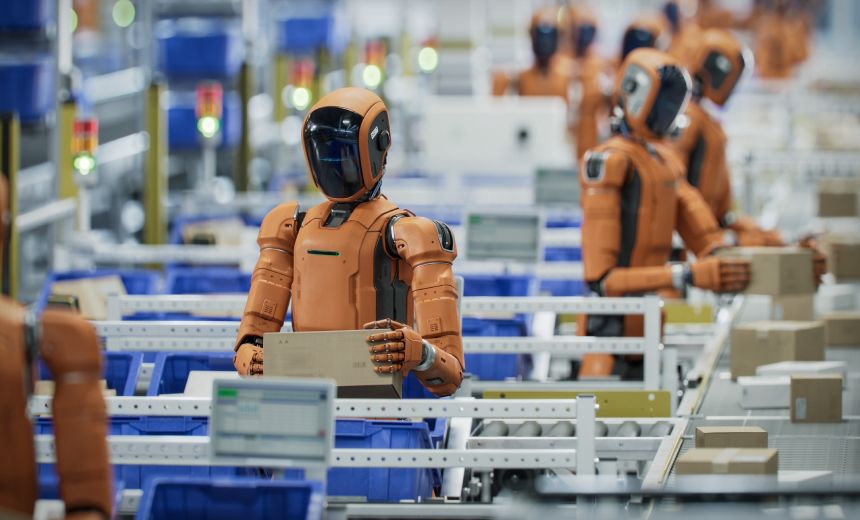
In an increasingly tech-driven world, Japan finds itself embarking on a grand initiative to harness "physical artificial intelligence" as a means to revitalize its AI sector and escape what has been characterized as a technological slump. This venture aims to leverage the country’s rich history in industrial manufacturing to develop AI applications that extend far beyond traditional computer interfaces, venturing into realms such as robot-operated factories, construction sites, and healthcare facilities.
A National Call to Action
In a significant move, Japan has unveiled a revised national AI strategy that underscores the need for a robust domestic AI sector. This was prompted by warnings from Japan’s digital minister, who expressed concerns that the country could end up becoming an "AI colony" if it fails to catch up with international competitors. As part of this strategy, a series of initiatives has been announced, all aimed at revitalizing Japan’s initiative in AI development.
One centerpiece of this strategy involves a government-backed AI infrastructure project in collaboration with Nvidia, a leading technology firm. In tandem with this, partnerships have been formed between various Japanese manufacturers, including the likes of Fanuc, Yaskawa, and Kawasaki, to advance the frontiers of physical AI. An innovative consortium named Noetra has also emerged, backed by dozens of Japanese companies, and is tasked with launching full-scale research and development (R&D) for a domestically-developed foundation model specifically designed for AI-enabled robots.
A Diverse Industrial Ecosystem
Japan’s ambition relies significantly on creating a comprehensive industrial ecosystem. This multifaceted approach encompasses not only robotics manufacturers but also semiconductor firms, telecommunications providers, and essential infrastructure operators. The founding members of Noetra, which include well-established entities such as SoftBank, Sony, NEC, and Honda, illustrate the collaborative spirit driving this initiative. Altogether, the consortium comprises approximately 40 companies poised to contribute their expertise and resources to bolster the nation’s AI capabilities.
The roadmap laid out by Noetra commences with the development of a reasoning foundation model, with aspirations to create an "omnimodal" model by 2028. This advanced model will be capable of processing various forms of data, including language, images, video, and audio. By that time, the goal is to establish "real-world native AI," capable of understanding spatial relationships and functioning effectively within real-world environments. Indicating the scale of this endeavor, Noetra plans to construct a new computing facility that will be equipped with a staggering 27,500 Nvidia Rubin graphics processors, with operations set to begin in mid-2028. Nvidia has commented that this advanced system will facilitate the training of physical AI models at a trillion-parameter scale.
Capitalizing on Manufacturing Expertise
Understanding the intricacies involved in operating machinery is vital for the success of AI systems. Japan’s rich legacy of telemetry, production records, and engineering knowledge accumulated over decades could serve as valuable training data for developing robust AI models. The Ministry of Economy, Trade and Industry has emphasized the potential of Japan’s manufacturing base and the operational data generated within factories as a source of competitive advantage in the realm of physical AI. Noetra’s key investors have similarly highlighted how Japan’s unique industrial prowess and data resources can be pivotal in crafting sophisticated AI models specifically tailored for robotics.
Challenges and Competition
However, the road ahead is not without its hurdles. The necessary data for training AI systems is often dispersed across disparate systems, and can be generated from aging equipment or even solely through the knowledge gained by seasoned engineers. Moreover, the reluctance of companies to share proprietary production data with partners—who may also be competitors—adds another layer of complexity to the collaboration network.
Competing countries, particularly China, are also aggressively pursuing advancements in embodied AI and industrial automation, benefiting from a vast manufacturing base and operational robot fleet. Meanwhile, American firms are actively leading the development of cutting-edge general-purpose AI models while exploring potential applications in robotics.
A Collaborative Experiment
Noetra represents an experiment not merely in developing models but also in coordinating collaborative efforts among numerous stakeholders. The 44 investors assembling under its banner bring together manufacturing knowledge, computing capabilities, and financial backing, which could facilitate the spreading of development costs and fortify access to a wide array of industries. However, this collaboration may also breed disputes concerning data sharing, prioritization of applications, and commercialization strategies.
Ultimately, Japan stands at a crossroads as it seeks to harness its existing factories, robotics companies, and deep reservoirs of industrial expertise. The crucial question remains: can Japan translate these assets into functional data, competitive models, and a well-coordinated ecosystem before its rivals—who often wield more substantial computing power and manufacturing scale—gain the upper hand? The coming years will be pivotal in determining the outcome of this ambitious endeavor.