
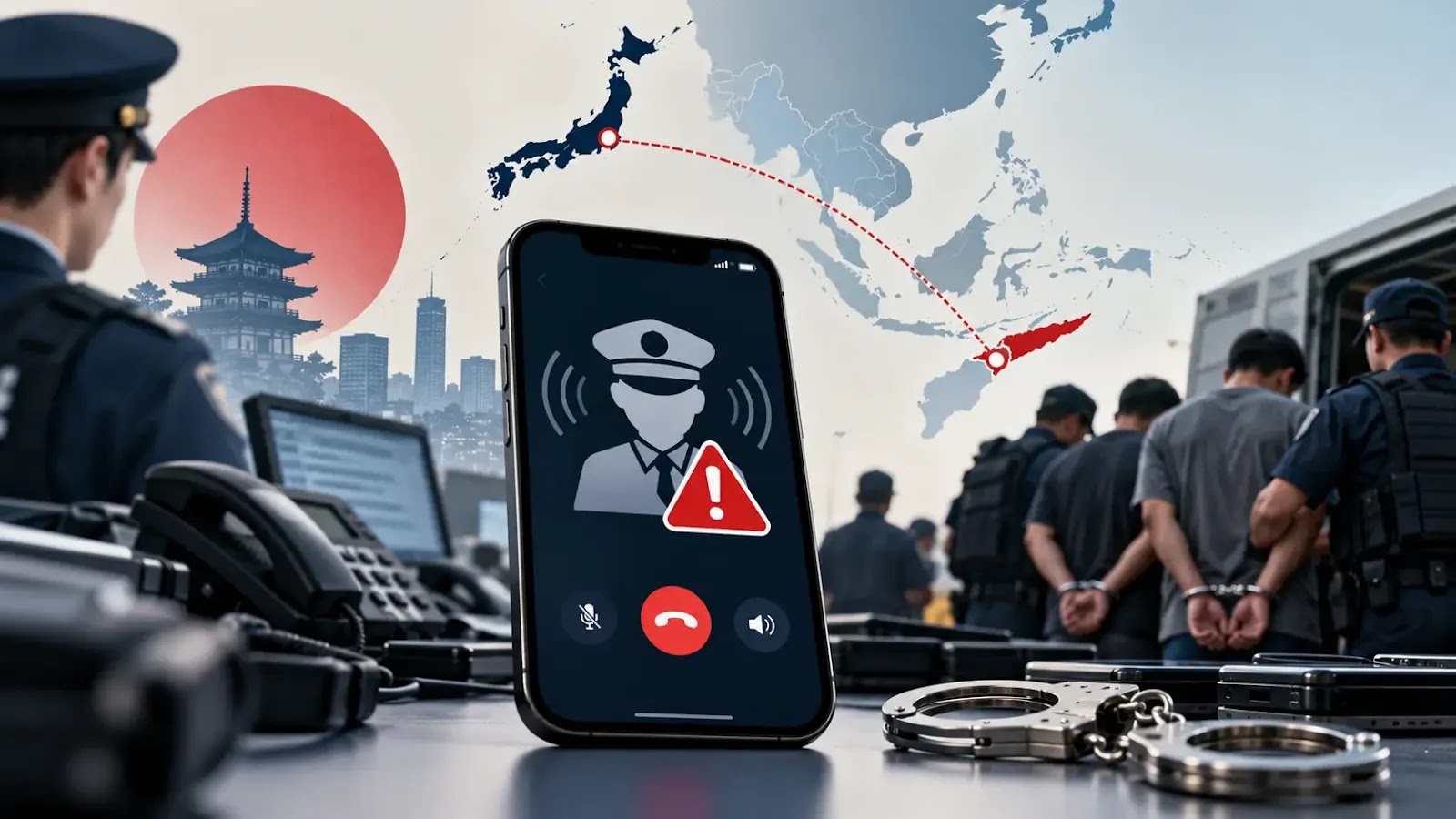


Timor-Leste has recently seen a significant development in its fight against transnational fraud. Investigators conducted a major raid in Dili, which led to the dismantling of a suspected cross-border telecommunications fraud operation. This operation involved the arrest of 16 individuals who are accused of impersonating Japanese police officers to defraud unsuspecting victims in Japan. This incident raises serious concerns regarding the sophistication and reach of such scams, emphasizing a troubling trend in global cybersecurity.
The raid, which took place on a Friday, revealed a meticulously staged social-engineering setup. Authorities uncovered an array of counterfeit law-enforcement materials, including a fake Japanese police uniform, a backdrop displaying the insignia of a Japanese prefectural police headquarters, and even a Japanese-language document believed to function as an operational fraud manual. The presence of these items indicates that the scammers were attempting to create a credible persona as they interacted with their targets.
Among the arrested were seven Japanese nationals and six Chinese nationals, highlighting the international dimensions of this fraudulent scheme. Investigators believe that the group utilized the fake law enforcement props to enhance their credibility during calls or video interactions with targets in Japan. The sophistication of their operation was further emphasized by the use of scripted call protocols designed to instill fear and urgency in the intended victims.
The method employed by the scammers involved claiming that the recipient’s identity, phone number, bank account, or parcel delivery was somehow linked to criminal activity. Victims were then pressured to cooperate with what was presented to them as a police investigation, often under threats of arrest, account freezes, or legal ramifications. Such tactics caused immense psychological pressure, leading many to comply out of fear for their safety.
For those connected to businesses, the scammers had tailored their approach to end calls more discreetly, often presenting their inquiries as wrong-number incidents. However, residential recipients were kept on the line longer, which was critical for the scammers to instill a false sense of urgency. Reportedly, victims were told that a fraudulent parcel was sent in their name, escalating the tension in the conversation.
This tactic is in line with targeted telecom-fraud practices. Interactions with corporate lines could expose the operation to potential scrutiny from switchboard staff, call recording systems, internal security teams, and other safeguards, making residential numbers a more appealing target for scammers. Cyber Affairs researchers underscored that a Japanese-language manual seized in the raid contained specific guidelines for operators. These instructions were designed to help the scammers discern whether they were communicating with a private individual or a corporate entity, allowing them to adjust their deceptive strategies accordingly.
In households, operators found an environment conducive to manipulation, where they could more easily isolate their targets, exploit their fears, and lead them into a longer fictional investigation. The use of a police uniform and an authentic-looking official backdrop added an additional layer of believability to their scams, particularly during video calls when victims were asked to verify the identity of the impersonated officer.
The discovery in Dili has raised alarms among authorities who are becoming increasingly aware of the growing infiltration of scam networks in Timor-Leste. As law enforcement pressure rises in other parts of Southeast Asia, they noted that there is a troubling trend towards relocating scam centers to this region. Reports from the UN Office on Drugs and Crime have indicated legitimate investment structures may be exploited to establish such illicit operations in Timor-Leste, particularly in the Oecusse-Ambeno Special Administrative Region, which has been flagged for its digital free-trade infrastructure.
UNODC assessments have highlighted that criminal activities are being disguised through seemingly legitimate business operations, thereby creating new challenges for law enforcement in a nation with limited experience dealing with large-scale scams. Following the recent raid, Timor-Leste authorities have scaled up their efforts against online fraud and illegal gambling, demonstrating a proactive approach in combating these rising threats.
For residents of Japan, this recent incident serves as an important reminder. Legitimate police agencies do not solicit urgent transfers of money, requests for secrecy, or access to personal devices through unsolicited contacts. Victims are advised to end any suspicious calls immediately and independently verify the identity of the caller by reaching out to official police numbers through trusted channels.
In summary, the raid in Dili not only highlights the immediate threat of impersonation scams, but also points to a burgeoning issue of organized crime exploiting foreign jurisdictions for their illicit operations. As authorities grapple with these developments, the need for vigilance among potential victims remains paramount.