
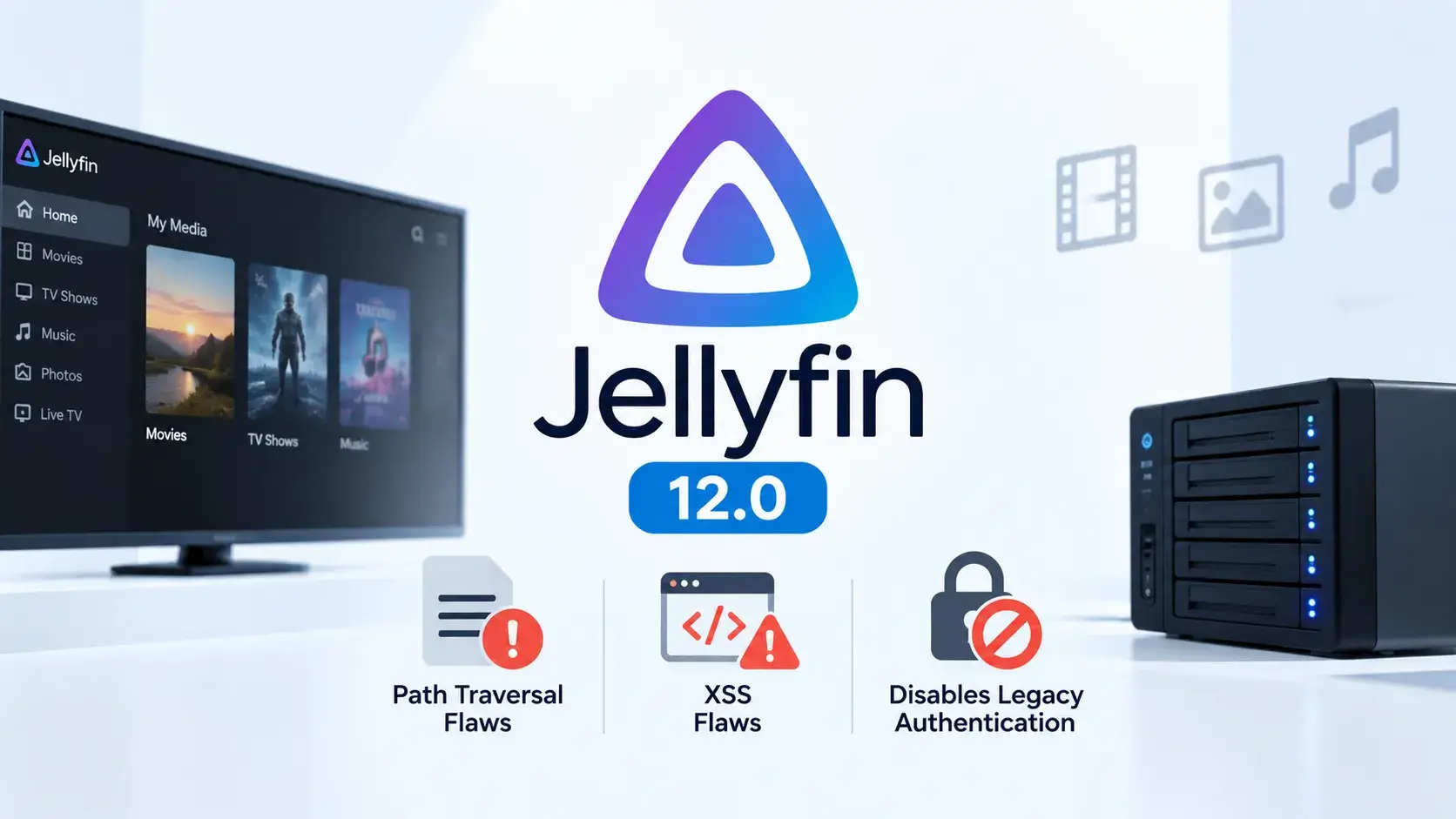


Jellyfin Releases Version 12.0: Major Update to Open-Source Media Server
Jellyfin, the popular open-source media server platform, has unveiled its significant version 12.0 update. This release brings a host of platform enhancements and crucial security updates that directly affect both the server and the web client. Jellyfin emphasizes the need for administrators to approach this upgrade with caution due to the introduction of database migrations and several compatibility-breaking changes for existing installations.
Key Security Improvements
Among the various notable improvements in Jellyfin 12.0 are critical security fixes designed to safeguard users against potential threats. One of the primary enhancements includes measures to prevent crafted requests from accessing files located outside Jellyfin’s designated directories. This is a vital step for protecting sensitive data and maintaining the integrity of user installations.
Furthermore, the update addresses key vulnerabilities that could be exploited in misconfigured instances. For instance, it stops unauthorized re-runs of the setup wizard, ensuring that only authorized individuals can make changes to server configurations. It also disallows plugin packages with unsafe names and strengthens parental control enforcement, which is an essential feature for families looking to regulate content access.
Jellyfin 12.0 specifically tackles cross-site scripting vulnerabilities in the web client that could compromise browser-based administration and media access workflows. This proactive approach to security establishes a more reliable environment for users, particularly for those who utilize web interfaces extensively.
Upgrade Process and Database Changes
This version is not merely a routine patch; it introduces modifications to the database schema and rewrites data upon the first boot. Thus, administrators wishing to revert to an earlier version will need to rely on backups, making a proper upgrade strategy essential. Before proceeding, it’s crucial for administrators to halt the service and manually back up both the data and configuration directories.
Supported upgrade paths are specified to begin from Jellyfin version 10.10.7 or any version within the 10.11.x range. For those using older versions, a prerequisite upgrade to 10.10.7 is required to facilitate a smooth transition.
Additionally, administrators need to identify any accounts that have usernames differing solely by letter case, as Jellyfin has shifted to a case-insensitive username policy. Failure to do so may result in migration failures during initial processing due to duplicate usernames.
After the migration is executed, a full library scan is mandated to ensure the accurate storage of alternative versions, which automatically clears previously grouped versions. It is important to note that the initial scan may take longer than average, potentially categorizing some titles as newly added, and it is crucial that the process remains uninterrupted while migrations are still underway.
Deprecation and Compatibility Considerations
With the release of version 12.0, Jellyfin has officially retired the legacy /emby/ and /mediabrowser/ addresses, and deprecated authentication mechanisms are now disabled by default. This deprecation poses challenges for unmaintained clients and integrations, highlighting the importance for developers to test any software that parses version strings, employs legacy routes, or generates SDKs. The server will now report as version 12.0.0, requiring regeneration of its updated OpenAPI output prior to deployment.
Plugin maintainers are advised of a separate transition process as the server now targets .NET 10, necessitating the retargeting and rebuilding of plugins originally designed for version 10.11. Jellyfin recommends that administrators remove any third-party plugins before upgrading, restoring only compatible versions once the upgrade is complete. Official plugins have already been updated to support version 12.0, ensuring consistent functionality and compatibility.
Enhancements Beyond Security
In addition to security upgrades, Jellyfin 12.0 reorganizes playlists and collections, storing each item as an individual database row. This structural change is designed to enhance pagination, counting, and editing of large lists while reducing interface lag during user interactions. The update extends alternate-version grouping to include TV episodes, adds support for books and comics, and adopts a modern layout intended to improve user experience.
For deployments exposed to the internet, Jellyfin continues to advocate for placing their server behind a reverse proxy, enhancing security protocols. Although the removal of internal TLS/SSL has been postponed, this creates an opportunity for users to appropriately prepare for future changes rather than altering established best practices prematurely.
Organizations considering the upgrade are encouraged to stage the process meticulously, validating client configurations and closely monitoring first-boot migrations. Additionally, rescan libraries and clear caches as necessary following the completion of the upgrade process to maintain optimal performance.
Overall, the release of Jellyfin 12.0 heralds a significant step forward for the open-source media server, offering essential security enhancements while improving overall functionality and usability for administrators and users alike.