
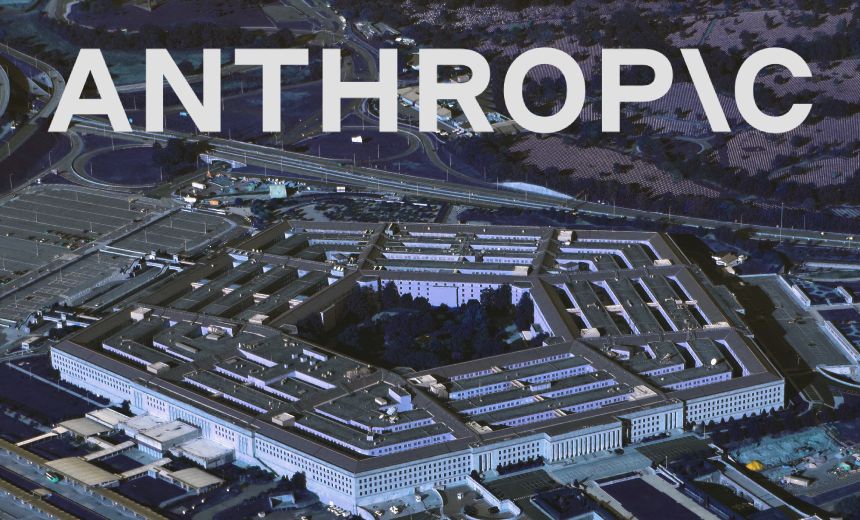


Court Declares DOD’s Designation of Anthropic as Unlawful Retaliation Under First Amendment
In a pivotal ruling, a U.S. federal judge has ordered the Department of Defense (DOD) to rescind its designation of artificial intelligence company Anthropic as a supply chain risk. This decision comes as part of a broader legal narrative in which Anthropic sought judicial intervention to challenge the Pentagon’s actions. The court’s verdict is significant not only for the AI sector but also raises questions about government accountability and the intricacies of First Amendment protections.
Judge Rita F. Lin, presiding over the case in the District Court for the Northern District of California, found that Secretary of Defense Pete Hegseth’s February declaration against Anthropic was an unlawful act of retaliation that violated First Amendment rights. Judge Lin noted, “The challenged actions constituted unlawful retaliation in violation of the First Amendment.” This strong language indicates that the court perceives this case as not merely a technical legal issue, but rather as a fundamental question of free speech and government overreach.
The implications of the ruling are far-reaching. Judge Lin emphasized that while governmental agencies indeed possess the authority to select AI vendors based on their requirements, the evidence presented during the trial showed that the extensive measures imposed on Anthropic had no legal grounding. She pointedly remarked, “The empty invocation of national security is not a blank check to punish and retaliate against government critics.” This phrase reflects the court’s concern that national security issues could be misappropriated to silence dissenting voices.
The judge’s ruling pinpointed several procedural missteps by the DOD. Specifically, the court found that the agency had not adhered to necessary procedural protocols, such as failing to document that less intrusive measures had been considered or implemented prior to designating Anthropic as a national security risk. Additionally, it was noted that the decision was made by an official who was not authorized to perform such an assessment.
During the court proceedings, which included a hearing on July 30, Judge Lin expressed skepticism about the government’s defense that it was merely enforcing contractual rights and was not retaliating against Anthropic for its critiques. This skepticism adds another layer of complexity to the case, as it suggests the court is wary of the government’s narrative.
Anthropic’s legal journey began on March 9 when the company filed a lawsuit against the Defense Department following Hegseth’s public declaration that the company posed a supply chain risk. This declaration occurred shortly after Anthropic had approached the government with concerns over how its AI models might be used—specifically, worries related to mass surveillance and autonomous weapons systems. Despite having a lucrative contract worth approximately $200 million over two years with the government, Anthropic’s apprehensions about the potential misuse of its technology prompted legal action.
In her ruling, Judge Lin did grant one request from Anthropic but maintained a careful approach by not fully endorsing the company’s broader request for permanent injunctions. The company sought to block any blacklisting that may arise from other federal agencies, especially after former President Donald Trump had leveraged social media to demand that all federal agencies cease using Anthropic’s technology. However, the court determined that Anthropic did not sufficiently prove that Trump’s statements had violated specific procurement statutes.
Looking ahead, the Defense Department retains the option to appeal Judge Lin’s decision, which could prolong the litigation surrounding this case. In addition to the current developments, Anthropic has pursued further legal action in the U.S. Court of Appeals for the District of Columbia regarding another supply chain designation that invoked the Federal Acquisition Supply Chain Security Act. A three-judge panel in that court, earlier this year, did not agree to Anthropic’s request for a temporary injunction against the designation.
This case symbolizes a crucial intersection between technological advancement, governmental authority, and individual rights. As society increasingly leans on AI and machine learning technologies, the rulings made in Courtrooms like this one will have lasting effects on how such technologies are developed, controlled, and utilized in both civilian and military contexts. The outcome of this case can set important precedents for how similar conflicts might be resolved in the future, perhaps guiding the ethical frameworks within which modern technologies must operate.