
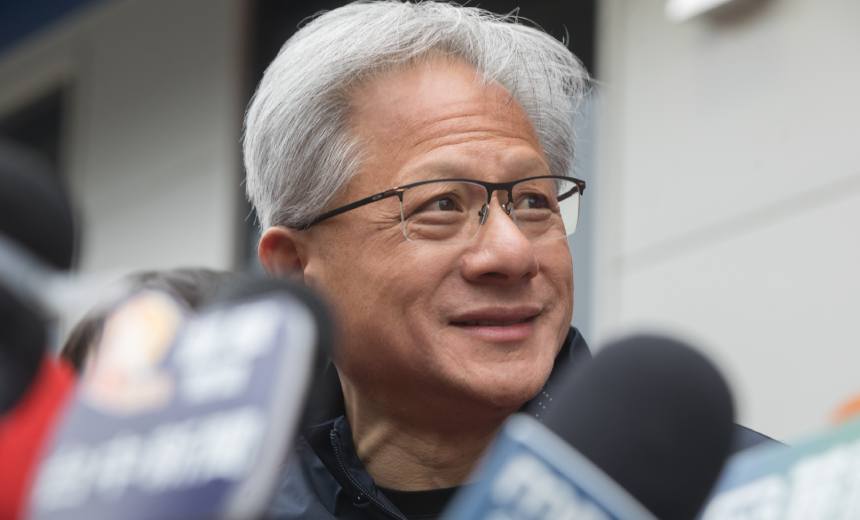


Nvidia’s Board Initiates Independent Investigation Amid Lawmaker Concerns Over CEO’s Affairs
In a move that underscores the rising scrutiny over national security and corporate governance, Nvidia’s board of directors has opened an independent investigation into CEO Jensen Huang, following inquiries from House lawmakers regarding his alleged ties to a suspected Chinese spy. This development comes amidst growing concerns about the potential vulnerabilities that foreign intelligence services might exploit within prominent U.S. technology firms.
Lawmakers from various committees, including the House Intelligence, Foreign Affairs, and China committees, have reached out to Huang for clarification on how Nvidia safeguards itself against foreign espionage. The representatives expressed their intention to understand the nature of Huang’s relationship with Alice Huang, an executive at Megaspeed, a company that provides artificial intelligence (AI) computing services based in Singapore. Alice Huang has been described by U.S. officials as a suspected Chinese intelligence asset, raising red flags regarding the implications for Nvidia.
In a letter sent to Huang, the Republican chairs of the aforementioned committees emphasized the urgency of the matter, asking for a closed-door briefing scheduled for November 18. These lawmakers underscored the necessity for Congress to assess whether U.S. national security has been jeopardized, labeling the potential infiltration by Chinese entities into vital American technology as a critical point of concern. It reflects an ongoing trend where vulnerabilities related to technological advancements are increasingly seen as national security risks.
Nvidia’s board has reacted to the situation by entrusting the inquiry to independent directors and external counsel. The board released a statement on Sunday, asserting that there was currently no evidence to suggest that either national security or Nvidia’s proprietary secrets had been compromised. However, the establishment of an independent investigation highlights the seriousness with which the company is treating these allegations, particularly in an environment where foreign threats are perceived as increasingly sophisticated.
In a memo circulated among Nvidia employees, Huang publicly acknowledged his infidelity, which has drawn media attention in the context of the broader investigation. Although he expressed regret for his personal missteps, the memo notably did not provide details about his relationship with Alice Huang. This omission leaves many questions unanswered about the potential implications his personal affairs could have on Nvidia’s business dealings and national security.
Megaspeed holds a significant position as a client of Nvidia, raising questions about the nature of the partnership between the two organizations. The Singaporean police have initiated their own investigation into Megaspeed for suspected legal violations, further complicating the situation. However, the Ministry of Home Affairs in Singapore stated that they had not identified any concerns regarding Alice Huang’s interactions with Jensen Huang.
The alarm over foreign espionage is not without precedent. Earlier this year, the White House Office of Science and Technology Policy raised red flags about foreign actors using various tactics to extract capabilities from U.S. AI models. This warning aligns with the increasing pressure on tech companies like Nvidia to bolster their defenses against foreign breaches, particularly from countries perceived as adversaries.
In the realm of corporate cybersecurity, Nvidia’s Chief Security Officer David Reber has previously articulated his stance against incorporating hidden hardware controls, asserting that such measures could potentially provide hackers with new vulnerabilities to exploit. His comments come against the backdrop of heightened scrutiny from the Chinese government regarding potential security risks associated with Nvidia’s products, including the controversial H20 chip.
Jensen Huang has previously voiced concerns over U.S. export bans, arguing that such restrictions might inadvertently empower Chinese semiconductor manufacturers by limiting U.S. companies’ competitive edge. Under the Trump administration, restrictions on Nvidia’s sales to China saw some recalibration, allowing for enhanced dealings that some lawmakers view as a double-edged sword.
As the political landscape shifts following the recent midterm elections, the implications for Nvidia and Huang’s leadership could become even more pronounced. Democrats, having gained control of both Congressional chambers, will take over committee leadership when the new Congress convenes in January, potentially altering the investigation’s trajectory.
The lawmakers’ letter has set a deadline of November 11 for Huang to confirm his participation in the requested briefing. With the potential impacts on both corporate governance and national security at stake, all eyes will be on how Nvidia navigates these unprecedented challenges as the inquiry unfolds. Nvidia has yet to respond to requests for further comment, leaving the situation in a state of uncertainty as the November 18 briefing approaches.