
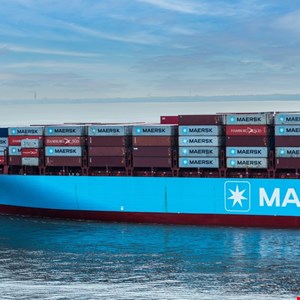
Data Breach at Maersk: Details Uncovered
Maersk, the prominent shipping and logistics giant, has recently reported a significant data breach affecting one of its IT systems. The alarm was raised after an extortion group, known as WhiteArmor, asserted that it had stolen approximately 100GB of logistics-related data from the company. This declaration marks a serious security incident for Maersk, which has maintained a relatively low profile in terms of cyber incidents since the notorious NotPetya attack in 2017.
On November 11, the company issued an official statement disclosing the unauthorized access and data extraction that had occurred within its systems. Although the exact timeline of when the breach took place remains ambiguous, Maersk has characterized the affected system as a “local legacy system from a previous acquisition.” This suggests that the breach may have stemmed from inherited vulnerabilities tied to systems that were integrated into Maersk during past mergers and acquisitions.
In the statement, Maersk reassured its stakeholders, emphasizing that preliminary investigations indicate that no sensitive data has been publicly disclosed. Moreover, they clarified that the breach is confined to a singular local system, with no evidence of adverse effects on other Maersk systems or those connected through various integrations, such as APIs (Application Programming Interfaces) and EDI (Electronic Data Interchange). They maintained that operations for customers would not be disrupted during this incident, allowing users to continue their usual activities concerning booking and managing their shipments through Maersk platforms.
Experts in cybersecurity have weighed in on the incident, highlighting the complexities surrounding acquired IT systems and the importance of rigorous security assessments during the due diligence phase of mergers and acquisitions. Seemant Sehgal, the founder and CEO of BreachLock, emphasized that systems acquired during mergers often come with their own credentials and patch schedules that can easily become neglected. He pointed out the critical need for penetration tests to uncover potential security weaknesses in such systems.
Darin Fredde, a senior director and offensive security evangelist at Ridge Security, expressed the necessity of determining how the attackers gained access and what specifically was compromised. He noted that understanding the boundaries separating legacy systems from the main network is paramount for security. Fredde cautioned organizations against hastily replacing legacy systems, urging them instead to thoroughly understand their inherited systems, how they intertwine with overall business operations, and to continuously validate the effectiveness of security controls.
Amidst the chaos, the extortion group WhiteArmor has asserted responsibility for the attack. The group has been vocal about its demands, seeking a ransom of $5 million in Bitcoin and alleging possession of significant amounts of sensitive data linked to Maersk’s OCF/LF logistics platform. This purported data stash includes a range of sensitive information such as driver records, plaintext passwords, staff accounts, delivery receipts, purchase orders, inventory details, and mobile device logs that encompass phone numbers, email addresses, and IMEIs (International Mobile Equipment Identity numbers).
Cybersecurity expert Nick Harris, serving as CISO for the cyber-insurance firm Assured, noted that WhiteArmor has been increasingly active in recent weeks, with demands ranging from $140,000 to a staggering $20 million. Several of their recent attacks have targeted the logistics sector, with notable companies such as J.B. Hunt, Ryder, and Echo Global Logistics also falling prey. Harris reported that WhiteArmor declares an intention to transition from data-theft extortion to ransomware attacks, revealing that their encryption software is nearing completion.
The situation underscores the growing trend of cyber extortion, especially aimed at major logistics firms that might hold sensitive operational data. Harris outlined several defensive strategies for organizations, which include implementing robust access controls, regularly cycling credentials, setting up data loss alerts, and validating third-party connections. He advised maintaining a mindset of "assumed compromise," thereby tightening controls and alert mechanisms to prepare for possible insider threats.
Reflecting on its historical cyber challenges, Maersk has navigated a tumultuous cybersecurity landscape, notably in the aftermath of the NotPetya incident in 2017, which the company estimated could have cost it as much as $300 million. As this new breach unfolds, stakeholders and observers alike will be watching closely to see how Maersk navigates these challenges and fortifies its defenses against future threats in the complex sphere of cybersecurity.