
Google’s Agentic Vulnerability Discovery Harness: A Paradigm Shift in Source Code Security
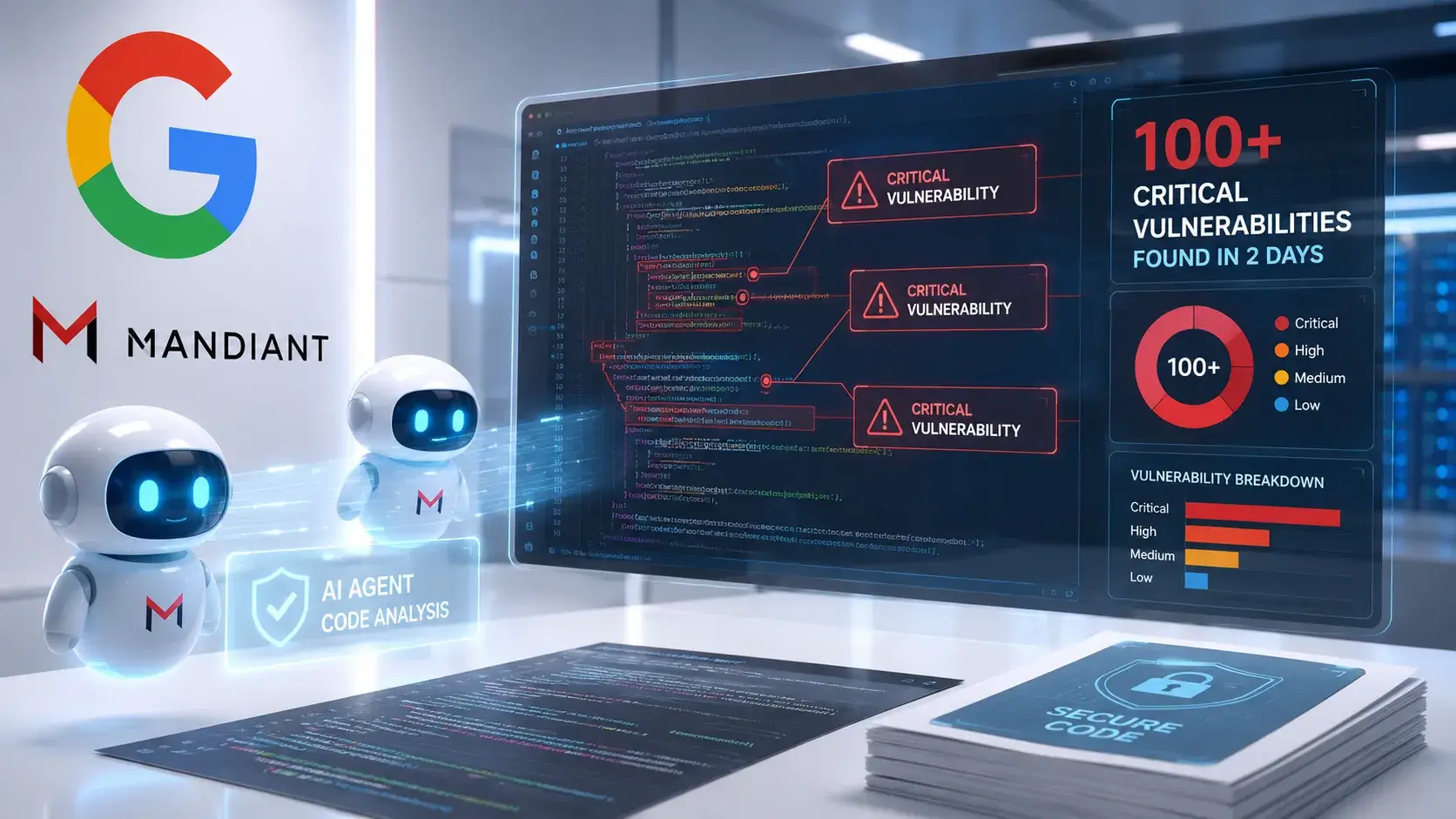
In a recent development, Google’s Threat Intelligence Group made a significant announcement regarding the capabilities of its Agentic Vulnerability Discovery Harness (AVDH). Over the course of just two days, the AVDH identified over 100 critical true-positive vulnerabilities within stolen corporate source code repositories. This remarkable feat underscores the potential of agentic AI to enhance vulnerability discovery dramatically during various security processes, such as incident response, red teaming, penetration testing, and proactive secure code reviews. The findings are particularly vital in scenarios where adversaries have already accessed proprietary code and can utilize AI-powered analysis at machine speed.
The AVDH is not merely a standalone code scanner; instead, it leverages a complex architecture that fuses specialized large language model (LLM) agents with deterministic orchestration alongside expert-defined security methodologies. This multi-faceted approach allows the system to organize its agents into a sequential pipeline, producing prioritized, risk-rated findings that require human validation for confirmation.
Having been utilized over the past ten months in environments containing millions of lines of code, Google has executed thousands of analysis pipelines with the AVDH, resulting in tens of thousands of findings. This process has culminated in the assignment of 12 Common Vulnerabilities and Exposures (CVEs) across open-source projects and web extensions. Noteworthy vulnerabilities include CVE-2026-13242 and CVE-2026-55803, with additional flaws currently undergoing coordinated disclosure processes.
The Mechanism Behind AVDH
The operation of AVDH begins with an Explorer agent tasked with profiling a target codebase. This agent assesses the code’s purpose, scrutinizes documentation, and identifies directories that should be excluded from evaluation, such as unit test folders. Following this initial phase, specialized Explorer agents target distinct areas including authentication, authorization, routing, and software-domain-specific attack surfaces.
A Threat Model Synthesis agent subsequently consolidates findings from these specialized agents, generating both textual and visual threat models. These models serve to identify exposed components, trust boundaries, likely attack vectors, and application relationships. An essential part of this stage involves a human consultant approving the threat model, ensuring that all insights are validated before deeper analysis begins.
Once threat modeling is complete, parallel Discovery agents take the reins to scrutinize the in-scope files for entry points, such as HTTP routes and other externally reachable interfaces. These agents play a crucial role in isolating user-controlled input sources that could potentially access sensitive functions.
In the context of these operations, an Enrichment agent broadens the analysis by tracing relevant code across various files and nested calls. It gathers context related to sanitization procedures, permissions, routing logic, and storage boundaries. This comprehensive approach seeks to rectify a common limitation seen in manual reviews and traditional scanning techniques, wherein exploitable conditions can manifest across distributed code paths.
Control-flow and data-flow analyses are managed by Access Control agents and Data Flow Analysis agents, respectively. The Access Control agents aim to identify missing or broken authorization checks, paths for privilege escalation, and exposure to Cross-Site Request Forgery (CSRF). Conversely, Data Flow Analysis agents focus on tracing user input to dangerous sinks, alerting to possible vulnerabilities such as SQL injection, cross-site scripting, command injection, and path traversal issues.
Validation and Human Oversight
A distinctive feature of Google’s AVDH workflow is the intentional separation between broad hypothesis generation and strict validation. Multiple Validation agents are employed to evaluate potential vulnerabilities, utilizing higher-temperature configurations to explore diverse reasoning pathways. A Validation Synthesis agent then reviews the accumulated evidence, categorizing each identified issue as confirmed, disproven, or rejected.
Issues that are confirmed are carefully deduplicated and risk-rated before being handed off to human experts. These consultants conduct dynamic tests of possible exploitation paths and proof-of-concept code to filter out false positives and identify any compensating controls that AI may overlook.
Importantly, Google stresses that the AVDH does not aim to replace security researchers. Rather, its success hinges on the “distilled knowledge” gleaned from seasoned consultants, including reusable language, established frameworks, and vulnerability-specific guidelines.
Recommendations for Organizations
For organizations considering similar systems, Google recommends instituting robust human validation processes along with proprietary benchmark environments. Given that public vulnerability datasets can be affected by the training data of LLMs, organizations must be cautious in measuring the genuine reasoning performance of these systems.
The compelling outcomes reported by AVDH underscore an increasing urgency for organizations to adopt AI-assisted source code analysis. Keeping pace with the rapid advancements in adversarial AI is critical, but it remains equally essential to maintain human oversight in evaluating decisions regarding exploitability, vulnerability disclosure, and remediation.
In conclusion, Google’s AVDH represents a significant innovation in the realm of cybersecurity, marking a vital step forward in the battle against vulnerabilities in an increasingly complex digital landscape. As organizations continue to grapple with growing threats, the integration of such advanced tools—alongside the wisdom of human experts—might be key to securing proprietary code and safeguarding sensitive information.