
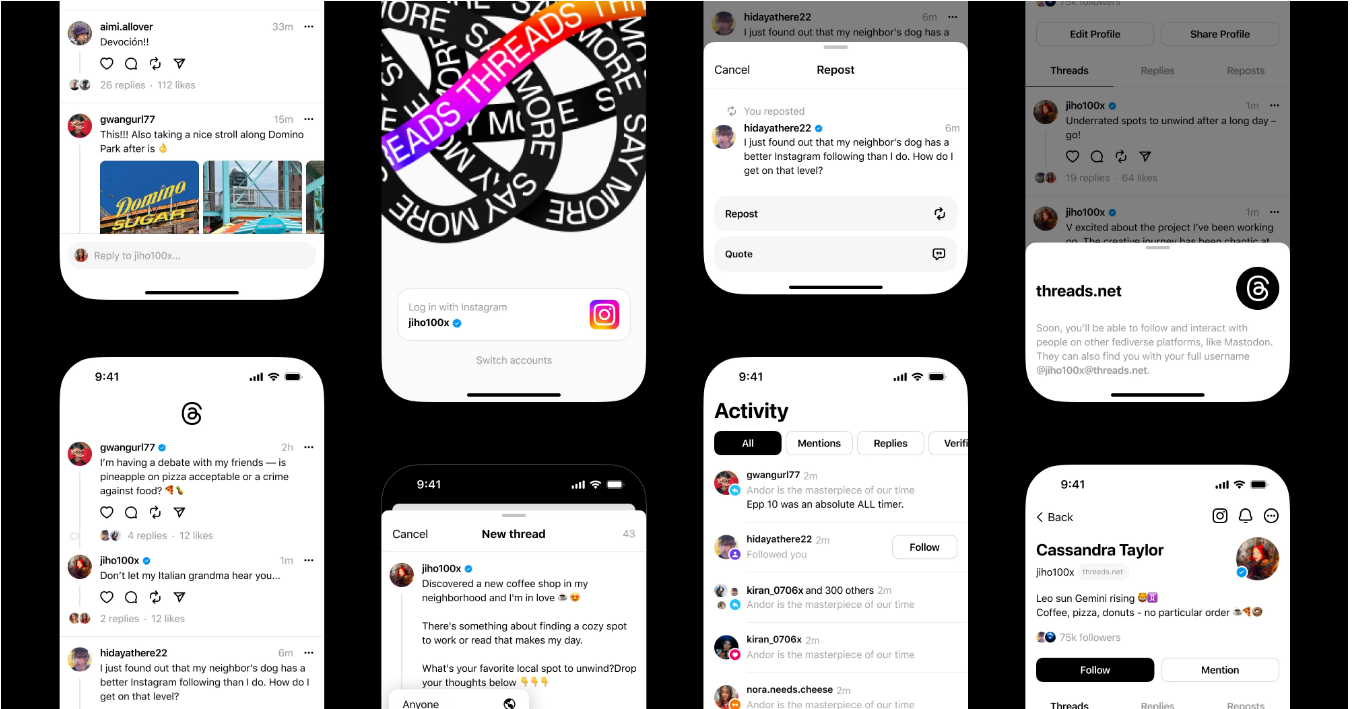


Meta’s new microblogging app “Threads” is facing obstacles in its launch in European Union (EU) markets due to upcoming data privacy regulations. The privacy battle for the Twitter clone has just begun, as experts anticipate further challenges ahead.
On Wednesday, Meta launched its bid to overthrow the Twitter kingdom in over 100 countries, gaining millions of users within the first day. However, the app remains inaccessible in major EU markets due to complexities in compliance with upcoming laws set to take effect next year. Instagram CEO Adam Mosseri hinted at these challenges on July 5, suggesting that the new antitrust-oriented Digital Markets Act could be a factor. Additionally, experts predict that Threads will clash with consumer privacy regulations, as it collects various types of personal data.
PrivacyHawk CEO and co-founder Aaron Mendes suggests that Meta may be concerned about violating the General Data Protection Regulation (GDPR) guidelines, leading to the delay in Threads’ European rollout. Mendes highlights that Facebook, Meta’s parent company, has a reputation for gradually rolling out new features and services. Mendes explains, “They like to get stuff out fast, and then get information in and iterate.”
Meta has a history of conflicts with regulators over consumer privacy, with the EU having already fined the company nine figures or more on multiple occasions. Threads’ extensive data collection practices, as evident from its entry in the Apple app store, are likely a cause for its shielding from EU scrutiny. The app collects browsing history, geolocation data, health and financial information, and even “sensitive information” such as racial or ethnic data, sexual orientation, and religious beliefs, among others.
Mendes reassures users that most data collectors now offer settings for users to control the types of information they share. Additionally, he acknowledges that Threads essentially functions as Instagram, as users log in using their Instagram accounts, implying that the data collection protocols are similar.
While Threads shares similarities with Instagram, it does have its own supplemental privacy policy. Notably, the policy states that users can only delete a Threads account by deleting the associated Instagram account. Critics argue that many users may not be aware of this rule until it is too late, highlighting the lack of empowerment among customers. Jim Killock, executive director of the Open Rights Group, emphasizes the significant investment of time that users put into building their networks on these platforms and questions the acceptance of such behavior in any other context.
In addition to privacy concerns, Meta also faces challenges in complying with GDPR regulations. Mendes points out that EU laws make it challenging to introduce a new product due to data sharing restrictions outside the EU. Meta received a 1.3 billion Euro fine in May for transferring EU citizens’ data to US servers, which is necessary for operating a service. The Privacy Shield program initially facilitated data transfer between the US and EU, but the European Court of Justice invalidated it in July 2020. A new Trans-Atlantic Data Privacy Framework was agreed upon in March but has not been implemented yet.
Killock acknowledges the need to strike a balance between customer desires and facilitating business for companies. He suggests that rules, like the UK’s right to data portability law, can promote competition and discourage unsavory practices by creating commercial pressure on companies. Such measures empower both users and regulators to address practices that are disliked by users.
As Meta continues its global expansion with Threads, it must navigate the complexities of data privacy regulations, both existing and upcoming. The launch delay in EU markets is just the beginning of the privacy battle the microblogging app will face, and its success will depend on its ability to comply with these regulations while meeting user expectations.