
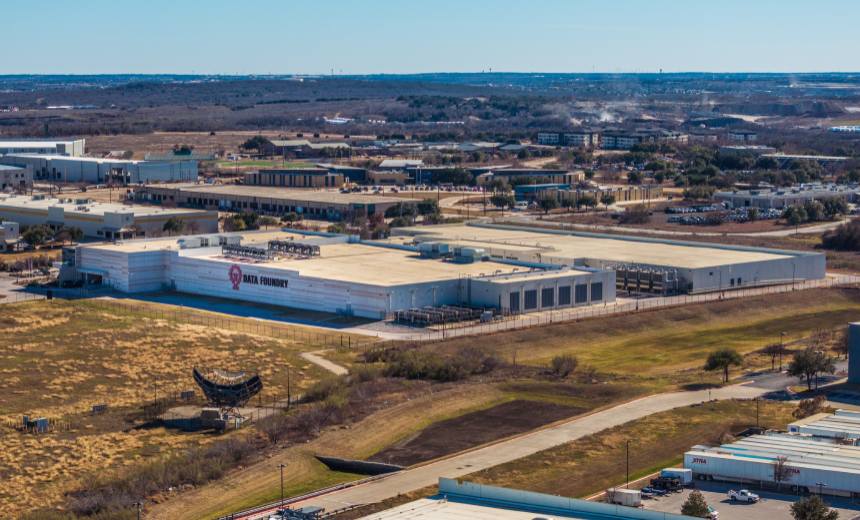


Data Center Restrictions and Democratic Gains Signal Tougher Rules for AI Growth
In a noteworthy political shift, the expansion plans of the artificial intelligence (AI) industry encountered significant backlash in the United States elections held on Tuesday. Voters across the country expressed their discontent by supporting restrictions on data center construction and electing candidates dedicated to holding technology companies accountable for the associated costs. This electoral outcome is indicative of a broader movement demanding increased regulation and oversight of an industry that is often perceived as environmentally harmful and economically burdensome to local communities.
The Democratic Party’s success was particularly pronounced, as they won control of both chambers of Congress and secured governorships in key states such as Texas, Ohio, and Georgia. These victories are critical for advocates of stricter regulations, as they now possess greater influence over an industry facing increasing scrutiny related to its electricity consumption, water usage, and the agreements that communities must accept in exchange for economic development opportunities.
Brad Carson, co-founder of Americans for Responsible Innovation, characterized the election results as an "AI earthquake." He emphasized that the clear message from voters was a desire for rules governing AI and data center operations. This public sentiment indicates a noteworthy shift towards regulatory measures that aim to protect community interests while managing the fast-paced growth of AI technology.
For leaders in enterprise technology, these electoral outcomes add further political uncertainty to the landscape in which they operate. The data center sector’s power demand is projected to escalate significantly, with expectations of an increase of 97 gigawatts between 2025 and 2030, effectively doubling the sector’s size within five years. By 2030, global data center capacity could reach a staggering 200 gigawatts, primarily fueled by hyperscale cloud expansion and rising demands for AI services.
As enterprises engage with cloud providers and AI firms for their service needs, the expansion and sustainability of these offerings hinge on a sector that is increasingly unpopular. The ability of data center companies to secure land, power, and local approvals is now in jeopardy, as evidenced by voter decisions on Tuesday night, which approved restrictions or outright bans in at least 38 jurisdictions across the United States.
In Joliet Township, Illinois, nearly 80% of voters opted for restrictions on data center expansion, while in Janesville, Wisconsin, over 60% supported requiring local officials to garner voter approval for any changes to formerly industrial sites being considered for data center development. These results reflect a growing trend of municipalities taking a stand against the unchecked expansion of data centers, with voters recognizing the need for more stringent regulations.
In Ohio, a state where former President Donald Trump had actively supported increased data center construction, voters defied his endorsements by approving multiple local restrictions. Communities like Hubbard saw approximately 76% of voters in favor of a complete ban, while Conneaut restricted facilities to a maximum size of 25 megawatts. These results suggest a significant disconnect between national political endorsements and local voter priorities.
The outcome of these elections was not uniform, however. In South Carolina, newly elected Republican governor Allen Wilson prevailed over his opponent, who had called for a moratorium on data center construction. Additionally, pro-data center candidates in states such as Florida, Alabama, Tennessee, Vermont, and Wyoming won their congressional and state races, illustrating the complexity of public sentiment surrounding data center expansion.
Despite the considerable financial backing from technology companies and trade organizations—reportedly over $400,000 spent to defeat local measures in Ohio—the results showed a resilience among voters wishing to implement restrictions. All proposed charter amendments seeking to limit hyperscale facilities appeared to gain traction, underscoring a national trend of increasing public opposition to data centers.
Texas emerged as a focal point for this backlash, where Democrat Gina Hinojosa triumphed over incumbent Republican Governor Greg Abbott after advocating for a construction moratorium and stricter regulations. Her victory signifies a pivotal moment for the state, which is set to host over a quarter of the planned U.S. data center capacity by 2030. Reflecting on her campaign, Hinojosa told supporters that the electoral results conveyed a mandate for change—a change that her administration would pursue aggressively.
In Ohio, governor-elect Amy Acton similarly advocated for conditional moratoriums and initiatives requiring developers to bear all associated utility costs. Her campaign emphasized that while Ohio is "open for business," it should not be exploited for profit at the expense of residents.
With increasing political pressure permeating both local and national arenas, technology companies are likely to revise their communication strategies to better align with community interests. Notable firms, including Microsoft, Google, and Amazon, have already announced plans to discontinue the use of non-disclosure agreements during preliminary project discussions, while OpenAI is attempting to rebrand data centers as "compute campuses" in a bid to soften public perceptions.
This heightened political climate may soon extend to Congressional actions. With Democratic control anticipated, investigations and hearings regarding AI firms, and the potential risks posed by their products, seem likely as legislators seek to hold the industry accountable. Representative Greg Casar from Texas expressed intentions to interrogate AI company CEOs on the implications of their offerings, even suggesting the use of subpoenas to compel their attendance if necessary.
The election’s outcomes signal troubling prospects for enterprise buyers who may soon face significant constraints in supplier capacity commitments. Lengthy permitting reviews and increased demands for concessions from data center developers could hinder construction processes, even if statewide moratoriums do not take effect.
Industry leaders are cautioned to brace for challenges ahead. Libby Cantrill from PIMCO warned that companies will encounter substantial hurdles regardless of whether governors implement statewide construction pauses. The implications of this electoral backlash against the AI industry could reshape the future of infrastructure development for technology companies, making it essential for them to adapt to the shifting political landscape. As communities continue to voice their concerns, the growth trajectory of the AI sector may soon wrestle with the realities of public sentiment and regulatory requirements.